
AMD Invests $10 Billion in Taiwan's AI Supply Chain
AMD has announced a significant investment exceeding $10 billion in Taiwan's AI ecosystem. This move aims to enhance partnerships within the local semiconductor industry and ramp up production of advanced server processors. The investment underscores the growing demand for AI infrastructure globally.
The practical question is whether the development changes product timing, infrastructure demand, company spending or the next technical benchmark readers should watch.
More than $10 billion is the amount AMD is committing to Taiwan's AI supply chain.
On May 21, AMD revealed plans to invest heavily in Taiwan's semiconductor sector while increasing production of its next-generation server processors.
This investment is aimed at enhancing the company's capabilities in response to the surging global demand for AI infrastructure.
AMD's Chair and CEO Lisa Su emphasized the importance of integrating high-performance computing technologies with Taiwan's manufacturing ecosystem.
The goal is to create a robust, rack-scale AI infrastructure that can support next-generation AI systems.
Investment Focus on Advanced Technology
A key aspect of AMD's investment is the development of advanced packaging technology for AI chips.
This includes the next-generation 2.5D bridge interconnect technology, known as Elevated Fanout Bridge (EFB).
To bolster this initiative, AMD is collaborating with Taiwan-based companies such as ASE Technology Holding Co. and Siliconware Precision Industries Co. This partnership aims to enhance chip interconnect bandwidth and power efficiency for AMD's future EPYC processors.
Achievements in Chip Production
AMD has also reached a milestone by qualifying the industry's first 2.5D panel-based EFB interconnect with Powertech Technology Inc. This advancement is expected to enable more scalable and cost-efficient production of AI chips.
The investments are closely linked to AMD's upcoming Helios AI platform, which is set to provide a production-ready rack-scale AI infrastructure system starting in the second half of 2026.
The Role of TSMC in AMD's Strategy
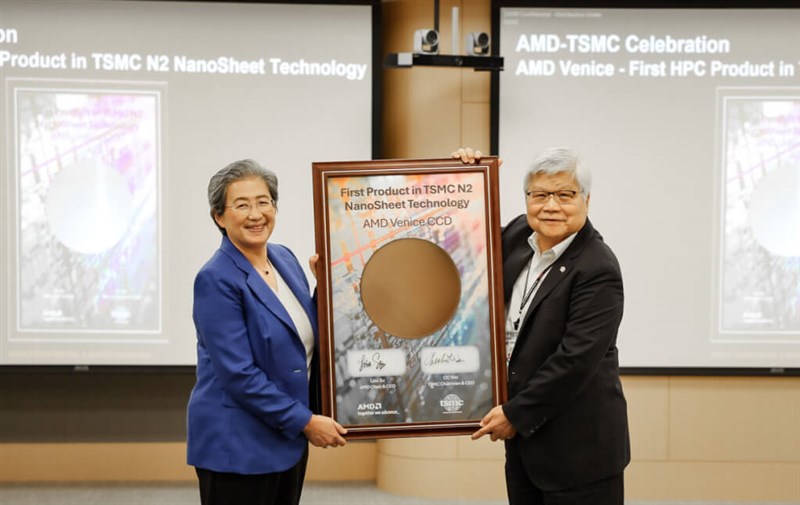
AMD is ramping up production of its next-generation EPYC server processor, codenamed "Venice," utilizing TSMC's advanced 2nm process technology.
This makes it the first high-performance computing product in the industry to leverage this new manufacturing process.
As demand for AI workloads grows, the importance of CPUs in managing data movement, networking, storage, and system orchestration across AI data centers is becoming increasingly evident.
Future Manufacturing Plans
Future production of the "Venice" processors is also planned at TSMC's fabrication facility in Arizona.
This strategy reflects AMD's aim to diversify its advanced manufacturing footprint while meeting the rising global demand for AI technology.
The next checkpoint to watch will be AMD's deployment of the Helios AI platform and the anticipated advancements in chip technology that stem from this significant investment.