Gulf AI Spending Tests Startup Revenue Reality
Gulf AI investment is moving from strategy documents and trade-show announcements toward a harder test: paid enterprise adoption in Dubai and Riyadh.

Last updated: May 23, 2026 | 12:34 PM
$320 billion is the number now framing the Gulf's artificial intelligence race.
PwC Middle East has estimated that AI could contribute that amount to the Middle East economy by 2030, while Saudi Arabia's national data and AI authority says the kingdom wants to become a global AI leader under Vision 2030.
The gap between ambition and execution is where investors are looking.
Dubai is watching the same gap.
The investment story is no longer limited to software companies pitching chatbots.
It now includes data centres, cloud regions, Arabic-language models, cybersecurity tools, government automation and venture funding rounds that need enough infrastructure to scale across the region.
the question is practical: which parts of the AI build-out are becoming revenue, and which remain conference-stage announcements?
Why Are Gulf AI Budgets Moving Now?
Saudi Arabia has put artificial intelligence at the centre of its Vision 2030 technology strategy through the Saudi Data and AI Authority, known as SDAIA.
The UAE has also built national AI policy around the UAE Artificial Intelligence Strategy 2031 and the Office of Artificial Intelligence, Digital Economy and Remote Work Applications.
Those official programmes matter because Gulf technology spending often follows government procurement, national champions and regulated infrastructure.
The strongest near-term signal is infrastructure.
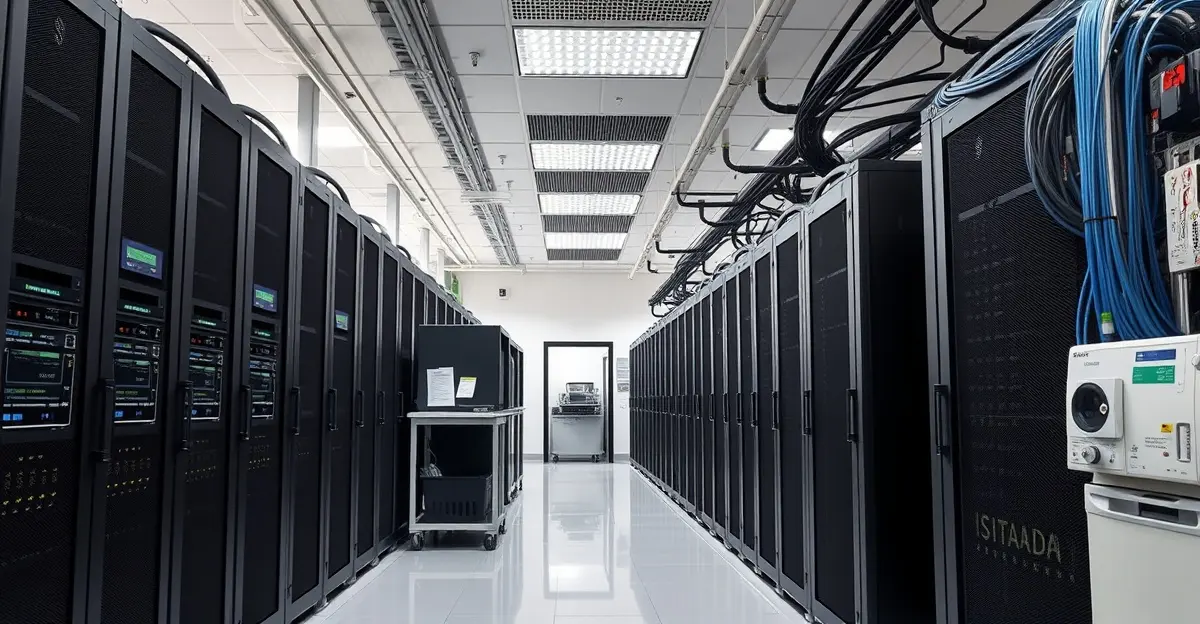
AI systems need cloud capacity, chips, power and secure data handling before startups can sell reliable products to banks, hospitals or public-sector buyers.
That is why GITEX in Dubai and LEAP in Riyadh have become more than trade shows.
They are deal rooms where ministries, telecom groups, cloud providers and venture investors test which announcements can become regional platforms.
For Dubai-based founders, the opportunity is access.
A company building AI compliance software, Arabic enterprise search or fraud-detection tools can pitch across UAE free zones, Saudi government-linked entities and regional banks without leaving the Gulf.
The catch is procurement speed.
Large buyers move slowly, and pilots do not always convert into paid contracts.
Where Do Startups Fit Into The AI Cycle?
MENA startup platforms such as Wamda and MAGNiTT track funding rounds that show where capital is moving before public markets notice.
Their coverage matters because many AI companies in the region are still private, small and dependent on venture investors rather than listed-company reporting.
A funding announcement does not prove product quality.
It does show which sectors investors believe can absorb AI spending.
The current pattern favours business-to-business tools over consumer apps.
Banks need fraud monitoring and customer-service automation.
Retailers need demand forecasting.
Logistics operators need routing and customs-document processing.
Hospitals need administrative automation before clinical AI can safely expand.
That gives Dubai an advantage because the emirate already has dense clusters of finance, logistics, tourism and trade companies that can test software quickly.
If you run a startup in DIFC, Dubai Internet City or Abu Dhabi's Hub71, the useful test is not whether your pitch deck says AI.
It is whether one regulated buyer will pay for a narrow workflow this quarter.
Regional investors have become more cautious about generic automation claims.
They now ask for customer retention, gross margin and proof that the model works in Arabic and English.
What Could Slow The Market?
The upside is clear.
Government strategy, cloud investment and enterprise demand give Gulf AI companies a stronger customer base than many emerging markets can offer.
The region also has a reason to build local AI systems because Arabic language coverage, public-sector data rules and national digital-identity systems create needs that imported tools do not always meet.
The downside sits in execution costs.
AI infrastructure is expensive, talent is scarce, and model performance can fall when products move from demos to regulated industries.
Cybersecurity risk also rises when companies connect AI tools to customer data, payment systems and government services.
A weak deployment can damage trust faster than a slow procurement cycle.
For readers, three checkpoints through 2026.
First, whether GITEX and LEAP announcements turn into signed customer contracts.
Second, whether Wamda and MAGNiTT report larger AI funding rounds with named investors and disclosed amounts.
Third, whether UAE and Saudi regulators publish clearer rules on data residency, model accountability and AI procurement.
The next serious signal will not be another slogan.
It will be a paid renewal.
Summary version for Medium
Gulf AI Spending Tests Startup Revenue Reality
What the announcement means beyond the headline
Quick Summary: Gulf AI investment is moving from strategy documents and trade-show announcements toward a harder test: paid enterprise adoption in Dubai and Riyadh.
Why Are Gulf AI Budgets Moving Now?
Saudi Arabia has put artificial intelligence at the centre of its Vision 2030 technology strategy through the Saudi Data and AI Authority, known as SDAIA. The UAE has also built national AI policy around the UAE Artificial Intelligence Strategy 2031 and the Office of Artificial Intelligence, Digital Economy and Remote Work Applications.
Where Do Startups Fit Into The AI Cycle?
MENA startup platforms such as Wamda and MAGNiTT track funding rounds that show where capital is moving before public markets notice.
- Point 1: The central topic is AI, with the announcement framed around concrete operating detail.
- Point 2: Their coverage matters because many AI companies in the region are still private, small and dependent on venture investors rather than listed-company reporting.
The important shift is not the AI label, but the operating boundary it creates for teams.
What Could Slow The Market?
The upside is clear. Government strategy, cloud investment and enterprise demand give Gulf AI companies a stronger customer base than many emerging markets can offer.
Read the Full Deep Dive
Want to explore the complete technical analysis, enterprise trade-offs, and detailed metrics?
Read the full article originally published at SendTech Times