SendTech Times
News
AI SHIFT:

Fujitsu pairs OpenAI and Anthropic deals for enterprise AI push

Article summary

Fujitsu announced cooperation with OpenAI and a strategic partnership with Anthropic on the same day. The company plans to use ChatGPT Enterprise, Codex and Claude internally and in customer-facing enterprise AI services. Fujitsu says it will combine external models with Fujitsu Kozuchi, Takane, cybersecurity work and a Forward Deployed Engineer model.

Fujitsu pairs OpenAI and Anthropic deals for enterprise AI push
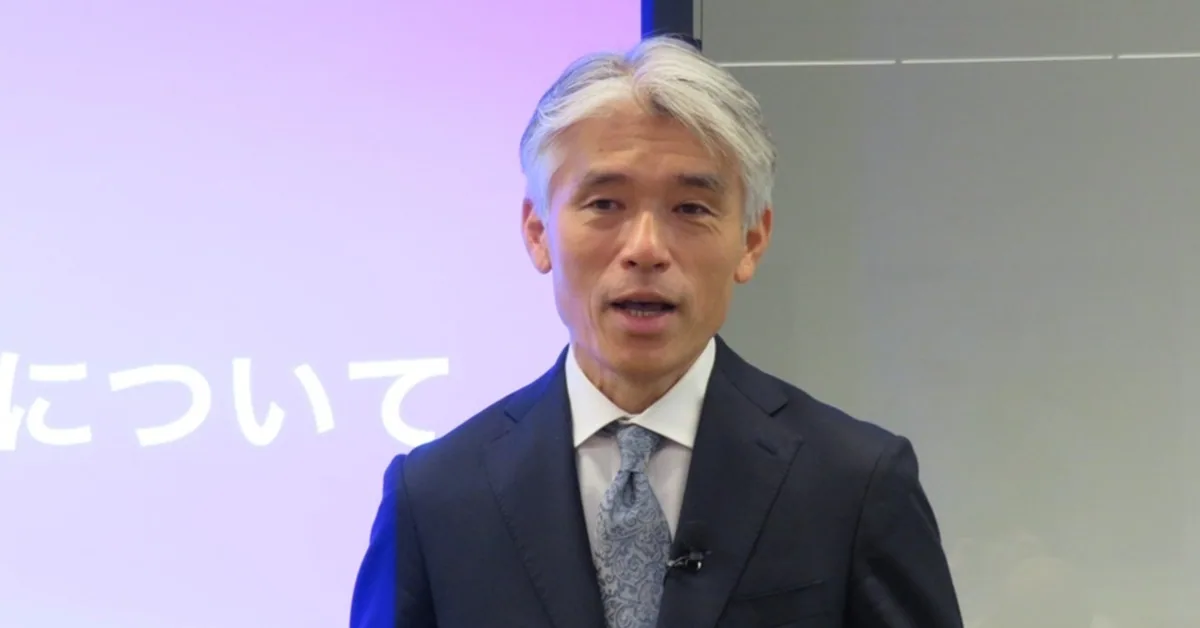
Image source: ITmedia Enterprise

Fujitsu adds global AI models to its enterprise playbook

Fujitsu announced two major AI tie-ups on the same day, starting cooperation with OpenAI while also signing a strategic partnership with Anthropic.

The move gives the Japanese technology group access to ChatGPT Enterprise, Codex and Claude as it tries to deepen generative AI use inside its own operations and in customer-facing services.

The strategy is broader than tool resale.

Fujitsu wants to combine external AI models with its industry knowledge, systems integration experience and operations know-how.

That matters in Japan enterprise market, where large customers often need AI deployments that match existing processes, sector regulation, security requirements and data governance rules.

Customer zero becomes the operating model

Fujitsu is presenting itself as customer zero.

By using OpenAI and Anthropic systems internally first, it expects to turn its own lessons around use-case design, implementation and operations into reusable customer playbooks.

The company is also leaning on a Forward Deployed Engineer model, placing engineers close to customer sites to move AI projects from experimentation into working business change.

The partnerships have different focus areas.

OpenAI cooperation is aimed especially at manufacturing, health care and pharmaceuticals.

Anthropic partnership is being directed toward mission-critical domains such as government, finance, health care, defense and important infrastructure.

Both tracks include cybersecurity as a major theme, including cooperation with the Japanese government to improve defensive capability.

A multi-model approach for regulated AI

Fujitsu is not abandoning its own AI stack.

It already offers Fujitsu Kozuchi and has worked with Cohere on Takane, a large language model.

The new agreements give it a wider menu of models and tools, letting it match each customer case to requirements around data sovereignty, compliance, security and performance.

The source article also notes that Fujitsu will study the use of high-performance computing and quantum computing as future AI infrastructure.

The signal for the market is that Japanese enterprise AI is becoming less about one generic model and more about orchestration: multiple models, sector knowledge, cyber controls and deployment teams working together to deliver measurable transformation.


Share this article
inXf

Related articles

More
Airbnb’s Chesky Tests Whether AI Needs Its Own Interface Lab
AI

Airbnb’s Chesky Tests Whether AI Needs Its Own Interface Lab

Brian Chesky is preparing to support a separate AI research effort centered on interface design while keeping his Airbnb CEO role. Airbnb’s AI markers include 40% customer-support automation, conversational search built around a large language model, and a planned voice assistant later this year. The central question is whether a founder-led lab can turn interface research into useful consumer AI without a disclosed team, funding amount or timeline.

Microsoft Uses Build 2026 to Push Agents Beyond Copilot
AI

Microsoft Uses Build 2026 to Push Agents Beyond Copilot

Microsoft used its Build 2026 keynote to introduce MAI models, Project Soltera and Microsoft Scout as part of a broader agent strategy. MAI-Thinking-1 is described as a 35-billion-parameter reasoning model with a 128,000-context window for multi-step instructions, long-context reasoning and code generation. The announcement gives Microsoft a clearer agent roadmap, but the source does not provide customer rollout data, pricing or enterprise adoption evidence.

Salesforce opens Headless 360 as AI agents push enterprise software beyond the browser
AI

Salesforce opens Headless 360 as AI agents push enterprise software beyond the browser

Salesforce Japan described Headless 360 as a way for external interfaces and AI agents to directly access Salesforce assets through APIs, MCP and CLI tools. The briefing connected Headless 360 with prior Agentforce 360 customer uptake. In Japan, the key test may be whether IT service vendors and partners treat the platform as a preferred toolkit.

Mercari Moves AI Leadership Into HR as It Tests AI-Native Workflows
AI

Mercari Moves AI Leadership Into HR as It Tests AI-Native Workflows

Mercari's Japan business CTO Toshiya Kimura is becoming CHRO and CAIO as the company links AI adoption with organizational redesign. The company has tested smaller AI Pods and found faster decisions, but also limits around design, compliance and cross-functional work. Mercari plans to make HR itself AI-first while using governance across legal, privacy, security, public policy and AI expertise.

Keep Reading

More Stories

Latest
Nvidia 6G Radio Chip Plan Moves AI-RAN Into Telecom EdgeChips & SemiconductorsJun 9, 2026Nvidia 6G Radio Chip Plan Moves AI-RAN Into Telecom EdgeNvidia is working on a GPU-based chip for 6G radio units, extending AI-RAN into low-PHY radio processing while power, supplier integration and RAN spending remain the key tests.Apple AI Architecture Puts Google And Nvidia Inside Its Privacy TestAIJun 9, 2026Apple AI Architecture Puts Google And Nvidia Inside Its Privacy TestApple is using Google and Nvidia to support its most advanced cloud AI model while trying to keep Apple Intelligence centered on private orchestration, proprietary models and on-device context.Amazon-Corning Fiber Deal Puts Optics Inside The AI Data Center BottleneckCloud & Data CentersJun 9, 2026Amazon-Corning Fiber Deal Puts Optics Inside The AI Data Center BottleneckAmazon has reached a multi-year optical fiber and networking agreement with Corning, adding North Carolina manufacturing jobs and highlighting fiber capacity as a practical constraint in AI data center expansion.Check Point VPN Exploitation Puts Legacy IKEv1 Access In The Ransomware SpotlightCybersecurityJun 8, 2026Check Point VPN Exploitation Puts Legacy IKEv1 Access In The Ransomware SpotlightA critical Check Point VPN flaw, CVE-2026-50751, is being exploited against legacy IKEv1 remote-access configurations, with activity tied in one case to a Qilin ransomware affiliate and a second related VPN issue also disclosed.Silent Ransom Group Uses Fake IT Support Calls to Pressure Law FirmsCybersecurityJun 8, 2026Silent Ransom Group Uses Fake IT Support Calls to Pressure Law FirmsSilent Ransom Group is targeting U.S. law firms and professional services organizations with fake IT support calls, remote access tools and rapid data-theft extortion. Mandiant links the activity to UNC3753, Luna Moth and Chatty Spider, while the FBI has warned of related social engineering and in-person theft attempts.Alphabet’s $85 Billion AI Financing Push Tests Data Center Investor AppetiteCloud & Data CentersJun 8, 2026Alphabet’s $85 Billion AI Financing Push Tests Data Center Investor AppetiteAlphabet is seeking $85 billion in equity financing after raising its capex outlook to as high as $190 billion. The company is presenting Google Cloud growth, AI adoption and lower Gemini serving costs as evidence that its data center spending can support long-term AI demand.Apple WWDC 2026 Turns Siri Into the Test of Its AI CredibilityAIJun 8, 2026Apple WWDC 2026 Turns Siri Into the Test of Its AI CredibilityApple is expected to put Siri back at the center of WWDC 2026 after delays to its promised Apple Intelligence assistant. The event is likely to test whether Apple can turn contextual awareness, chatbot-style interaction and agentic voice tasks into reliable platform features.ChatGPT Lockdown Mode Narrows AI Data Exfiltration PathsCybersecurityJun 8, 2026ChatGPT Lockdown Mode Narrows AI Data Exfiltration PathsOpenAI is rolling out Lockdown Mode for eligible ChatGPT users to reduce data exfiltration risk from prompt injection. The optional setting limits outbound web and tool capabilities, trading some product flexibility for stronger containment around sensitive workflows.Smart TV Proxy SDKs Turn Free Apps Into a Hidden AI Scraping Supply ChainCybersecurityJun 7, 2026Smart TV Proxy SDKs Turn Free Apps Into a Hidden AI Scraping Supply ChainBright Data's SDK has been reverse-engineered in research showing how free apps can turn consumer devices, including smart TVs, into residential proxy nodes for web-scraping traffic. The issue matters because AI data harvesting is increasing demand for residential IPs, while consent screens and background network behavior may not be clear to users or IT teams.Stratos Data Center Cuts Utah Plan as Water Backlash Tests AI Infrastructure GrowthAIJun 7, 2026Stratos Data Center Cuts Utah Plan as Water Backlash Tests AI Infrastructure GrowthA Kevin O'Leary-backed Utah data center plan has been cut back after water and transparency objections, showing how local resistance can reshape AI infrastructure projects.Dubai Hotels Turn to Residents as Tourism Shock Tests Luxury DemandEconomyJun 7, 2026Dubai Hotels Turn to Residents as Tourism Shock Tests Luxury DemandDubai luxury hotels are using resident staycation discounts to offset weaker international tourism, but the source shows weekend demand cannot fully replace longer foreign stays.Ciena's $50 Billion AI Network Target Puts Optical Capacity on the Hyperscaler ClockChips & SemiconductorsJun 7, 2026Ciena's $50 Billion AI Network Target Puts Optical Capacity on the Hyperscaler ClockCiena says AI demand could roughly double its addressable market to about $50 billion by 2029 as hyperscalers and service providers invest in optical networking. It cited RLS Hyper Rail, DCOM, coherent modules and 400G/800G pluggable optics as demand areas while planning $250 million to $275 million in capex this year. The practical test is whether AI compute buildouts convert into durable network orders.