SendTech Times
News
CAPACITY TEST:

Google Compute Lease Turns SpaceX Data Centers Into an AI Capacity Test

Article summary

SpaceX lined up a Google compute agreement that gives Google access to about 110,000 NVIDIA GPUs and related components. The filing-based terms call for $920 million a month from October 2026 through June 2029, with delivery protections if GPU access is not ready by September 30, 2026. The next signal is whether SpaceX can turn AI data-center capacity into reliable third-party infrastructure before Google's bridge-capacity need changes.
Google Compute Lease Turns SpaceX Data Centers Into an AI Capacity Test
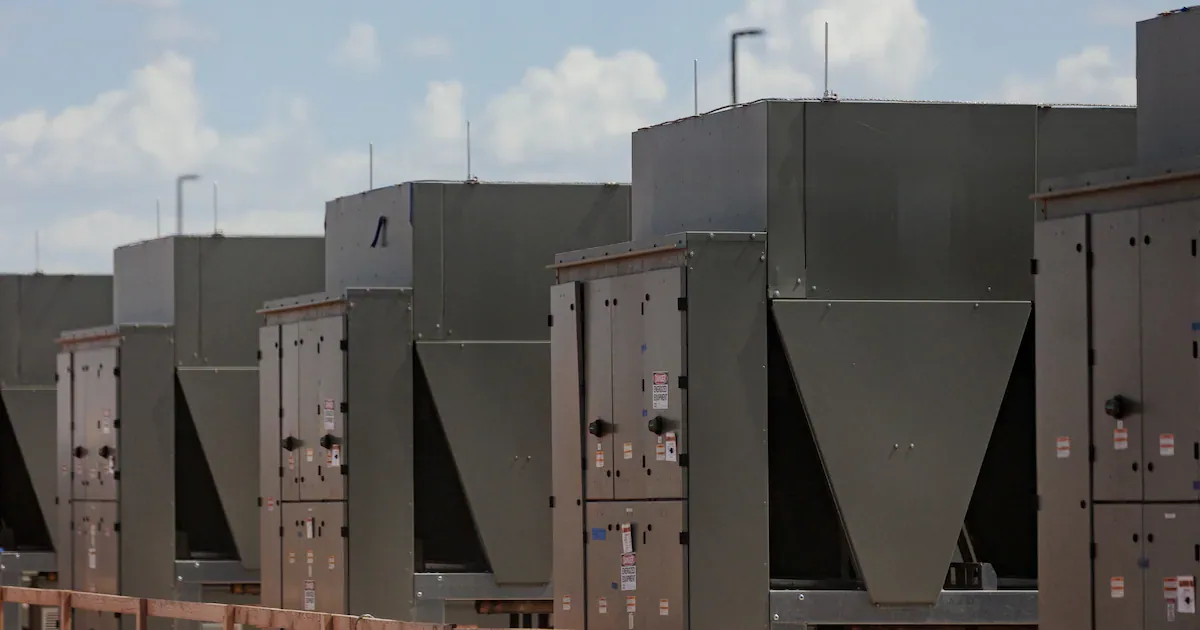
Image source: TechCrunch / Getty Images

Google Turns to SpaceX for Bridge AI Compute

SpaceX has lined up a Google compute agreement as it moves toward a planned public listing, turning its AI data-center capacity into a near-term revenue test.

Regulatory-filing terms put the payment at $920 million per month, running from October 2026 to June 2029, in exchange for access to approximately 110,000 NVIDIA GPUs, CPUs, memory and related components.

The agreement is tied to demand for Google's agent platform, Gemini Enterprise.

A Google representative said the arrangement is a short-term bridge-capacity deal because demand for Gemini Enterprise has been higher than expected.

The practical signal is that even a large cloud operator may rent external AI capacity when enterprise demand rises faster than internal infrastructure planning.

For SpaceX, the same agreement gives its data centers a commercial customer outside xAI's original workloads.

Data-Center Timing Carries the Risk

The filing gives Google a delivery protection if the committed GPU capacity is not available on time.

If SpaceX fails to provide access to the committed amount of GPUs by September 30, 2026, Google may terminate the agreement after a one-month grace period or accept the available GPU count with reduced monthly fees.

The agreement also includes a broader exit mechanism.

Both companies can terminate the arrangement with 90 days' notice after December 31, 2026, while Google's access ramps through September at a reduced fee.

That structure makes execution more important than the headline monthly value.

SpaceX must convert data-center capacity into usable infrastructure before the full commercial rate begins, while Google is buying time for customer demand that has moved faster than expected.

SpaceX Adds a Second Compute Customer

The Google agreement follows a separate Anthropic arrangement announced in late May.

Under the late-May Anthropic arrangement, SpaceX would receive $1.25 billion per month through 2029 for available compute at the Colossus 1 data center near Memphis, Tennessee, originally built by xAI for its own artificial-intelligence work.

The newer Google deal appears to cover roughly half the compute available to Anthropic at Colossus 1, but SpaceX did not say which specific data center Google would use.

Elon Musk has previously suggested Colossus 2 would be reserved for xAI.

For AI infrastructure buyers, the affected segment is not only cloud platforms.

The deal also puts pressure on neocloud providers and other infrastructure lessors that sell access to scarce accelerator capacity.

IPO Filing Puts Numbers Under Scrutiny

SpaceX's securities paperwork puts the planned offering at about $75 billion and the target valuation near $1.75 trillion.

Because those are IPO-linked figures, they remain filing-based claims rather than operating results.

Alphabet's AI infrastructure budget is already large: its stated capital-expenditure commitment is above $180 billion this year, with spending expected to rise significantly in 2027.

It also announced an $80 billion equity sale.

The next signal is whether SpaceX can deliver the GPU access by the September 30, 2026 milestone while Google decides whether bridge capacity remains necessary after its own AI infrastructure spending increases.
Share this article
inXf

Related articles

More
AirTrunk Makes India a Bigger Test Case for AI Data Center Buildouts
Cloud & Data Centers

AirTrunk Makes India a Bigger Test Case for AI Data Center Buildouts

AirTrunk said it would invest $30 billion in India by 2030 to develop 5GW of new AI data center capacity. Bernstein’s forecast puts the country’s data center market at up to 8GW in 2030, compared with about 1.5GW today. The practical test is whether land, power and water availability can support the proposed buildout.

Amazon-Corning Fiber Deal Puts Optics Inside The AI Data Center Bottleneck
Cloud & Data Centers

Amazon-Corning Fiber Deal Puts Optics Inside The AI Data Center Bottleneck

Amazon has reached a multi-year optical fiber and networking agreement with Corning, adding North Carolina manufacturing jobs and highlighting fiber capacity as a practical constraint in AI data center expansion.

Alphabet’s $85 Billion AI Financing Push Tests Data Center Investor Appetite
Cloud & Data Centers

Alphabet’s $85 Billion AI Financing Push Tests Data Center Investor Appetite

Alphabet is seeking $85 billion in equity financing after raising its capex outlook to as high as $190 billion. The company is presenting Google Cloud growth, AI adoption and lower Gemini serving costs as evidence that its data center spending can support long-term AI demand.

AI Data-Centre Spending Turns Energy Costs Into an Inflation Test
Cloud & Data Centers

AI Data-Centre Spending Turns Energy Costs Into an Inflation Test

AI infrastructure spending is pushing data-centre power demand, construction costs and debt issuance into the inflation debate. Pew Research Centre counted more than 3,000 operational US data centres and about 1,500 more under construction or in early development. The practical test is whether productivity gains arrive before power, construction and financing costs spread further through the economy.

Keep Reading

More Stories

Latest
Apple AI Architecture Puts Google And Nvidia Inside Its Privacy TestAIJun 9, 2026Apple AI Architecture Puts Google And Nvidia Inside Its Privacy TestApple is using Google and Nvidia to support its most advanced cloud AI model while trying to keep Apple Intelligence centered on private orchestration, proprietary models and on-device context.Check Point VPN Exploitation Puts Legacy IKEv1 Access In The Ransomware SpotlightCybersecurityJun 8, 2026Check Point VPN Exploitation Puts Legacy IKEv1 Access In The Ransomware SpotlightA critical Check Point VPN flaw, CVE-2026-50751, is being exploited against legacy IKEv1 remote-access configurations, with activity tied in one case to a Qilin ransomware affiliate and a second related VPN issue also disclosed.Silent Ransom Group Uses Fake IT Support Calls to Pressure Law FirmsCybersecurityJun 8, 2026Silent Ransom Group Uses Fake IT Support Calls to Pressure Law FirmsSilent Ransom Group is targeting U.S. law firms and professional services organizations with fake IT support calls, remote access tools and rapid data-theft extortion. Mandiant links the activity to UNC3753, Luna Moth and Chatty Spider, while the FBI has warned of related social engineering and in-person theft attempts.Apple WWDC 2026 Turns Siri Into the Test of Its AI CredibilityAIJun 8, 2026Apple WWDC 2026 Turns Siri Into the Test of Its AI CredibilityApple is expected to put Siri back at the center of WWDC 2026 after delays to its promised Apple Intelligence assistant. The event is likely to test whether Apple can turn contextual awareness, chatbot-style interaction and agentic voice tasks into reliable platform features.ChatGPT Lockdown Mode Narrows AI Data Exfiltration PathsCybersecurityJun 8, 2026ChatGPT Lockdown Mode Narrows AI Data Exfiltration PathsOpenAI is rolling out Lockdown Mode for eligible ChatGPT users to reduce data exfiltration risk from prompt injection. The optional setting limits outbound web and tool capabilities, trading some product flexibility for stronger containment around sensitive workflows.Smart TV Proxy SDKs Turn Free Apps Into a Hidden AI Scraping Supply ChainCybersecurityJun 7, 2026Smart TV Proxy SDKs Turn Free Apps Into a Hidden AI Scraping Supply ChainBright Data's SDK has been reverse-engineered in research showing how free apps can turn consumer devices, including smart TVs, into residential proxy nodes for web-scraping traffic. The issue matters because AI data harvesting is increasing demand for residential IPs, while consent screens and background network behavior may not be clear to users or IT teams.Stratos Data Center Cuts Utah Plan as Water Backlash Tests AI Infrastructure GrowthAIJun 7, 2026Stratos Data Center Cuts Utah Plan as Water Backlash Tests AI Infrastructure GrowthA Kevin O'Leary-backed Utah data center plan has been cut back after water and transparency objections, showing how local resistance can reshape AI infrastructure projects.Dubai Hotels Turn to Residents as Tourism Shock Tests Luxury DemandEconomyJun 7, 2026Dubai Hotels Turn to Residents as Tourism Shock Tests Luxury DemandDubai luxury hotels are using resident staycation discounts to offset weaker international tourism, but the source shows weekend demand cannot fully replace longer foreign stays.Ciena's $50 Billion AI Network Target Puts Optical Capacity on the Hyperscaler ClockChips & SemiconductorsJun 7, 2026Ciena's $50 Billion AI Network Target Puts Optical Capacity on the Hyperscaler ClockCiena says AI demand could roughly double its addressable market to about $50 billion by 2029 as hyperscalers and service providers invest in optical networking. It cited RLS Hyper Rail, DCOM, coherent modules and 400G/800G pluggable optics as demand areas while planning $250 million to $275 million in capex this year. The practical test is whether AI compute buildouts convert into durable network orders.liko.ai Funding Turns Edge AI Into a Smart-Home Hardware TestAIJun 7, 2026liko.ai Funding Turns Edge AI Into a Smart-Home Hardware Testliko.ai completed its first-round financing to fund edge-side vision-language models, AI-native hardware and multi-modal home terminals. The investor group includes Shangtang Guoxiang Capital, Orient Fortune Capital, iFlytek Venture Capital, Hongtai Fund, Zhengxuan Investment and Mianbi Intelligence. The practical test is whether the startup can turn camera-based edge AI into a consumer smart-home hub without relying on cloud processing.Impact Circle Turns Impact Finance Into a Japan Fintech Measurement TestFintech & Digital PaymentsJun 7, 2026Impact Circle Turns Impact Finance Into a Japan Fintech Measurement TestTokyo-based Impact Circle is building a fintech model that measures social impact through its own lending and visualization businesses. The company won the Tokyo Financial Award 2025 financial innovation category and raised 335 million yen in a November 2024 Series A round. The next signal is whether Impact Cloud IC can turn impact measurement into a repeatable workflow for investors and Japanese corporations.ByteDance Raises Volcano Engine AI Revenue Target on Seedance 2.0 DemandAIJun 7, 2026ByteDance Raises Volcano Engine AI Revenue Target on Seedance 2.0 DemandByteDance’s Volcano Engine raised its full-year MaaS revenue target to RMB 15 billion after Seedance 2.0 became a larger AI revenue contributor. Seedance 2.0 is described as generating more than RMB 1 billion in monthly revenue, while average daily token consumption has grown by nearly 40% month-on-month. The practical test is whether Volcano Engine can keep video-generation usage converting into paid token consumption beyond high-usage content segments.