SendTech Times
Funding
FUNDING GAP:

Huawei’s Kirin 9050 highlights 3D stacking and Tau Law ahead of the Mate 90 launch

Article summary

Huawei plans to introduce the Kirin 9050 with the Mate 90 series this fall, with September 2026 indicated for the phone launch window. Reports tied to industry channels and an ISCAS 2026 conference presentation describe the chip as moving past Apple’s A18 while nearing first-generation 3nm-class density. The central issue is whether 3D IC stacking and Tau Law can deliver high-end results without relying on the most advanced EUV lithography tools.
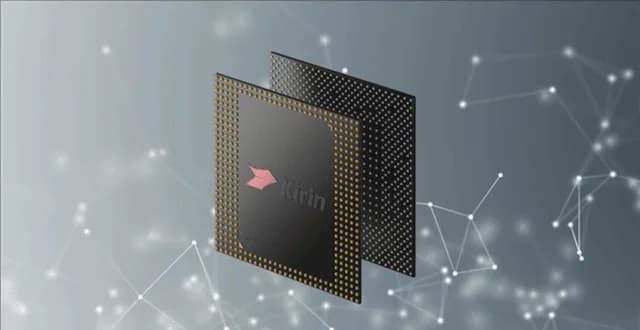
Huawei’s Kirin 9050 highlights 3D stacking and Tau Law ahead of the Mate 90 launch
Image source: pandaily.com

Huawei’s next flagship chip

Huawei is preparing to launch the Kirin 9050 together with the Mate 90 smartphone series this fall, and the Mate 90 line is expected in September 2026.

Pre-launch reporting around the processor says its overall performance exceeds Apple’s A18.

Those claims are linked to industry reporting as well as a presentation delivered at ISCAS 2026, the International Symposium on Circuits and Systems, held in Geneva.

The importance of the Kirin 9050 is tied not just to the performance comparison with Apple’s chip, but also to the method Huawei is using to get there.

The company’s upcoming flagship processor is described as reaching a level close to TSMC’s first-generation 3nm technology while avoiding dependence on the most advanced EUV lithography systems, which remain affected by export restrictions.

3D IC stacking as the core change

At the center of the design is a 3D IC stacking approach.

Instead of relying only on the standard progression toward smaller process nodes, this method raises transistor density by placing components in vertical layers.

That shift reduces the importance of traditional geometric scaling, which has long defined progress in semiconductor manufacturing.

In this case, the reported gain comes from architecture and integration.

By increasing density through vertical design, Huawei is said to improve performance without requiring the newest EUV tools.

That makes the Kirin 9050 notable as an example of an alternate engineering route rather than a direct replication of the conventional 3nm manufacturing path.

This approach is presented as a way to keep advancing performance under manufacturing constraints.

Rather than focusing solely on access to the smallest process technology, Huawei is described as using packaging and chip architecture to push its flagship processor closer to the performance class associated with much more advanced fabrication methods.

Tau Law and density gains

The theoretical basis for that strategy is Huawei’s proprietary Tau Law, developed by the company’s semiconductor research division.

Tau Law replaces conventional geometric miniaturization with what Huawei describes as temporal miniaturization.

In practical terms, the framework shifts the scaling problem away from feature-size reduction and toward better circuit timing and more efficient interconnect behavior.

Combined with 3D IC stacking, that approach is said to let Huawei work around EUV-related constraints through a different engineering method.

The claim is not simply that the company has matched an established process node by using the same route.

Instead, it is presented as achieving similar territory in density and performance through a different combination of design and manufacturing choices.

Huawei’s reported figures say transistor density on the Kirin 9050 is up 53.5% from the prior generation, reaching 238 million transistors per square millimeter.

That density is described as approaching the level of TSMC’s first-generation 3nm process technology while using manufacturing techniques that are more accessible.

The chip is also expected to deliver performance comparable to TSMC’s N31, a 3nm-class chip, while being built through a different manufacturing path based on legacy processes more widely available to Chinese semiconductor fabs.

What the Mate 90 launch may confirm

The Mate 90 series will be the first commercial test of these claims when it arrives this fall.

Huawei is positioning the next generation of flagship devices as part of a broader effort to rebuild its standing among leading smartphone vendors after several years of restrictions on access to advanced semiconductor manufacturing.

The main question for the launch is whether the reported specifications and conference-presented results hold up in production silicon.

If they do, Huawei would become the first Android smartphone maker to move ahead of Apple’s A-series chips in comprehensive benchmark performance, reversing a competitive gap that has lasted for years.

That puts the Kirin 9050 story in a broader context.

It is not only about one flagship processor, but about whether architecture, stacking, and interconnect optimization can sustain semiconductor progress when access to the newest lithography tools is limited.
Share this article
inXf

Related articles

More
AMD Server CPU Share Hits 33.2% as AI Server Demand Lifts the Segment
Chips & Semiconductors

AMD Server CPU Share Hits 33.2% as AI Server Demand Lifts the Segment

AMD reached 33.2 percent of the server CPU market in the first quarter of 2026 as overall x86 processor shipments fell by more than six percent. Server CPU unit shipments rose by more than 10 percent from a year earlier, while Intel still held roughly two-thirds of the server CPU market. The next signal is whether AI server demand keeps server processors stronger than the wider PC and client CPU cycle.

Warren Hearing Request Puts Nvidia China Chip Sales Under Export-Control Scrutiny
Chips & Semiconductors

Warren Hearing Request Puts Nvidia China Chip Sales Under Export-Control Scrutiny

Sen. Elizabeth Warren invited Nvidia CEO Jensen Huang to testify before the Senate Banking Committee on June 11 over China chip sales and export controls. The request focuses on Nvidia's views on U.S. export control laws and its business in China as lawmakers scrutinize advanced AI chip flows. The next signal is whether Huang appears and gives senators enough detail on Nvidia's China strategy and national-security posture.

Marvell Teralynx T100 Puts AI Data-Center Switching Into the Chip Race
Chips & Semiconductors

Marvell Teralynx T100 Puts AI Data-Center Switching Into the Chip Race

Marvell announced planned availability of its Teralynx T100 switch chip for AI training and inference infrastructure. The 102.4 Tbps chip is built on a 3nm process, supports up to a 512-port radix and is claimed to use 25 percent lower power than competitive solutions. The practical test is whether data-center customers use lower-power, high-radix switching to ease latency and power constraints in larger AI clusters.

Intel Xeon 6+ Launch Puts CPU Supply on the AI Infrastructure Watchlist
Chips & Semiconductors

Intel Xeon 6+ Launch Puts CPU Supply on the AI Infrastructure Watchlist

Intel launched Xeon 6+ "Clearwater Forest" at Computex 2026 for scale-out data center workloads. The processor tops out at 288 Darkmont E-cores per socket, 576MB of L3 cache and compute tiles built on Intel 18A. The practical test is whether constrained CPU allocation becomes a larger bottleneck for agentic AI data center deployments.

Keep Reading

More Stories

Latest
Apple AI Architecture Puts Google And Nvidia Inside Its Privacy TestAIJun 9, 2026Apple AI Architecture Puts Google And Nvidia Inside Its Privacy TestApple is using Google and Nvidia to support its most advanced cloud AI model while trying to keep Apple Intelligence centered on private orchestration, proprietary models and on-device context.Amazon-Corning Fiber Deal Puts Optics Inside The AI Data Center BottleneckCloud & Data CentersJun 9, 2026Amazon-Corning Fiber Deal Puts Optics Inside The AI Data Center BottleneckAmazon has reached a multi-year optical fiber and networking agreement with Corning, adding North Carolina manufacturing jobs and highlighting fiber capacity as a practical constraint in AI data center expansion.Check Point VPN Exploitation Puts Legacy IKEv1 Access In The Ransomware SpotlightCybersecurityJun 8, 2026Check Point VPN Exploitation Puts Legacy IKEv1 Access In The Ransomware SpotlightA critical Check Point VPN flaw, CVE-2026-50751, is being exploited against legacy IKEv1 remote-access configurations, with activity tied in one case to a Qilin ransomware affiliate and a second related VPN issue also disclosed.Silent Ransom Group Uses Fake IT Support Calls to Pressure Law FirmsCybersecurityJun 8, 2026Silent Ransom Group Uses Fake IT Support Calls to Pressure Law FirmsSilent Ransom Group is targeting U.S. law firms and professional services organizations with fake IT support calls, remote access tools and rapid data-theft extortion. Mandiant links the activity to UNC3753, Luna Moth and Chatty Spider, while the FBI has warned of related social engineering and in-person theft attempts.Alphabet’s $85 Billion AI Financing Push Tests Data Center Investor AppetiteCloud & Data CentersJun 8, 2026Alphabet’s $85 Billion AI Financing Push Tests Data Center Investor AppetiteAlphabet is seeking $85 billion in equity financing after raising its capex outlook to as high as $190 billion. The company is presenting Google Cloud growth, AI adoption and lower Gemini serving costs as evidence that its data center spending can support long-term AI demand.Apple WWDC 2026 Turns Siri Into the Test of Its AI CredibilityAIJun 8, 2026Apple WWDC 2026 Turns Siri Into the Test of Its AI CredibilityApple is expected to put Siri back at the center of WWDC 2026 after delays to its promised Apple Intelligence assistant. The event is likely to test whether Apple can turn contextual awareness, chatbot-style interaction and agentic voice tasks into reliable platform features.ChatGPT Lockdown Mode Narrows AI Data Exfiltration PathsCybersecurityJun 8, 2026ChatGPT Lockdown Mode Narrows AI Data Exfiltration PathsOpenAI is rolling out Lockdown Mode for eligible ChatGPT users to reduce data exfiltration risk from prompt injection. The optional setting limits outbound web and tool capabilities, trading some product flexibility for stronger containment around sensitive workflows.Smart TV Proxy SDKs Turn Free Apps Into a Hidden AI Scraping Supply ChainCybersecurityJun 7, 2026Smart TV Proxy SDKs Turn Free Apps Into a Hidden AI Scraping Supply ChainBright Data's SDK has been reverse-engineered in research showing how free apps can turn consumer devices, including smart TVs, into residential proxy nodes for web-scraping traffic. The issue matters because AI data harvesting is increasing demand for residential IPs, while consent screens and background network behavior may not be clear to users or IT teams.Stratos Data Center Cuts Utah Plan as Water Backlash Tests AI Infrastructure GrowthAIJun 7, 2026Stratos Data Center Cuts Utah Plan as Water Backlash Tests AI Infrastructure GrowthA Kevin O'Leary-backed Utah data center plan has been cut back after water and transparency objections, showing how local resistance can reshape AI infrastructure projects.Dubai Hotels Turn to Residents as Tourism Shock Tests Luxury DemandEconomyJun 7, 2026Dubai Hotels Turn to Residents as Tourism Shock Tests Luxury DemandDubai luxury hotels are using resident staycation discounts to offset weaker international tourism, but the source shows weekend demand cannot fully replace longer foreign stays.Ciena's $50 Billion AI Network Target Puts Optical Capacity on the Hyperscaler ClockChips & SemiconductorsJun 7, 2026Ciena's $50 Billion AI Network Target Puts Optical Capacity on the Hyperscaler ClockCiena says AI demand could roughly double its addressable market to about $50 billion by 2029 as hyperscalers and service providers invest in optical networking. It cited RLS Hyper Rail, DCOM, coherent modules and 400G/800G pluggable optics as demand areas while planning $250 million to $275 million in capex this year. The practical test is whether AI compute buildouts convert into durable network orders.liko.ai Funding Turns Edge AI Into a Smart-Home Hardware TestAIJun 7, 2026liko.ai Funding Turns Edge AI Into a Smart-Home Hardware Testliko.ai completed its first-round financing to fund edge-side vision-language models, AI-native hardware and multi-modal home terminals. The investor group includes Shangtang Guoxiang Capital, Orient Fortune Capital, iFlytek Venture Capital, Hongtai Fund, Zhengxuan Investment and Mianbi Intelligence. The practical test is whether the startup can turn camera-based edge AI into a consumer smart-home hub without relying on cloud processing.