SendTech Times
Policy
REGULATION WATCH:

Mercari Moves AI Leadership Into HR as It Tests AI-Native Workflows

Article summary

Mercari's Japan business CTO Toshiya Kimura is becoming CHRO and CAIO as the company links AI adoption with organizational redesign. The company has tested smaller AI Pods and found faster decisions, but also limits around design, compliance and cross-functional work. Mercari plans to make HR itself AI-first while using governance across legal, privacy, security, public policy and AI expertise.
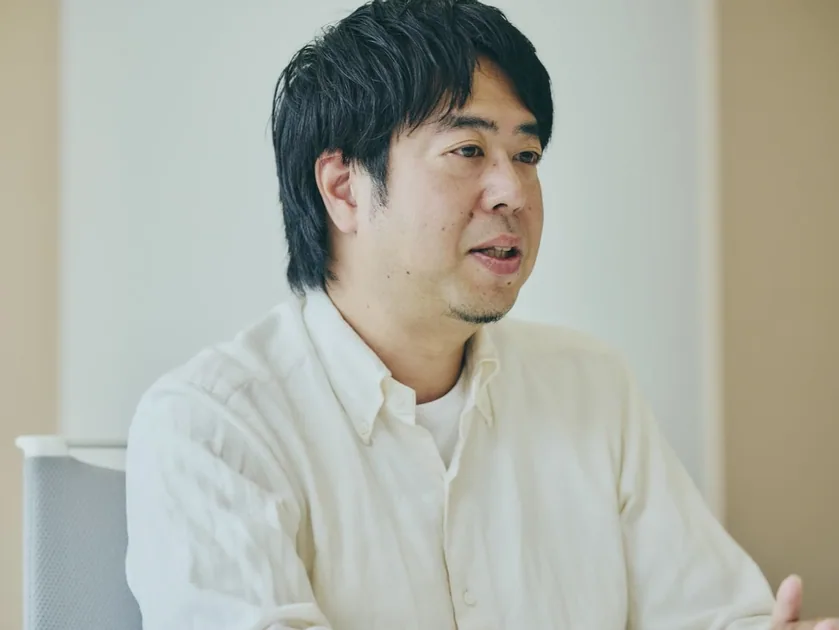
Mercari Moves AI Leadership Into HR as It Tests AI-Native Workflows
Image source: CNET Japan

Mercari is moving one of its senior technology leaders into the center of its people strategy as the Japanese marketplace company tests what an AI-native organization could look like.

Toshiya Kimura, who has served as CTO of Mercari's Japan business since July 2024, is taking on the roles of CHRO and CAIO.

The unusual shift from technology leadership to human resources gives Mercari a single executive link between AI adoption, organizational design and employee policy.

What Changed

Kimura said the move follows his work leading Mercari's companywide AI task force over the past year.

Employees are already using AI tools in regular work, but Mercari is questioning whether tool adoption alone is enough to become an AI-native company.

The company has been testing that question inside its development organization through a structure it calls AI Pods.

Instead of a conventional setup with one manager, around eight engineers and one or two project managers, the pods are designed to be smaller teams that can make decisions faster and work across engineering, product and design boundaries.

The experiment has shown both promise and limits.

Kimura said decision-making became faster and communication simpler, but engineers still struggled when AI was used to move into unfamiliar areas such as design or compliance consultation.

That matters because the bottleneck is not only the AI tool.

It is also the operating model around approvals, resource allocation, governance and evaluation.

Why It Matters

Mercari's decision points to a wider issue for large digital companies in Japan and elsewhere: AI adoption is becoming an organizational problem, not just a software rollout.

If employees use AI but decision rights, compliance reviews and talent systems remain unchanged, the productivity gain may be uneven.

Kimura said HR is close to the company's core because it shapes pay guidelines, evaluation, organization design and the policies that affect how people work.

By combining CHRO and CAIO responsibilities, Mercari is trying to connect AI transformation with the mechanisms that govern the workforce.

The company is considering three pillars.

The first is making the HR organization itself AI-first, including data-driven AI use in recruiting and operations.

Mercari then plans to use the capacity and lessons from HR to propose new organizational models and extend experiments into functions such as finance and legal.

Who Is Affected

The first affected group is Mercari's own workforce, which numbers about 2,000 employees.

Kimura said AI could change talent management by helping the company understand individual skills more deeply and create more personalized growth plans.

He also suggested that AI analysis could support fairer opportunity allocation and more optimized organization design.

Corporate departments may also face pressure to change.

If product development speeds up, functions such as legal checks, compliance and security reviews need faster ways to respond without weakening governance.

What To Watch Next

Mercari has already created an AI governance team that brings together legal, privacy, security, public policy and AI expertise.

That structure will be important if the company expands AI-native work patterns beyond engineering.

The key question is whether Mercari can turn AI Pods and HR-led experiments into a repeatable operating model for a company of its size.

The next signal is whether dedicated AI leadership remains necessary while Mercari adjusts its operating model over a one-to-two-year window.

Readers should watch whether Mercari shares not only successful cases but also experiments that did not work, which could make the company's internal redesign useful as a signal for other Japanese technology businesses.
Share this article
inXf

Related articles

More
Japan’s Gennai AI Push Tests Public-Sector Guardrails For Diet Answers
AI

Japan’s Gennai AI Push Tests Public-Sector Guardrails For Diet Answers

Japan’s government is using its in-house generative AI system Gennai to help prepare Diet answer documents as officials defend the workflow against criticism. Digital Minister Matsumoto said Gennai can identify related systems and past answers, while staff still revise outputs and check facts before material reaches the minister. The practical test is whether the tool reduces late-night bureaucratic work without turning parliamentary answers into unchecked AI output.

Amazon Tests Conversational Warehouse Robots as Europe Rollout Looms
AI

Amazon Tests Conversational Warehouse Robots as Europe Rollout Looms

Amazon unveiled a next-generation Proteus warehouse robot that can follow plain-language worker commands. The original Proteus is used in 25 U.S. fulfillment centers, and Amazon plans a Europe rollout in the first half of 2027. The practical test is whether Amazon can expand warehouse robotics while matching automation gains with skilled fulfillment roles.

Airbnb’s Chesky Tests Whether AI Needs Its Own Interface Lab
AI

Airbnb’s Chesky Tests Whether AI Needs Its Own Interface Lab

Brian Chesky is preparing to support a separate AI research effort centered on interface design while keeping his Airbnb CEO role. Airbnb’s AI markers include 40% customer-support automation, conversational search built around a large language model, and a planned voice assistant later this year. The central question is whether a founder-led lab can turn interface research into useful consumer AI without a disclosed team, funding amount or timeline.

UAE Banks Lead Regional Responsible AI Push as Adoption Gap Narrows
AI

UAE Banks Lead Regional Responsible AI Push as Adoption Gap Narrows

Emirates NBD ranked first and First Abu Dhabi Bank ranked third in a responsible AI index for Middle East and Africa banks. The Evident AI Index surveyed more than 100 companies and weighted talent highest at 45 per cent across four assessment metrics. The practical test is whether UAE banks can turn responsible AI rankings into measurable deployment across customer engagement, risk analytics and core banking workflows.

Keep Reading

More Stories

Latest
Apple AI Architecture Puts Google And Nvidia Inside Its Privacy TestAIJun 9, 2026Apple AI Architecture Puts Google And Nvidia Inside Its Privacy TestApple is using Google and Nvidia to support its most advanced cloud AI model while trying to keep Apple Intelligence centered on private orchestration, proprietary models and on-device context.Amazon-Corning Fiber Deal Puts Optics Inside The AI Data Center BottleneckCloud & Data CentersJun 9, 2026Amazon-Corning Fiber Deal Puts Optics Inside The AI Data Center BottleneckAmazon has reached a multi-year optical fiber and networking agreement with Corning, adding North Carolina manufacturing jobs and highlighting fiber capacity as a practical constraint in AI data center expansion.Check Point VPN Exploitation Puts Legacy IKEv1 Access In The Ransomware SpotlightCybersecurityJun 8, 2026Check Point VPN Exploitation Puts Legacy IKEv1 Access In The Ransomware SpotlightA critical Check Point VPN flaw, CVE-2026-50751, is being exploited against legacy IKEv1 remote-access configurations, with activity tied in one case to a Qilin ransomware affiliate and a second related VPN issue also disclosed.Silent Ransom Group Uses Fake IT Support Calls to Pressure Law FirmsCybersecurityJun 8, 2026Silent Ransom Group Uses Fake IT Support Calls to Pressure Law FirmsSilent Ransom Group is targeting U.S. law firms and professional services organizations with fake IT support calls, remote access tools and rapid data-theft extortion. Mandiant links the activity to UNC3753, Luna Moth and Chatty Spider, while the FBI has warned of related social engineering and in-person theft attempts.Alphabet’s $85 Billion AI Financing Push Tests Data Center Investor AppetiteCloud & Data CentersJun 8, 2026Alphabet’s $85 Billion AI Financing Push Tests Data Center Investor AppetiteAlphabet is seeking $85 billion in equity financing after raising its capex outlook to as high as $190 billion. The company is presenting Google Cloud growth, AI adoption and lower Gemini serving costs as evidence that its data center spending can support long-term AI demand.Apple WWDC 2026 Turns Siri Into the Test of Its AI CredibilityAIJun 8, 2026Apple WWDC 2026 Turns Siri Into the Test of Its AI CredibilityApple is expected to put Siri back at the center of WWDC 2026 after delays to its promised Apple Intelligence assistant. The event is likely to test whether Apple can turn contextual awareness, chatbot-style interaction and agentic voice tasks into reliable platform features.ChatGPT Lockdown Mode Narrows AI Data Exfiltration PathsCybersecurityJun 8, 2026ChatGPT Lockdown Mode Narrows AI Data Exfiltration PathsOpenAI is rolling out Lockdown Mode for eligible ChatGPT users to reduce data exfiltration risk from prompt injection. The optional setting limits outbound web and tool capabilities, trading some product flexibility for stronger containment around sensitive workflows.Smart TV Proxy SDKs Turn Free Apps Into a Hidden AI Scraping Supply ChainCybersecurityJun 7, 2026Smart TV Proxy SDKs Turn Free Apps Into a Hidden AI Scraping Supply ChainBright Data's SDK has been reverse-engineered in research showing how free apps can turn consumer devices, including smart TVs, into residential proxy nodes for web-scraping traffic. The issue matters because AI data harvesting is increasing demand for residential IPs, while consent screens and background network behavior may not be clear to users or IT teams.Stratos Data Center Cuts Utah Plan as Water Backlash Tests AI Infrastructure GrowthAIJun 7, 2026Stratos Data Center Cuts Utah Plan as Water Backlash Tests AI Infrastructure GrowthA Kevin O'Leary-backed Utah data center plan has been cut back after water and transparency objections, showing how local resistance can reshape AI infrastructure projects.Dubai Hotels Turn to Residents as Tourism Shock Tests Luxury DemandEconomyJun 7, 2026Dubai Hotels Turn to Residents as Tourism Shock Tests Luxury DemandDubai luxury hotels are using resident staycation discounts to offset weaker international tourism, but the source shows weekend demand cannot fully replace longer foreign stays.Ciena's $50 Billion AI Network Target Puts Optical Capacity on the Hyperscaler ClockChips & SemiconductorsJun 7, 2026Ciena's $50 Billion AI Network Target Puts Optical Capacity on the Hyperscaler ClockCiena says AI demand could roughly double its addressable market to about $50 billion by 2029 as hyperscalers and service providers invest in optical networking. It cited RLS Hyper Rail, DCOM, coherent modules and 400G/800G pluggable optics as demand areas while planning $250 million to $275 million in capex this year. The practical test is whether AI compute buildouts convert into durable network orders.liko.ai Funding Turns Edge AI Into a Smart-Home Hardware TestAIJun 7, 2026liko.ai Funding Turns Edge AI Into a Smart-Home Hardware Testliko.ai completed its first-round financing to fund edge-side vision-language models, AI-native hardware and multi-modal home terminals. The investor group includes Shangtang Guoxiang Capital, Orient Fortune Capital, iFlytek Venture Capital, Hongtai Fund, Zhengxuan Investment and Mianbi Intelligence. The practical test is whether the startup can turn camera-based edge AI into a consumer smart-home hub without relying on cloud processing.