SendTech Times
News
CAPACITY TEST:

Nvidia ‘likely the most concerned’ as Huawei bets on new chip architecture law

Article summary

Huawei says its new Tau Scaling Law could support transistor density equivalent to a 1.4-nanometre process in high-end chips by 2031. Analysts said the move could weaken US-led export-control leverage as China pushes semiconductor self-sufficiency under sanctions. Omdia said Nvidia is likely the most concerned, while Chinese state media cast the effort as a technological Long March.
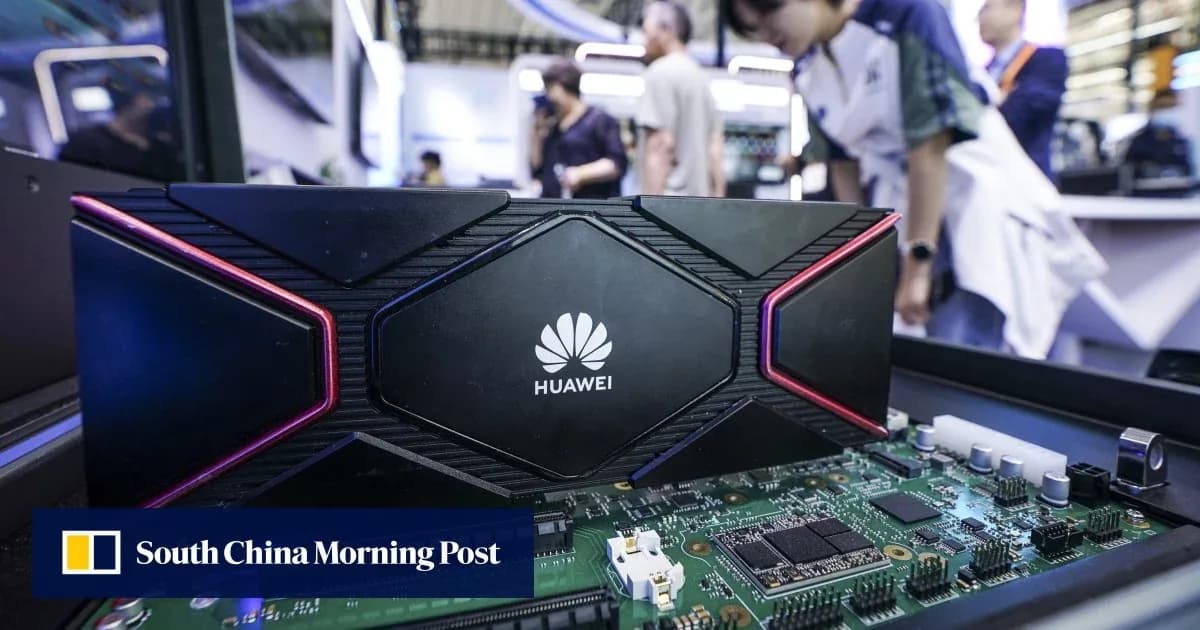
Nvidia ‘likely the most concerned’ as Huawei bets on new chip architecture law
Image source: South China Morning Post

Huawei Technologies’ new chip architecture law is being read by analysts as a fresh test of whether China can push past US-led technology restrictions — and as a development that may worry Nvidia more than any other company.

On Monday, Huawei introduced its Tau (τ) Scaling Law, which it said lays the groundwork to reach transistor density equivalent to a 1.4-nanometre process in high-end chips by 2031.

If that holds up in practice, it would narrow the gap with leading semiconductor companies and offer a new route around a manufacturing bottleneck created by sanctions.

Huawei’s case for a new path

Huawei said the new law could deliver performance gains in both smartphone chips and artificial intelligence computing systems.

US-led sanctions block China’s semiconductor industry from accessing the most advanced chipmaking technologies, including extreme ultraviolet lithography machines required for 3nm nodes and below.

He Tingbo, chairwoman of the Huawei Scientist Committee and president of Huawei’s semiconductor business department, said new EUV tools would no longer be necessary to reach these advanced nodes.

Liao Heng, chief scientist at Huawei’s semiconductor department, tied the approach to rising demand for computing power in the AI race.

“By 2035, our single chip module performance can be expected to increase by 100-fold, and system level performance can be expected to increase by 1,000 times,” Liao said.

He added that the path had “effectively tackled” the challenge of computing power availability, which he said was an anxiety in China and around the world.

Analysts link the move to export controls and Nvidia

Gary Ng, senior economist at Natixis Corporate and Investment Bank, said “the US will have less leverage over export control as China becomes more self-sufficient”, while cautioning that the Tau law still needed to be “tested in practice”.

James Lambert, head of Asia consulting at Oxford Economics, said the development pointed to China’s broader adaptation to Western technology restrictions.

He said Chinese firms were increasingly investing in alternative domestic AI and semiconductor pathways rather than depending on Western ones.

Wall Street research firm Bernstein called the announcement “another DeepSeek moment”.

Analyst Lin Qingyuan wrote that, if executed successfully, it could give the Chinese semiconductor industry more confidence to invest locally and build a fuller domestic semiconductor stack.

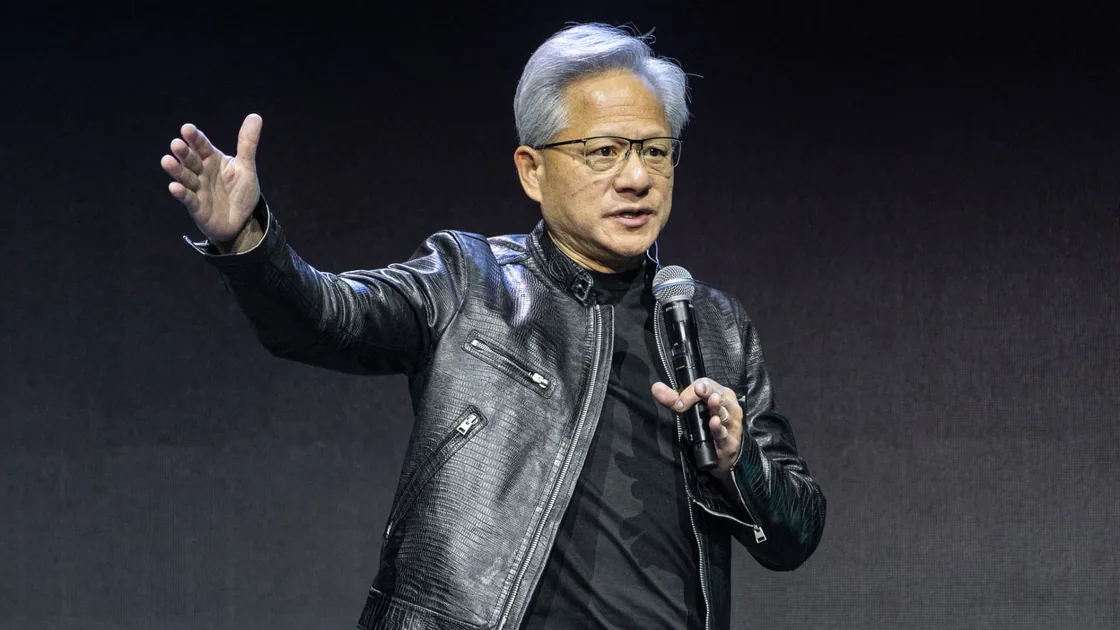
He Hui, director of semiconductor research at Omdia, said “Nvidia is likely the most concerned by this development”.

He said Nvidia had already lost half of its market share in China and now faced domestic chips that had nearly closed the gap with the H200.

The report also noted that China has yet to approve domestic sales of Nvidia’s H200 AI chips.

State media frames the effort as a Long March

Chinese state media welcomed the announcement in political terms.

Communist Party newspaper People’s Daily compared the struggle against US sanctions to “the most tragic and brave Long March in the history of science and technology”.

“Instead of getting stuck in a rut, why not try a different approach?” the paper wrote.
Share this article
inXf

Related articles

More
Nvidia's RTX Spark Turns AI PCs Into the Next Chip Battleground
Chips & Semiconductors

Nvidia's RTX Spark Turns AI PCs Into the Next Chip Battleground

Nvidia is entering the AI PC market with RTX Spark, a MediaTek-linked SoC that combines Blackwell GPU technology with a CPU on a single chip. The move shifts Nvidia's AI strategy closer to edge devices, where agentic AI could run locally instead of relying only on cloud infrastructure. Analysts cited in the source said the PC opportunity is still small compared with Nvidia's data center and networking businesses.

Warren Hearing Request Puts Nvidia China Chip Sales Under Export-Control Scrutiny
Chips & Semiconductors

Warren Hearing Request Puts Nvidia China Chip Sales Under Export-Control Scrutiny

Sen. Elizabeth Warren invited Nvidia CEO Jensen Huang to testify before the Senate Banking Committee on June 11 over China chip sales and export controls. The request focuses on Nvidia's views on U.S. export control laws and its business in China as lawmakers scrutinize advanced AI chip flows. The next signal is whether Huang appears and gives senators enough detail on Nvidia's China strategy and national-security posture.

Nvidia 6G Radio Chip Plan Moves AI-RAN Into Telecom Edge
Chips & Semiconductors

Nvidia 6G Radio Chip Plan Moves AI-RAN Into Telecom Edge

Nvidia is working on a GPU-based chip for 6G radio units, extending AI-RAN into low-PHY radio processing while power, supplier integration and RAN spending remain the key tests.

Bluesky Warns Teen Social Media Bans Could Tighten Big Tech's Grip
Science & Tech

Bluesky Warns Teen Social Media Bans Could Tighten Big Tech's Grip

Bluesky COO Rose Wang warned that teen social media bans could strengthen large technology platforms if compliance costs fall harder on smaller rivals. Australia's ban for under-16s requires age-verification steps and can carry fines of up to 49.5 million Australian dollars, or $35 million, for non-compliance. The practical test is whether online-safety rules can protect young users without making scale and compliance teams the main market advantage.

Keep Reading

More Stories

Latest
Apple AI Architecture Puts Google And Nvidia Inside Its Privacy TestAIJun 9, 2026Apple AI Architecture Puts Google And Nvidia Inside Its Privacy TestApple is using Google and Nvidia to support its most advanced cloud AI model while trying to keep Apple Intelligence centered on private orchestration, proprietary models and on-device context.Amazon-Corning Fiber Deal Puts Optics Inside The AI Data Center BottleneckCloud & Data CentersJun 9, 2026Amazon-Corning Fiber Deal Puts Optics Inside The AI Data Center BottleneckAmazon has reached a multi-year optical fiber and networking agreement with Corning, adding North Carolina manufacturing jobs and highlighting fiber capacity as a practical constraint in AI data center expansion.Check Point VPN Exploitation Puts Legacy IKEv1 Access In The Ransomware SpotlightCybersecurityJun 8, 2026Check Point VPN Exploitation Puts Legacy IKEv1 Access In The Ransomware SpotlightA critical Check Point VPN flaw, CVE-2026-50751, is being exploited against legacy IKEv1 remote-access configurations, with activity tied in one case to a Qilin ransomware affiliate and a second related VPN issue also disclosed.Silent Ransom Group Uses Fake IT Support Calls to Pressure Law FirmsCybersecurityJun 8, 2026Silent Ransom Group Uses Fake IT Support Calls to Pressure Law FirmsSilent Ransom Group is targeting U.S. law firms and professional services organizations with fake IT support calls, remote access tools and rapid data-theft extortion. Mandiant links the activity to UNC3753, Luna Moth and Chatty Spider, while the FBI has warned of related social engineering and in-person theft attempts.Alphabet’s $85 Billion AI Financing Push Tests Data Center Investor AppetiteCloud & Data CentersJun 8, 2026Alphabet’s $85 Billion AI Financing Push Tests Data Center Investor AppetiteAlphabet is seeking $85 billion in equity financing after raising its capex outlook to as high as $190 billion. The company is presenting Google Cloud growth, AI adoption and lower Gemini serving costs as evidence that its data center spending can support long-term AI demand.Apple WWDC 2026 Turns Siri Into the Test of Its AI CredibilityAIJun 8, 2026Apple WWDC 2026 Turns Siri Into the Test of Its AI CredibilityApple is expected to put Siri back at the center of WWDC 2026 after delays to its promised Apple Intelligence assistant. The event is likely to test whether Apple can turn contextual awareness, chatbot-style interaction and agentic voice tasks into reliable platform features.ChatGPT Lockdown Mode Narrows AI Data Exfiltration PathsCybersecurityJun 8, 2026ChatGPT Lockdown Mode Narrows AI Data Exfiltration PathsOpenAI is rolling out Lockdown Mode for eligible ChatGPT users to reduce data exfiltration risk from prompt injection. The optional setting limits outbound web and tool capabilities, trading some product flexibility for stronger containment around sensitive workflows.Smart TV Proxy SDKs Turn Free Apps Into a Hidden AI Scraping Supply ChainCybersecurityJun 7, 2026Smart TV Proxy SDKs Turn Free Apps Into a Hidden AI Scraping Supply ChainBright Data's SDK has been reverse-engineered in research showing how free apps can turn consumer devices, including smart TVs, into residential proxy nodes for web-scraping traffic. The issue matters because AI data harvesting is increasing demand for residential IPs, while consent screens and background network behavior may not be clear to users or IT teams.Stratos Data Center Cuts Utah Plan as Water Backlash Tests AI Infrastructure GrowthAIJun 7, 2026Stratos Data Center Cuts Utah Plan as Water Backlash Tests AI Infrastructure GrowthA Kevin O'Leary-backed Utah data center plan has been cut back after water and transparency objections, showing how local resistance can reshape AI infrastructure projects.Dubai Hotels Turn to Residents as Tourism Shock Tests Luxury DemandEconomyJun 7, 2026Dubai Hotels Turn to Residents as Tourism Shock Tests Luxury DemandDubai luxury hotels are using resident staycation discounts to offset weaker international tourism, but the source shows weekend demand cannot fully replace longer foreign stays.Ciena's $50 Billion AI Network Target Puts Optical Capacity on the Hyperscaler ClockChips & SemiconductorsJun 7, 2026Ciena's $50 Billion AI Network Target Puts Optical Capacity on the Hyperscaler ClockCiena says AI demand could roughly double its addressable market to about $50 billion by 2029 as hyperscalers and service providers invest in optical networking. It cited RLS Hyper Rail, DCOM, coherent modules and 400G/800G pluggable optics as demand areas while planning $250 million to $275 million in capex this year. The practical test is whether AI compute buildouts convert into durable network orders.liko.ai Funding Turns Edge AI Into a Smart-Home Hardware TestAIJun 7, 2026liko.ai Funding Turns Edge AI Into a Smart-Home Hardware Testliko.ai completed its first-round financing to fund edge-side vision-language models, AI-native hardware and multi-modal home terminals. The investor group includes Shangtang Guoxiang Capital, Orient Fortune Capital, iFlytek Venture Capital, Hongtai Fund, Zhengxuan Investment and Mianbi Intelligence. The practical test is whether the startup can turn camera-based edge AI into a consumer smart-home hub without relying on cloud processing.