SendTech Times
News
CAPACITY TEST:

Nvidia’s Taipei GTC underscores Taiwan’s rising role in the global AI infrastructure race

Article summary

Nvidia will hold GTC Taipei from June 1-4, 2026, for the second consecutive year, alongside COMPUTEX Taipei. Jensen Huang is scheduled to keynote on June 1, with sessions focused on AI infrastructure, agentic AI, reasoning AI, science, robotics, and edge systems. The event matters because it reinforces Taiwan’s importance not just as a hardware supply base, but as a strategic stage for the next phase of AI platform competition.
Nvidia’s Taipei GTC underscores Taiwan’s rising role in the global AI infrastructure race
Image source: Focus Taiwan - CNA English News

What Happened

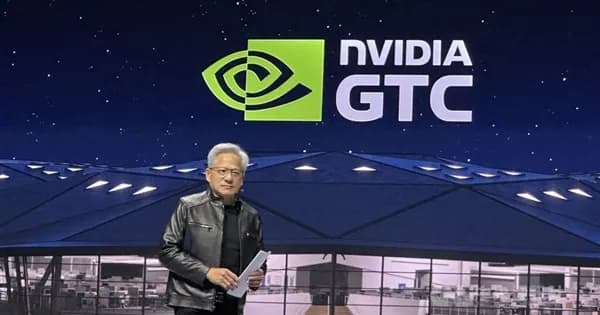
Nvidia will return its GPU Technology Conference to Taipei in June 2026 for the second consecutive year, aligning the event with COMPUTEX Taipei, the annual global computer and technology trade show.

The conference is scheduled for June 1-4 and will take place at the Taipei International Convention Center and other venues across the city.

Jensen Huang, Nvidia’s founder and CEO, is set to deliver the opening keynote at 11 a.m. on June 1 at the Taipei Music Center.

Company materials indicate the conference will explore “the next generation of AI,” with programming covering AI factories and scaling infrastructure, agentic AI, reasoning AI, AI for science, physical AI, and robotics.

Nvidia executives including Justin Boitano and Deepu Talla are also scheduled to speak.

COMPUTEX Taipei will run June 2-5, 2026, under the theme “AI Together.”

Why It Matters

This is more than a conference scheduling decision.

Holding GTC Taipei again alongside COMPUTEX suggests Nvidia sees Taiwan as a central convening point for the companies building and commercializing AI systems.

The combination of Nvidia’s developer and infrastructure agenda with COMPUTEX’s broad hardware ecosystem could strengthen Taipei’s role as a meeting ground for chipmakers, server vendors, component suppliers, developers, and enterprise buyers.

The topic mix also signals where Nvidia wants market attention: not only on chips, but on full-stack AI deployment.

References to AI factories, scaling infrastructure, reasoning models, and robotics indicate a push to frame AI as an industrial platform rather than a narrow data-center product category.

If that message lands, it could further shift spending conversations from experimentation toward capacity buildout and operational deployment.

Global Context

GTC began in San Jose in 2009, and the San Jose Convention Center remains its usual venue.

Bringing the event back to Taipei in 2026 highlights how the geography of AI competition increasingly overlaps with the geography of advanced electronics manufacturing and system integration.

In broader industry terms, AI competition is no longer only about model releases.

It also involves control over compute supply, packaging, servers, networking, edge deployment, robotics integration, and developer ecosystems.

Taiwan sits near the center of several of those layers.

In that context, Nvidia’s continued presence in Taipei could help it reinforce ecosystem loyalty at a time when global AI infrastructure competition remains intense.

Industry Impact

For hardware and supply-chain participants, the event could serve as a signal-setting moment for product roadmaps and ecosystem priorities around AI servers, edge systems, and robotics.

For software developers and enterprise IT teams, the conference themes suggest continued emphasis on moving from model access to production-grade deployment, especially where inference efficiency, reasoning workflows, and physical-world automation matter.

For competing AI infrastructure providers, the Taipei event may also function as a visibility contest.

Developer mindshare, partner alignment, and ecosystem messaging can matter nearly as much as raw hardware performance when large buyers decide how to standardize future AI deployments.

What To Watch Next

Investors and industry participants will likely watch Huang’s keynote for any sharper signals on Nvidia’s priorities across data-center scaling, edge AI, robotics, and enterprise deployment.

The practical significance of the event may depend on whether Nvidia uses Taipei to introduce new platform direction, deepen ecosystem ties, or simply amplify themes already outlined elsewhere.

Two other watch points stand out.

First, whether conference messaging translates into concrete partner announcements during the COMPUTEX week.

Second, whether Nvidia provides any clearer indicators on deployment scale or commercial adoption, which were not detailed in the article.

Those metrics would help determine whether the Taipei event is primarily a branding platform or a marker of deeper market execution.


Share this article
inXf

Related articles

More
Marvell Teralynx T100 Puts AI Data-Center Switching Into the Chip Race
Chips & Semiconductors

Marvell Teralynx T100 Puts AI Data-Center Switching Into the Chip Race

Marvell announced planned availability of its Teralynx T100 switch chip for AI training and inference infrastructure. The 102.4 Tbps chip is built on a 3nm process, supports up to a 512-port radix and is claimed to use 25 percent lower power than competitive solutions. The practical test is whether data-center customers use lower-power, high-radix switching to ease latency and power constraints in larger AI clusters.

Ciena's $50 Billion AI Network Target Puts Optical Capacity on the Hyperscaler Clock
Chips & Semiconductors

Ciena's $50 Billion AI Network Target Puts Optical Capacity on the Hyperscaler Clock

Ciena says AI demand could roughly double its addressable market to about $50 billion by 2029 as hyperscalers and service providers invest in optical networking. It cited RLS Hyper Rail, DCOM, coherent modules and 400G/800G pluggable optics as demand areas while planning $250 million to $275 million in capex this year. The practical test is whether AI compute buildouts convert into durable network orders.

Google Compute Lease Turns SpaceX Data Centers Into an AI Capacity Test
Cloud & Data Centers

Google Compute Lease Turns SpaceX Data Centers Into an AI Capacity Test

SpaceX lined up a Google compute agreement that gives Google access to about 110,000 NVIDIA GPUs and related components. The filing-based terms call for $920 million a month from October 2026 through June 2029, with delivery protections if GPU access is not ready by September 30, 2026. The next signal is whether SpaceX can turn AI data-center capacity into reliable third-party infrastructure before Google's bridge-capacity need changes.

Warren Hearing Request Puts Nvidia China Chip Sales Under Export-Control Scrutiny
Chips & Semiconductors

Warren Hearing Request Puts Nvidia China Chip Sales Under Export-Control Scrutiny

Sen. Elizabeth Warren invited Nvidia CEO Jensen Huang to testify before the Senate Banking Committee on June 11 over China chip sales and export controls. The request focuses on Nvidia's views on U.S. export control laws and its business in China as lawmakers scrutinize advanced AI chip flows. The next signal is whether Huang appears and gives senators enough detail on Nvidia's China strategy and national-security posture.

Keep Reading

More Stories

Latest
Nvidia 6G Radio Chip Plan Moves AI-RAN Into Telecom EdgeChips & SemiconductorsJun 9, 2026Nvidia 6G Radio Chip Plan Moves AI-RAN Into Telecom EdgeNvidia is working on a GPU-based chip for 6G radio units, extending AI-RAN into low-PHY radio processing while power, supplier integration and RAN spending remain the key tests.Apple AI Architecture Puts Google And Nvidia Inside Its Privacy TestAIJun 9, 2026Apple AI Architecture Puts Google And Nvidia Inside Its Privacy TestApple is using Google and Nvidia to support its most advanced cloud AI model while trying to keep Apple Intelligence centered on private orchestration, proprietary models and on-device context.Amazon-Corning Fiber Deal Puts Optics Inside The AI Data Center BottleneckCloud & Data CentersJun 9, 2026Amazon-Corning Fiber Deal Puts Optics Inside The AI Data Center BottleneckAmazon has reached a multi-year optical fiber and networking agreement with Corning, adding North Carolina manufacturing jobs and highlighting fiber capacity as a practical constraint in AI data center expansion.Check Point VPN Exploitation Puts Legacy IKEv1 Access In The Ransomware SpotlightCybersecurityJun 8, 2026Check Point VPN Exploitation Puts Legacy IKEv1 Access In The Ransomware SpotlightA critical Check Point VPN flaw, CVE-2026-50751, is being exploited against legacy IKEv1 remote-access configurations, with activity tied in one case to a Qilin ransomware affiliate and a second related VPN issue also disclosed.Silent Ransom Group Uses Fake IT Support Calls to Pressure Law FirmsCybersecurityJun 8, 2026Silent Ransom Group Uses Fake IT Support Calls to Pressure Law FirmsSilent Ransom Group is targeting U.S. law firms and professional services organizations with fake IT support calls, remote access tools and rapid data-theft extortion. Mandiant links the activity to UNC3753, Luna Moth and Chatty Spider, while the FBI has warned of related social engineering and in-person theft attempts.Alphabet’s $85 Billion AI Financing Push Tests Data Center Investor AppetiteCloud & Data CentersJun 8, 2026Alphabet’s $85 Billion AI Financing Push Tests Data Center Investor AppetiteAlphabet is seeking $85 billion in equity financing after raising its capex outlook to as high as $190 billion. The company is presenting Google Cloud growth, AI adoption and lower Gemini serving costs as evidence that its data center spending can support long-term AI demand.Apple WWDC 2026 Turns Siri Into the Test of Its AI CredibilityAIJun 8, 2026Apple WWDC 2026 Turns Siri Into the Test of Its AI CredibilityApple is expected to put Siri back at the center of WWDC 2026 after delays to its promised Apple Intelligence assistant. The event is likely to test whether Apple can turn contextual awareness, chatbot-style interaction and agentic voice tasks into reliable platform features.ChatGPT Lockdown Mode Narrows AI Data Exfiltration PathsCybersecurityJun 8, 2026ChatGPT Lockdown Mode Narrows AI Data Exfiltration PathsOpenAI is rolling out Lockdown Mode for eligible ChatGPT users to reduce data exfiltration risk from prompt injection. The optional setting limits outbound web and tool capabilities, trading some product flexibility for stronger containment around sensitive workflows.Smart TV Proxy SDKs Turn Free Apps Into a Hidden AI Scraping Supply ChainCybersecurityJun 7, 2026Smart TV Proxy SDKs Turn Free Apps Into a Hidden AI Scraping Supply ChainBright Data's SDK has been reverse-engineered in research showing how free apps can turn consumer devices, including smart TVs, into residential proxy nodes for web-scraping traffic. The issue matters because AI data harvesting is increasing demand for residential IPs, while consent screens and background network behavior may not be clear to users or IT teams.Stratos Data Center Cuts Utah Plan as Water Backlash Tests AI Infrastructure GrowthAIJun 7, 2026Stratos Data Center Cuts Utah Plan as Water Backlash Tests AI Infrastructure GrowthA Kevin O'Leary-backed Utah data center plan has been cut back after water and transparency objections, showing how local resistance can reshape AI infrastructure projects.Dubai Hotels Turn to Residents as Tourism Shock Tests Luxury DemandEconomyJun 7, 2026Dubai Hotels Turn to Residents as Tourism Shock Tests Luxury DemandDubai luxury hotels are using resident staycation discounts to offset weaker international tourism, but the source shows weekend demand cannot fully replace longer foreign stays.liko.ai Funding Turns Edge AI Into a Smart-Home Hardware TestAIJun 7, 2026liko.ai Funding Turns Edge AI Into a Smart-Home Hardware Testliko.ai completed its first-round financing to fund edge-side vision-language models, AI-native hardware and multi-modal home terminals. The investor group includes Shangtang Guoxiang Capital, Orient Fortune Capital, iFlytek Venture Capital, Hongtai Fund, Zhengxuan Investment and Mianbi Intelligence. The practical test is whether the startup can turn camera-based edge AI into a consumer smart-home hub without relying on cloud processing.