SendTech Times
Analysis
CAPACITY TEST:

Taiwan Visit Highlights How AI Demand Is Pulling Chip Power, Capacity and Pricing Into One Orbit

Article summary

Jensen Huang’s Taiwan visit was centered on partner meetings, a planned discussion with TSMC Chairman C.C. Wei, and Nvidia appearances tied to the Computex cycle. The episode points to a broader market phase in which AI chip demand is increasingly shaped by foundry access, packaging readiness, memory costs and ecosystem coordination. Investors, suppliers and device makers should watch whether Taiwan-related expansion signals translate into concrete capacity, site, and pricing outcomes.

Taiwan Visit Highlights How AI Demand Is Pulling Chip Power, Capacity and Pricing Into One Orbit
Image source: Focus Taiwan - CNA English News

The Market Signal

In a May 2026 retrospective reading of this episode, the visit stands out less as a standalone celebrity arrival and more as a supply-chain signal.

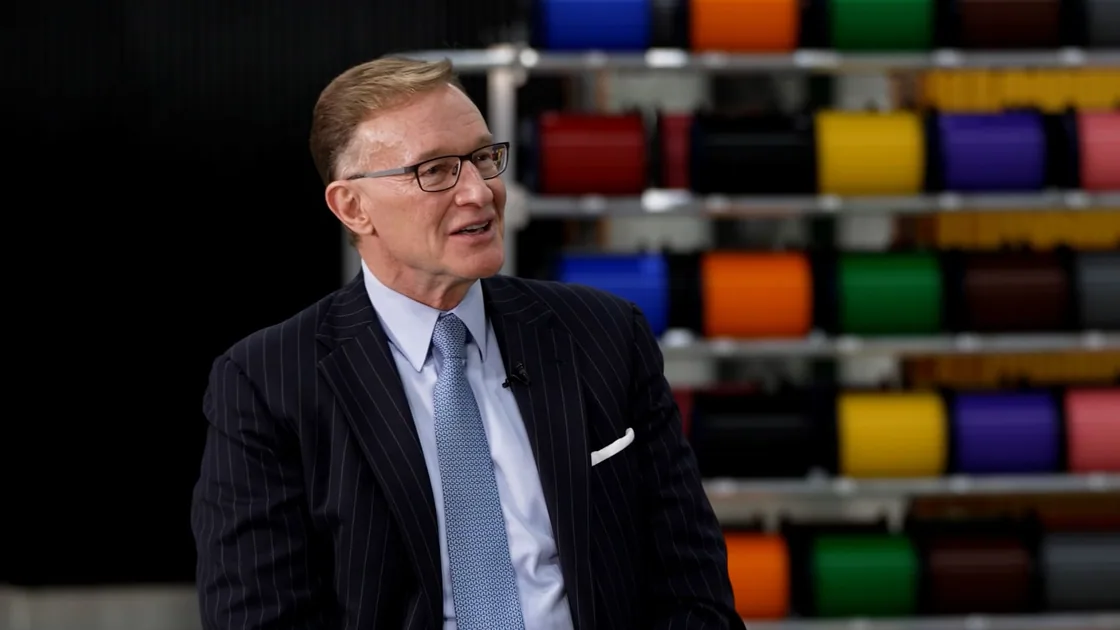
Focus Taiwan reported that Nvidia CEO Jensen Huang arrived in Taiwan on May 23 ahead of AI and technology events, saying he planned to meet clients and TSMC Chairman C.C.

Wei during the trip.

After landing at Taipei Songshan Airport, he said he had “a lot to do” and later went to Taipei’s Nangang District for Nvidia’s “Meet-a-Claw” developer event.

He was also scheduled to deliver a keynote at the Taipei Music Center on June 1 to open that year’s Computex Taipei.

During the visit, Huang addressed several commercially important topics.

On Nvidia’s reported planned headquarters site in Taipei’s Beitou Shilin Technology Park, he said that if the company held an event, he would attend and might unveil the building’s design.

On AI business, he said Nvidia works closely with partners and supports them while receiving support in return.

On memory pricing, he said nearly all electronics rely on memory chips and that rising memory prices could significantly affect consumer electronics prices, describing it as an important form of inflation and expressing hope that suppliers could expand output quickly.

Why It Matters

The significance lies in the combination of three signals arriving together: executive attention to Taiwan, direct engagement with TSMC leadership, and public concern about memory pricing.

Those elements matter because advanced AI systems depend not just on chip design leadership but on synchronized access to fabrication, advanced packaging, high-bandwidth memory, board-level integration, and server deployment.

The article also places Huang’s comments alongside AMD’s recently announced plan to invest more than US$10 billion in Taiwan’s industrial ecosystem to expand strategic partnerships and meet demand for AI infrastructure.

That juxtaposition suggests that Taiwan was being treated not only as a manufacturing base but as a competitive coordination hub for the AI compute cycle.

When major chip companies intensify local engagement at the same time, it can indicate that ecosystem control is becoming as strategic as product performance.

Cycle Context

This fits a broader market pattern in which AI demand can tighten multiple parts of the hardware stack at once.

In that kind of cycle, leading compute vendors may benefit from strong order books, but margins, shipment timing, and customer adoption can still depend on bottlenecks outside the GPU itself.

Memory is one obvious choke point.

If memory prices rise sharply, the cost of AI servers and even broader consumer electronics could increase, potentially shifting purchasing behavior across data center and device markets.

More broadly, Taiwan’s role in the AI cycle has likely become more central because foundry capability and related supply-chain specialization remain difficult to replicate quickly.

A meeting between Nvidia’s CEO and TSMC’s chairman may therefore be read as part of the normal competitive choreography of the AI infrastructure race rather than a routine courtesy.

It could reflect ongoing alignment around production planning, technology roadmaps, or supply priorities, though the article does not confirm any specific outcome from the meeting.

Who Is Exposed

The most immediate exposure sits with chip designers, foundries, memory suppliers, server makers, and cloud infrastructure buyers.

For chip designers such as Nvidia and AMD, competitive advantage may depend not only on architecture and software ecosystems but also on how reliably they secure manufacturing and component supply.

For TSMC and its surrounding ecosystem, concentrated demand from AI leaders can strengthen strategic importance while increasing execution pressure.

Memory suppliers are exposed because capacity decisions could affect pricing stability across both AI systems and consumer electronics.

Hardware buyers are exposed because higher component costs may flow into server budgets, PC and device pricing, or deployment timelines.

Developers and enterprise customers are also indirectly exposed: if infrastructure costs remain high, AI deployment economics could become harder to justify for smaller buyers than for hyperscale operators.

What To Watch Next

First, watch whether Taiwan-related Nvidia expansion plans produce confirmed milestones, including any event, building design reveal, or later groundbreaking activity linked to the Beitou Shilin Technology Park site.

Huang only said he would attend if such an event were held.

Second, monitor whether meetings with TSMC translate into visible supply outcomes, such as improved shipment cadence, stronger packaging availability, or commentary on production readiness.

No such outcomes were confirmed in the article.

Third, watch memory pricing.

If suppliers expand capacity fast enough, pricing pressure could ease; if not, inflationary effects may continue to ripple through AI systems and consumer electronics.

Finally, watch the competitive rhythm around Computex-style ecosystem events.

In this market phase, keynote stages and partner meetings can function as early indicators of where design wins, supply commitments, and infrastructure spending may be heading next.


Share this article
inXf

Related articles

More
Marvell Teralynx T100 Puts AI Data-Center Switching Into the Chip Race
Chips & Semiconductors

Marvell Teralynx T100 Puts AI Data-Center Switching Into the Chip Race

Marvell announced planned availability of its Teralynx T100 switch chip for AI training and inference infrastructure. The 102.4 Tbps chip is built on a 3nm process, supports up to a 512-port radix and is claimed to use 25 percent lower power than competitive solutions. The practical test is whether data-center customers use lower-power, high-radix switching to ease latency and power constraints in larger AI clusters.

Ciena's $50 Billion AI Network Target Puts Optical Capacity on the Hyperscaler Clock
Chips & Semiconductors

Ciena's $50 Billion AI Network Target Puts Optical Capacity on the Hyperscaler Clock

Ciena says AI demand could roughly double its addressable market to about $50 billion by 2029 as hyperscalers and service providers invest in optical networking. It cited RLS Hyper Rail, DCOM, coherent modules and 400G/800G pluggable optics as demand areas while planning $250 million to $275 million in capex this year. The practical test is whether AI compute buildouts convert into durable network orders.

Google Compute Lease Turns SpaceX Data Centers Into an AI Capacity Test
Cloud & Data Centers

Google Compute Lease Turns SpaceX Data Centers Into an AI Capacity Test

SpaceX lined up a Google compute agreement that gives Google access to about 110,000 NVIDIA GPUs and related components. The filing-based terms call for $920 million a month from October 2026 through June 2029, with delivery protections if GPU access is not ready by September 30, 2026. The next signal is whether SpaceX can turn AI data-center capacity into reliable third-party infrastructure before Google's bridge-capacity need changes.

AI Data-Centre Spending Turns Energy Costs Into an Inflation Test
Cloud & Data Centers

AI Data-Centre Spending Turns Energy Costs Into an Inflation Test

AI infrastructure spending is pushing data-centre power demand, construction costs and debt issuance into the inflation debate. Pew Research Centre counted more than 3,000 operational US data centres and about 1,500 more under construction or in early development. The practical test is whether productivity gains arrive before power, construction and financing costs spread further through the economy.

Keep Reading

More Stories

Latest
Nvidia 6G Radio Chip Plan Moves AI-RAN Into Telecom EdgeChips & SemiconductorsJun 9, 2026Nvidia 6G Radio Chip Plan Moves AI-RAN Into Telecom EdgeNvidia is working on a GPU-based chip for 6G radio units, extending AI-RAN into low-PHY radio processing while power, supplier integration and RAN spending remain the key tests.Apple AI Architecture Puts Google And Nvidia Inside Its Privacy TestAIJun 9, 2026Apple AI Architecture Puts Google And Nvidia Inside Its Privacy TestApple is using Google and Nvidia to support its most advanced cloud AI model while trying to keep Apple Intelligence centered on private orchestration, proprietary models and on-device context.Amazon-Corning Fiber Deal Puts Optics Inside The AI Data Center BottleneckCloud & Data CentersJun 9, 2026Amazon-Corning Fiber Deal Puts Optics Inside The AI Data Center BottleneckAmazon has reached a multi-year optical fiber and networking agreement with Corning, adding North Carolina manufacturing jobs and highlighting fiber capacity as a practical constraint in AI data center expansion.Check Point VPN Exploitation Puts Legacy IKEv1 Access In The Ransomware SpotlightCybersecurityJun 8, 2026Check Point VPN Exploitation Puts Legacy IKEv1 Access In The Ransomware SpotlightA critical Check Point VPN flaw, CVE-2026-50751, is being exploited against legacy IKEv1 remote-access configurations, with activity tied in one case to a Qilin ransomware affiliate and a second related VPN issue also disclosed.Silent Ransom Group Uses Fake IT Support Calls to Pressure Law FirmsCybersecurityJun 8, 2026Silent Ransom Group Uses Fake IT Support Calls to Pressure Law FirmsSilent Ransom Group is targeting U.S. law firms and professional services organizations with fake IT support calls, remote access tools and rapid data-theft extortion. Mandiant links the activity to UNC3753, Luna Moth and Chatty Spider, while the FBI has warned of related social engineering and in-person theft attempts.Alphabet’s $85 Billion AI Financing Push Tests Data Center Investor AppetiteCloud & Data CentersJun 8, 2026Alphabet’s $85 Billion AI Financing Push Tests Data Center Investor AppetiteAlphabet is seeking $85 billion in equity financing after raising its capex outlook to as high as $190 billion. The company is presenting Google Cloud growth, AI adoption and lower Gemini serving costs as evidence that its data center spending can support long-term AI demand.Apple WWDC 2026 Turns Siri Into the Test of Its AI CredibilityAIJun 8, 2026Apple WWDC 2026 Turns Siri Into the Test of Its AI CredibilityApple is expected to put Siri back at the center of WWDC 2026 after delays to its promised Apple Intelligence assistant. The event is likely to test whether Apple can turn contextual awareness, chatbot-style interaction and agentic voice tasks into reliable platform features.ChatGPT Lockdown Mode Narrows AI Data Exfiltration PathsCybersecurityJun 8, 2026ChatGPT Lockdown Mode Narrows AI Data Exfiltration PathsOpenAI is rolling out Lockdown Mode for eligible ChatGPT users to reduce data exfiltration risk from prompt injection. The optional setting limits outbound web and tool capabilities, trading some product flexibility for stronger containment around sensitive workflows.Smart TV Proxy SDKs Turn Free Apps Into a Hidden AI Scraping Supply ChainCybersecurityJun 7, 2026Smart TV Proxy SDKs Turn Free Apps Into a Hidden AI Scraping Supply ChainBright Data's SDK has been reverse-engineered in research showing how free apps can turn consumer devices, including smart TVs, into residential proxy nodes for web-scraping traffic. The issue matters because AI data harvesting is increasing demand for residential IPs, while consent screens and background network behavior may not be clear to users or IT teams.Stratos Data Center Cuts Utah Plan as Water Backlash Tests AI Infrastructure GrowthAIJun 7, 2026Stratos Data Center Cuts Utah Plan as Water Backlash Tests AI Infrastructure GrowthA Kevin O'Leary-backed Utah data center plan has been cut back after water and transparency objections, showing how local resistance can reshape AI infrastructure projects.Dubai Hotels Turn to Residents as Tourism Shock Tests Luxury DemandEconomyJun 7, 2026Dubai Hotels Turn to Residents as Tourism Shock Tests Luxury DemandDubai luxury hotels are using resident staycation discounts to offset weaker international tourism, but the source shows weekend demand cannot fully replace longer foreign stays.liko.ai Funding Turns Edge AI Into a Smart-Home Hardware TestAIJun 7, 2026liko.ai Funding Turns Edge AI Into a Smart-Home Hardware Testliko.ai completed its first-round financing to fund edge-side vision-language models, AI-native hardware and multi-modal home terminals. The investor group includes Shangtang Guoxiang Capital, Orient Fortune Capital, iFlytek Venture Capital, Hongtai Fund, Zhengxuan Investment and Mianbi Intelligence. The practical test is whether the startup can turn camera-based edge AI into a consumer smart-home hub without relying on cloud processing.