Google DeepMind CEO Proposes Frontier AI Standards Body
SiliconANGLE reported that Google DeepMind chief executive Demis Hassabis proposed a frontier AI standards body that could begin with voluntary model reviews 30 days before release. The proposal names quarterly risk-test refreshes and a launch goal before the end of the year, but does not identify first participating labs, funding commitments or a supervising US agency.
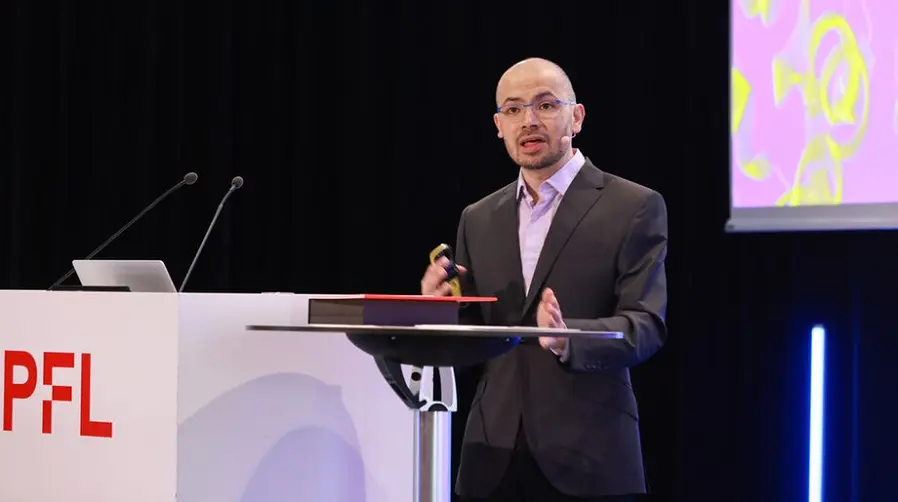
Google DeepMind chief executive Demis Hassabis has proposed a standards body for frontier AI models, with voluntary reviews beginning before wider release and a path to mandatory US market assessments if the process works, SiliconANGLE reported from Hassabis's Substack essay and Axios reporting.
The proposal would have the United States lead a body that creates risk benchmarks for advanced AI systems.
Axios reported that Hassabis has discussed the initiative with the White House, European officials and rival AI labs, and that he hopes to launch the body by the end of the year.
Google DeepMind Proposal Sets Frontier AI Risk Benchmarks
The standards body would test frontier models in sensitive areas including cybersecurity and biology research.
The essay said agentic AI tests could look for attempts to bypass safety guardrails, signs of deception, digital watermarking of AI-generated images and human-readable output tokens that help explain model reasoning.
Risk tests would not remain fixed.
The essay said the body should refresh its evaluations on a quarterly basis, with the cadence potentially accelerating as models change and new risk patterns appear.
SiliconANGLE reported that the proposed body would be modelled on the Financial Industry Regulatory Authority, the US broker regulator funded by the firms it oversees and supervised by the Securities and Exchange Commission.
The AI version would rely on private-sector infrastructure and technical talent for the hardware-intensive work of evaluating advanced models.
Voluntary Reviews Could Start 30 Days Before Release
The essay described the first phase as a voluntary risk-evaluation programme for AI labs.
It said participants could submit models for review 30 days before broad availability, giving the body an initial process for building a formal risk-assessment protocol.
The essay said formalisation could follow quickly once the protocol is shown to be effective and robust.
Under that later version, frontier models would need to pass the assessment before deployment in the US market, and labs would work with the standards body on critical post-release vulnerabilities.
The proposed board would include independent technical experts and open-source representatives, according to the essay.
The source record did not identify prospective board members, participating labs, funding commitments or the agency that would supervise the body if the voluntary process became mandatory.
Anthropic Proposal Gives The Standards Push A Second AI-Lab Voice
The proposal follows a similar idea from Anthropic chief executive Dario Amodei about a month earlier.
SiliconANGLE reported that Amodei suggested a US framework for AI regulation modelled on how the Federal Aviation Administration oversees aviation.
Hassabis's version is narrower in the public record available so far: it names model evaluations, release timing, test refresh cycles and post-release vulnerability handling, while leaving governance and enforcement details outside the proposal.
The public record still lacks named participating labs, launch budget, supervising US agency and a binding timetable beyond the goal to launch the body before the end of the year.
Summary version for Medium
Google DeepMind CEO Proposes Frontier AI Standards Body
What the policy signal means for operators and investors
Quick Summary: SiliconANGLE reported that Google DeepMind chief executive Demis Hassabis proposed a frontier AI standards body that could begin with voluntary model reviews 30 days before release. The proposal names quarterly risk-test refreshes and a launch goal before the end of the year, but does not identify first participating labs, funding commitments or a...
Google DeepMind Proposal Sets Frontier AI Risk Benchmarks
The standards body would test frontier models in sensitive areas including cybersecurity and biology research. The essay said agentic AI tests could look for attempts to bypass safety guardrails, signs of deception, digital watermarking of AI-generated images and human-readable output tokens that help explain model reasoning.
Voluntary Reviews Could Start 30 Days Before Release
The essay described the first phase as a voluntary risk-evaluation programme for AI labs.
- Point 1: The central topic is capital-policy, with the announcement framed around concrete operating detail.
- Point 2: It said participants could submit models for review 30 days before broad availability, giving the body an initial process for building a formal risk-assessment protocol.
The important shift is not the AI label, but the operating boundary it creates for teams.
Anthropic Proposal Gives The Standards Push A Second AI-Lab Voice
The proposal follows a similar idea from Anthropic chief executive Dario Amodei about a month earlier. SiliconANGLE reported that Amodei suggested a US framework for AI regulation modelled on how the Federal Aviation Administration oversees aviation.
Read the Full Deep Dive
Want to explore the complete technical analysis, enterprise trade-offs, and detailed metrics?
Read the full article originally published at SendTech Times