Anthropic’s Fable 5 Suspension Turns Sovereign AI Into A Live Dependency Test
Anthropic’s forced block on Claude Fable 5 and Claude Mythos 5 puts India’s sovereign AI debate on firmer ground, linking model access, export controls and startup architecture choices.
Model Access Becomes The Policy Shock
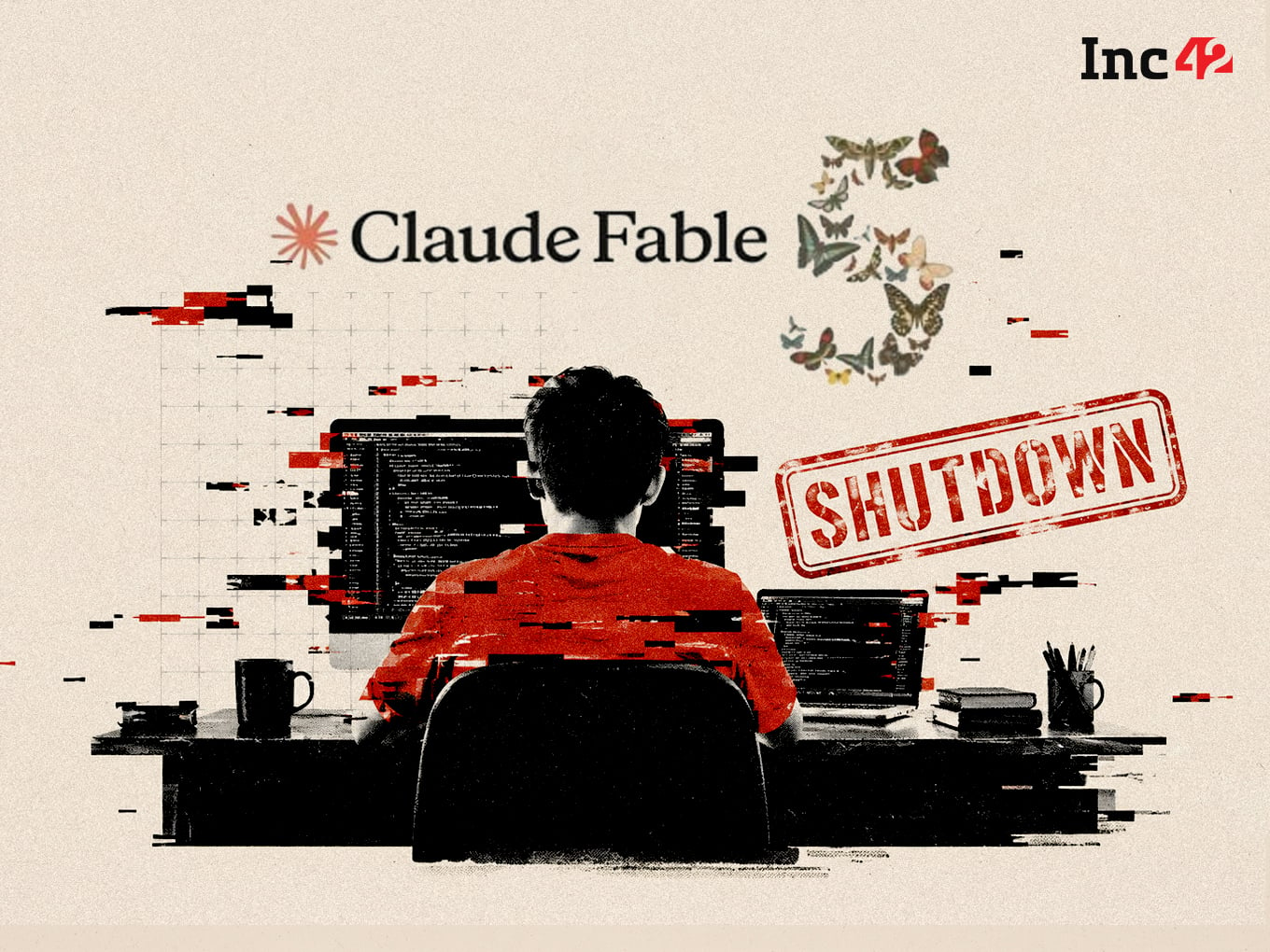
Anthropic’s suspension of Claude Fable 5 and Claude Mythos 5 turns a frontier-model launch into a practical test of AI sovereignty.
The company said it received a US export control directive requiring it to block access for foreign nationals, including non-US employees inside the company, leaving customers outside the permitted scope without access to the models.
The immediate issue is not only model performance.
It is the control layer around who can use a strategic AI system after launch, and how quickly a government order can override normal commercial access.
Anthropic complied while saying it lacked clarity on the exact concern that drove the intervention.
The disputed technical point is a potential jailbreak involving Fable 5.
Anthropic argued that the capability involved is widely available from other models, including GPT-5.5, and that it had not received the disclosure behind the finding.
That disagreement matters because it frames the shutdown as a governance dispute as much as a safety response.
India’s Sovereign AI Argument Gets A Concrete Trigger
For India, the suspension gives a sharper example of dependence on foreign model platforms.
The IndiaAI Mission already includes ₹10,372 Cr in support for subsidised compute, startup financing and broader ecosystem initiatives, but the access block gives founders and investors a more direct reason to question single-provider exposure.
Sridhar Vembu linked the event to national power and technology sovereignty.
Hemant Mohapatra called it a sovereign AI moment.
Mohandas Pai went further by proposing an annual ₹50,000 Cr fund for deeptech and AI, making the funding gap part of the same debate as infrastructure access and model control.
The launch details also matter.
Fable 5 was introduced on June 9 as a general-purpose model in the Mythos-class family, while Mythos 5 carried fewer cybersecurity safeguards and was initially limited to organisations that already had Claude Mythos Preview access under Project Glasswing.
Startup Architecture Moves Into The Risk Register
The strongest operational lesson is for startups building on frontier AI APIs.
Saurabh Awasthi of Augmen.IO said companies should avoid over-dependence on one provider and build resilience through multi-model architecture, open-source fallback models and on-premise deployment options.
That is a product-design issue, not just a policy slogan.
A startup that depends on one model family may face sudden feature disruption if access rules change, while a more modular architecture can shift workloads across models or environments when a provider, regulator or government changes the operating boundary.
Project Glasswing adds another layer.
Anthropic’s programme now reaches India as part of a group of around 150 organisations spread across more than 15 countries, with the work focused on finding and fixing critical software vulnerabilities before attackers exploit them.
The same episode therefore sits at the intersection of AI safety, cybersecurity access and national-control policy.
The Watchpoint Is Resilience, Not Slogans
Shayak Mazumder of Adya.ai described the US move as a likely temporary reaction and argued that India’s priority should be smaller models, fine-tuning studios and strong harnessed models rather than only a push for large foundation models.
That view narrows the next test to execution: whether Indian AI policy turns this access shock into deployable infrastructure and practical model alternatives.
The constraint is clear.
The suspension does not prove that every foreign AI platform will become unavailable, and it does not prove that domestic foundation models alone solve the problem.
It does show that model access can be treated as a strategic asset, forcing startups, investors and policymakers to design for interruption before the next access rule arrives.