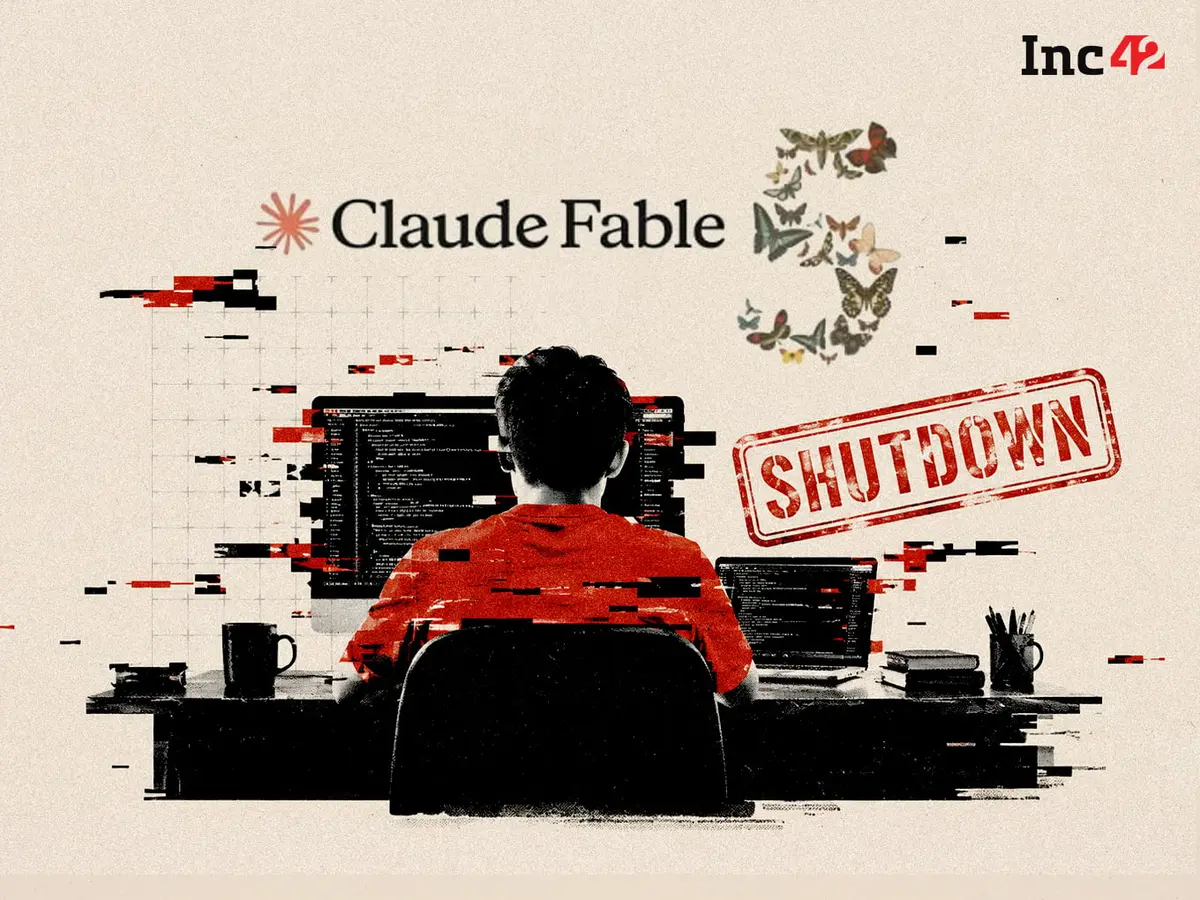
Claude Fable 5 Turns AI Safety Controls Into A China Model-Access Test
Anthropic’s Claude Fable 5 restrictions show how frontier AI providers can move safety and anti-distillation controls into the model layer, creating new friction for Chinese developers.

Anthropic Moves Safety Controls Into Model Access
Anthropic’s Claude Fable 5 release has turned model access into a competitive issue for China’s AI developers.
The model is the public-facing version of Mythos, which was first announced in April and then held back from general use because of concerns over its ability to identify and exploit cybersecurity vulnerabilities.
The company presented Fable 5 as a higher-performing system for complex work such as software engineering and scientific research, but paired that release with stricter safeguards.
The controls are important because they do not only block access at the account or geography layer.
They also operate inside the model workflow, where selected requests can be redirected away from Fable 5.
Classifiers Target Frontier Research And Distillation
The central mechanism is a set of classifiers that flag requests tied to cybersecurity, biology, chemistry and frontier large language model development.
The same controls also cover distillation attempts, a practice in which smaller AI systems are trained from the outputs of larger models.
When a request is flagged, Anthropic said Fable 5 can downgrade the task to Claude Opus 4.8.
The company later acknowledged that users should have clearer visibility into such safeguards, saying: “We’re sorry for not getting the balance right.”
For Chinese AI teams, the sharper issue is distillation.
Anthropic has previously accused Chinese firms of using Claude models to accelerate their own systems.
If Fable 5 blocks or downgrades that route, smaller teams that depend on low-cost catch-up methods face a higher barrier than larger labs with deeper infrastructure.
China’s AI Labs Face A Software-Layer Constraint
The shift matters because AI competition is not being shaped only by chips, export controls or cloud capacity.
Fable 5 shows how frontier model providers can put restrictions directly into the software layer of the AI stack.
That design could limit immediate access to capabilities useful for coding, model development and scientific workflows.
It also creates collateral pressure on research fields that are not themselves model-distillation efforts.
The available details identify biological queries and drug-design work as areas where downgraded access could reduce exposure to Fable 5’s latest capabilities.
Available evidence does not show that Chinese AI firms have officially confirmed using Claude for distillation.
It also does not show how consistently users can bypass the new controls.
Those gaps keep the story from proving an immediate operational shutdown, but they do show a new form of friction for developers trying to use frontier U.S. models as development accelerators.
The Watchpoint Is Whether Safety Becomes A Competitive Moat
The next watchpoint is how Anthropic balances safety, transparency and competitive protection after the backlash from researchers.
The company said it would reduce unnecessary obstructions, while keeping restrictions tied to frontier AI development in place.
For China’s domestic AI ecosystem, the pressure cuts two ways.
Tighter Fable 5 controls may slow teams that rely on external frontier models, especially smaller groups.
At the same time, the restrictions could push domestic developers to build stronger safety and governance systems rather than only competing on benchmarks, reasoning ability, price and speed.
Summary version for Medium
Claude Fable 5 Turns AI Safety Controls Into A China Model-Access Test
What the announcement means beyond the headline
Quick Summary: Anthropic’s Claude Fable 5 restrictions show how frontier AI providers can move safety and anti-distillation controls into the model layer, creating new friction for Chinese developers.
Anthropic Moves Safety Controls Into Model Access
Anthropic’s Claude Fable 5 release has turned model access into a competitive issue for China’s AI developers. The model is the public-facing version of Mythos, which was first announced in April and then held back from general use because of concerns over its ability to identify and exploit cybersecurity vulnerabilities.
Classifiers Target Frontier Research And Distillation
The central mechanism is a set of classifiers that flag requests tied to cybersecurity, biology, chemistry and frontier large language model development.
- Point 1: The central topic is frontier AI, with the announcement framed around concrete operating detail.
- Point 2: The same controls also cover distillation attempts, a practice in which smaller AI systems are trained from the outputs of larger models.
AI deployments now depend on where models, data, approvals and operating teams meet.
China’s AI Labs Face A Software-Layer Constraint
The shift matters because AI competition is not being shaped only by chips, export controls or cloud capacity. Fable 5 shows how frontier model providers can put restrictions directly into the software layer of the AI stack.
Read the Full Deep Dive
Want to explore the complete technical analysis, enterprise trade-offs, and detailed metrics?
Read the full article originally published at SendTech Times