AI Distillation Debate Moves From Labs To Washington
CNBC reported that AI distillation has become a policy fight after Moonshot AI's Kimi K3 raised questions about open-weight models, proprietary model output and U.S. restrictions.

Distillation moves from lab method to policy fight
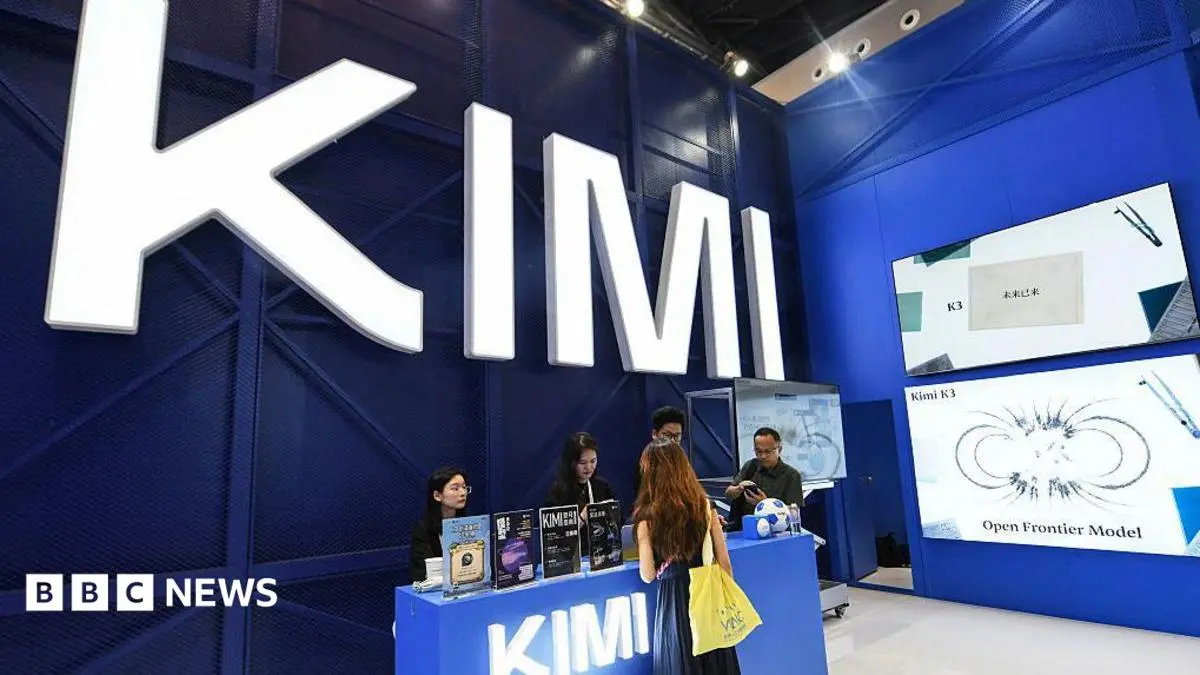
CNBC reported that AI distillation has moved from a specialist model-training technique into a Washington and Silicon Valley policy dispute after Moonshot AI's Kimi K3 became a new flashpoint in the open-weight model debate.
The article defines distillation as using the answers or work product of an advanced AI system to help train another model.
In the February podcast cited by the article, Google AI lead Jeff Dean said the method helped Google improve smaller systems by drawing on a frontier model first.
That technical framing now sits beside a political one: officials and AI vendors are asking when model-improvement practice becomes unauthorized extraction of a proprietary system's capabilities.
Moonshot allegation resets the stakes
According to the report, White House adviser Michael Kratsios wrote on X that the administration had information that Moonshot AI distilled Anthropic's Fable model to develop Kimi K3.
Kratsios alleged that Moonshot used a sophisticated internal platform for large-scale distillation against U.S. models and switched among access methods to avoid detection.
The article says Kimi K3 belongs to a wider wave of Chinese open-weight models that users can download, modify and run independently, unlike the closed commercial systems sold by leading U.S. AI firms.
For enterprise buyers, that distinction turns the story from model performance into procurement risk: security and legal teams have to ask whether the model's training history, license posture and deployment location create compliance or security exposure.
Open-weight backers push against early restrictions
The policy debate widened when Nvidia, Microsoft, Meta, Palantir and more than 20 other companies released a Friday letter urging policymakers not to impose premature restrictions on open-weight AI models.
The companies argued that early limits could weaken competition or move innovation outside the United States.
The signatories presented distillation as a normal engineering tool used to improve, test and evolve models rather than as a practice that should automatically trigger a ban.
Box CEO Aaron Levie, one of the signatories, told the outlet that U.S. companies need access to the best technology regardless of where it is developed, because more AI progress should generally push systems toward lower cost and greater efficiency over time.
Open-weight systems can be hosted on a customer's own infrastructure after review, reducing vendor lock-in and giving security teams more direct control over where inference runs.
That deployment route creates a policy problem: if a model's capability came from restricted access to another system, customers may inherit governance and reputational risk even when the downloadable weights appear operationally attractive.
Frontier vendors draw a boundary
Anthropic and OpenAI are taking the opposite line in their terms of service by banning distillation of their models.
The dispute gives frontier-model vendors a direct business incentive to detect and block large-scale output harvesting, while open-weight advocates argue that efficient model improvement is a normal part of AI development.
The report cited Anthropic's February statement alleging that DeepSeek, Moonshot and MiniMax drew Claude-like capabilities through a large coordinated campaign that used about 24,000 fake accounts and produced 16 million exchanges.
Anthropic characterized illicit distillation as a national security issue, saying its systems include safeguards against uses such as bioweapons development and malicious cyber activity.
The enforcement problem is partly technical.
Providers can watch for unusual account creation, high-volume prompt patterns and repeated attempts to extract similar capabilities, but the same models also serve legitimate developers who benchmark systems, validate outputs and build smaller internal tools.
A simple model-access rule may be hard to turn into a durable enforcement regime across APIs, resellers and enterprise accounts.
The unresolved issue is proof that can travel across policy, contract enforcement and customer due diligence.
The central evidence gap is whether buyers and regulators can verify when a downloadable model's capability came from authorized distillation, ordinary open research or prohibited large-scale output harvesting.
Until audit evidence for model lineage and API-output use is clearer, AI customers may need to treat open-weight adoption as a governance decision rather than only a cost-performance choice.
Summary version for Medium
AI Distillation Debate Moves From Labs To Washington
What the announcement means beyond the headline
Quick Summary: CNBC reported that AI distillation has become a policy fight after Moonshot AI's Kimi K3 raised questions about open-weight models, proprietary model output and U.S. restrictions.
Distillation moves from lab method to policy fight
CNBC reported that AI distillation has moved from a specialist model-training technique into a Washington and Silicon Valley policy dispute after Moonshot AI's Kimi K3 became a new flashpoint in the open-weight model debate. The article defines distillation as using the answers or work product of an advanced AI system to help train another model.
Moonshot allegation resets the stakes
According to the report, White House adviser Michael Kratsios wrote on X that the administration had information that Moonshot AI distilled Anthropic's Fable model to develop Kimi K3.
- Point 1: The central topic is ai, with the announcement framed around concrete operating detail.
- Point 2: Kratsios alleged that Moonshot used a sophisticated internal platform for large-scale distillation against U.S.
AI deployments now depend on where models, data, approvals and operating teams meet.
Open-weight backers push against early restrictions
The policy debate widened when Nvidia, Microsoft, Meta, Palantir and more than 20 other companies released a Friday letter urging policymakers not to impose premature restrictions on open-weight AI models. The companies argued that early limits could weaken competition or move innovation outside the United States.
Read the Full Deep Dive
Want to explore the complete technical analysis, enterprise trade-offs, and detailed metrics?
Read the full article originally published at SendTech Times