Ropedia Raises US$22 Million For Physical AI Data Layer
Singapore-based Ropedia has raised US$22 million in pre-Series A funding, e27 reported, as robotics developers look for data that records motion, depth, audio and human interaction rather than only online text.
A US$22 million pre-Series A round is moving Singapore-based Ropedia from robotics-data thesis to data-collection buildout, e27 reported, with the startup targeting the physical layer that robots need before they can work reliably outside demonstrations. e27 put total funding at US$30 million.
Funding Expands Real-World Data Collection
The capital is assigned to real-world data collection in Southeast Asia and North America, expansion of the Singapore and US teams, and higher production of Ropedia's wearable capture hardware.
The startup also plans to add annotation tools, quality analytics and compliance systems to its data platform while researching data foundation models and world models.
The funding round did not name the new investors.
Previous backing came from investors and super angels connected to Google, Andreessen Horowitz, NVIDIA and Amazon, giving the company a network tied to AI infrastructure and robotics without turning those names into confirmed customers.
Wearable Hardware Records Motion And Context
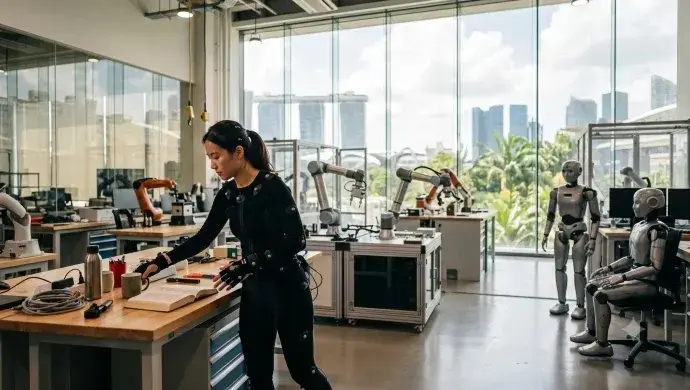
Ropedia's platform collects what the company calls multimodal human experience data through proprietary wearable hardware.
The captured material includes egocentric video, depth, motion and audio, then moves through synchronisation and processing before it becomes training data for robotics and embodied AI developers.
Zhaoxi Chen, Ropedia's chief executive and co-founder, said a robot cannot learn baseball by watching video alone because it must understand grip and timing.
The product logic is therefore not only visual recognition.
The data layer is meant to capture how people move through kitchens, workshops, factories, offices and streets, where lighting, tools, room layouts and user behaviour change from one setting to another.
Singapore Base Connects To US Robotics Market
Founded in the second half of 2025, Ropedia is headquartered in Singapore and has an office in Mountain View, California.
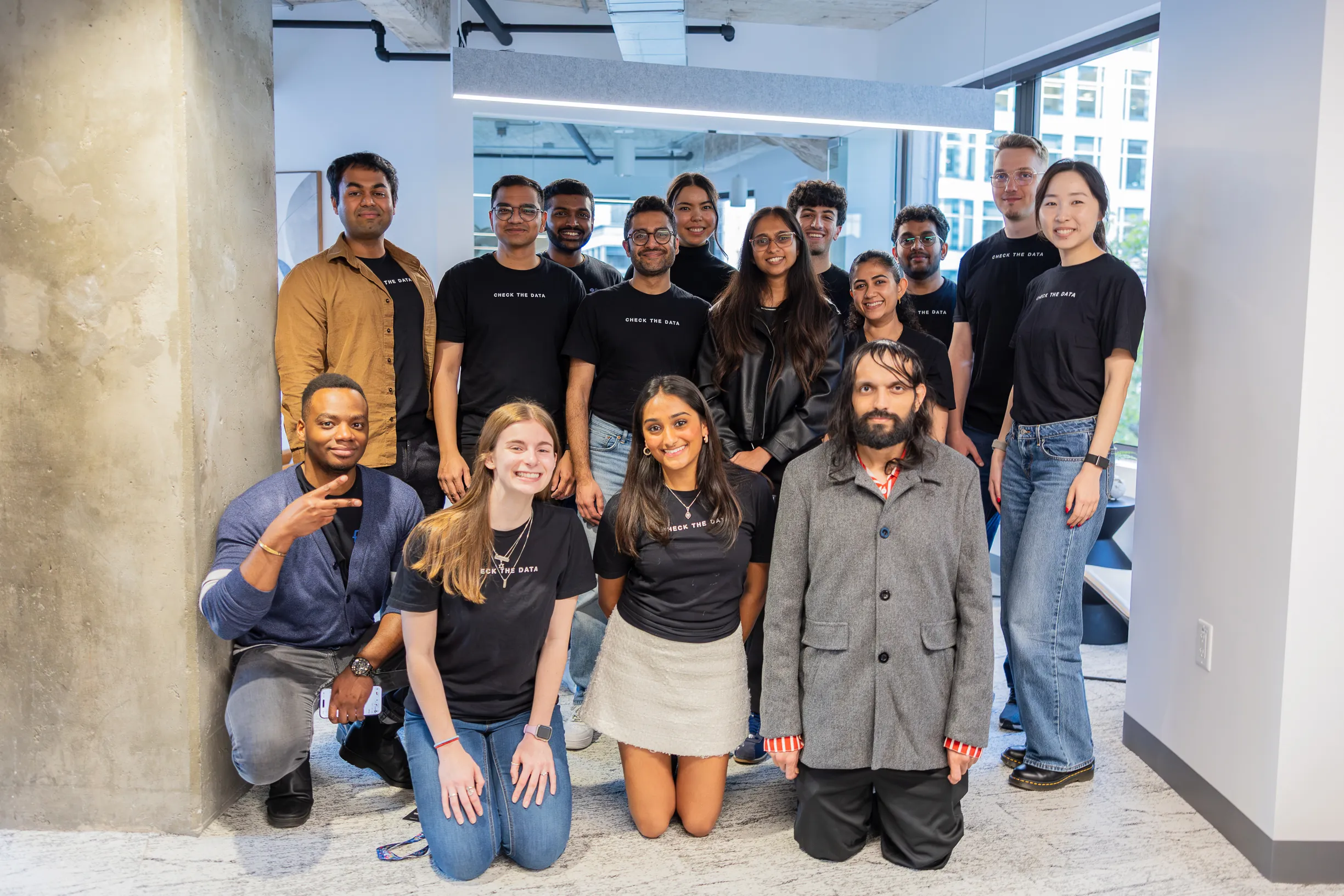
Its founding team includes Chen, whose work covers 3D computer vision and generative foundation models; CTO Fangzhou Hong, who previously worked on Meta's egocentric multimodal intelligence research; and Chief Scientist Ziwei Liu, an Associate Professor at Nanyang Technological University.
The Singapore base gives the company access to logistics, healthcare, cleaning, food-service and dense urban settings where robots face different operating conditions from a controlled lab.
Expansion into North America adds proximity to robotics and foundation-model customers that may need task-specific or geography-specific datasets.
Customers Still Need Deployment Proof
Ropedia said its wearable device, HOMIE, has entered mass production.
Ropedia places its customer base above 20 robotics and foundation-model companies, with the public list spanning North America, China and Singapore.
It identifies its flagship Xperience-10M dataset as one of the world's largest human experience datasets.
The commercial claim is still tied to customer validation.
Ropedia puts the potential data-collection cost reduction at up to 50x compared with traditional methods, but the public material does not include benchmark methodology or named customer performance results.
The company's pitch is that physical intelligence will need reusable interaction data in the same way software startups used cloud infrastructure.
Robotics developers still have to decide whether that layer is safer to buy from a specialist provider or keep inside their own model and hardware pipelines.
Summary version for Medium
Ropedia Raises US$22 Million For Physical AI Data Layer
What the announcement means beyond the headline
Quick Summary: Singapore-based Ropedia has raised US$22 million in pre-Series A funding, e27 reported, as robotics developers look for data that records motion, depth, audio and human interaction rather than only online text.
Funding Expands Real-World Data Collection
The capital is assigned to real-world data collection in Southeast Asia and North America, expansion of the Singapore and US teams, and higher production of Ropedia's wearable capture hardware. The startup also plans to add annotation tools, quality analytics and compliance systems to its data platform while researching data foundation models and world models.
Wearable Hardware Records Motion And Context
Ropedia's platform collects what the company calls multimodal human experience data through proprietary wearable hardware.
- Point 1: The central topic is ai, with the announcement framed around concrete operating detail.
- Point 2: The captured material includes egocentric video, depth, motion and audio, then moves through synchronisation and processing before it becomes training data for robotics and...
AI deployments now depend on where models, data, approvals and operating teams meet.
Singapore Base Connects To US Robotics Market
Founded in the second half of 2025, Ropedia is headquartered in Singapore and has an office in Mountain View, California. Its founding team includes Chen, whose work covers 3D computer vision and generative foundation models; CTO Fangzhou Hong, who previously worked on Meta's egocentric multimodal intelligence research; and Chief Scientist Ziwei Liu, an Associate Professor at Nanyang Technological University.
Read the Full Deep Dive
Want to explore the complete technical analysis, enterprise trade-offs, and detailed metrics?
Read the full article originally published at SendTech Times