Bond Investors Price AI Capex As Credit Risk
CNBC reported that bond-market anxiety is rising around AI capital spending, with hyperscaler spreads widening, Oracle CDS trading at a multi-year high and Meta data-center financing facing higher borrowing costs.
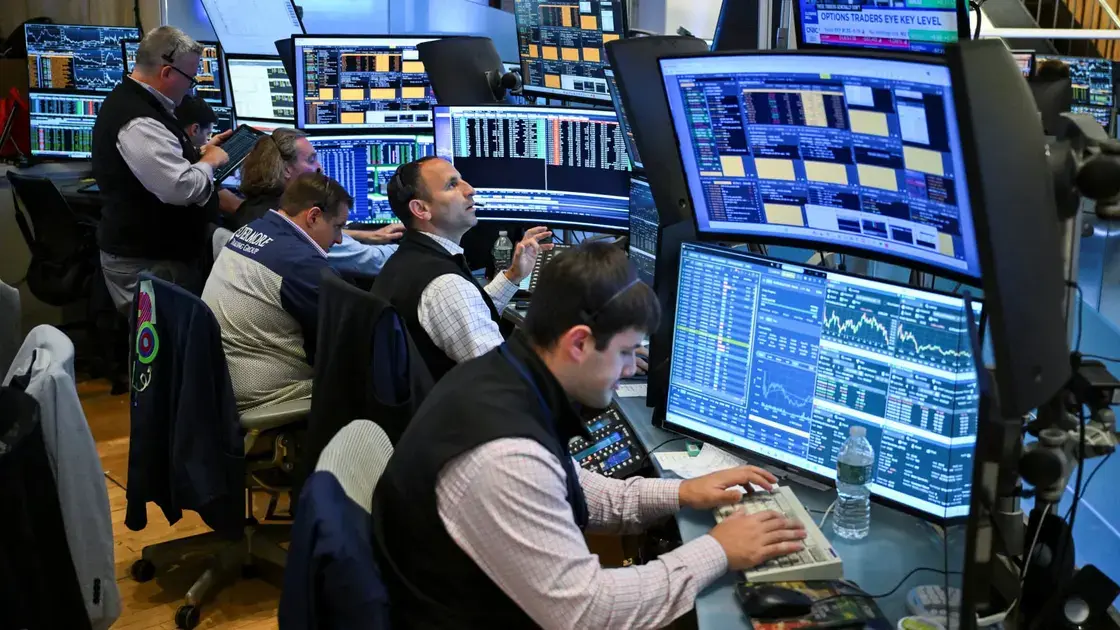
Bond investors are starting to price artificial intelligence infrastructure as a credit risk, not just a growth story, after Alphabet raised its capital-spending forecast for the buildout.
CNBC reported that yields climbed this week as the market weighed whether other hyperscalers would follow Alphabet with higher budgets.
Google, Amazon and Meta are also seeing credit spreads widen as fixed-income investors demand more reward for lending to the companies.
AI Buildout Costs Move Into Credit Markets
The pressure reflects the scale of infrastructure needed for AI services.
Hyperscalers are building large data centres across the United States, and power has become a major cost line for those projects.
GE Vernova CEO Scott Strazik told CNBC that he expects the current inflationary environment to remain, driven partly by the heightened geopolitical backdrop.
The CNBC article said oil also moved above $100 a barrel this week, adding another cost signal for infrastructure investors.
Mizuho analysts wrote to clients that capex raises are testing investor limits because companies once viewed as capital fortresses are seeing a dramatic rise in AI-tied costs.
Their note put the group on a path where planned capital outlays would exceed free-cash-flow generation next year.
Oracle Becomes A Proxy For AI Debt Fears
Oracle has become one of the clearer indicators of that anxiety.
The company's 5-year credit default swap is again trading at a multi-year high as investors use the instrument as a proxy for AI debt fears.
Barclays credit analyst Andrew Keches wrote that Oracle CDS has become a liquid hedge on AI capex, OpenAI execution and broader data-centre spending narratives.
Oracle is facing questions about how active it plans to be in the debt market as data-centre buildout and leasing become more capital intensive.
Earlier this month, S&P Global downgraded Oracle's credit rating to BBB-, one notch above junk status.
The company still has a growing relationship with OpenAI and hyperscalers such as Meta and Nvidia on cloud architecture, but the downgrade shows how AI infrastructure exposure is being read through the balance sheet.
Data-Centre Financing Faces A Higher Bar
Portfolio managers said the move in technology bond yields could affect financing for future deals.
A person familiar with the talks told CNBC that pricing for a $12 billion Texas data-centre financing sought by Meta is expected early next week.
The Financial Times reported that the deal will carry a higher borrowing rate than previous projects.
That would show investors demanding more compensation while questioning the return on investment from the AI buildout.
The credit-market evidence does not show that AI spending has stopped.
It shows that lenders still lack company-by-company proof that higher data-centre, power and cloud-capacity budgets will convert into returns large enough to offset the new borrowing costs.
Summary version for Medium
Bond Investors Price AI Capex As Credit Risk
What the policy signal means for operators and investors
Quick Summary: CNBC reported that bond-market anxiety is rising around AI capital spending, with hyperscaler spreads widening, Oracle CDS trading at a multi-year high and Meta data-center financing facing higher borrowing costs.
AI Buildout Costs Move Into Credit Markets
The pressure reflects the scale of infrastructure needed for AI services. Hyperscalers are building large data centres across the United States, and power has become a major cost line for those projects.
Oracle Becomes A Proxy For AI Debt Fears
Oracle has become one of the clearer indicators of that anxiety.
- Point 1: The central topic is capital-policy, with the announcement framed around concrete operating detail.
- Point 2: The company's 5-year credit default swap is again trading at a multi-year high as investors use the instrument as a proxy for AI debt fears.
AI deployments now depend on where models, data, approvals and operating teams meet.
Data-Centre Financing Faces A Higher Bar
Portfolio managers said the move in technology bond yields could affect financing for future deals. A person familiar with the talks told CNBC that pricing for a $12 billion Texas data-centre financing sought by Meta is expected early next week.
Read the Full Deep Dive
Want to explore the complete technical analysis, enterprise trade-offs, and detailed metrics?
Read the full article originally published at SendTech Times