TSMC U.S. Fab Push Squeezes AI Chip Margins
TSMC has announced $200 billion in U.S. manufacturing commitments since 2025, but overseas fab expansion is already diluting margins as AI chip customers face higher domestic production costs.
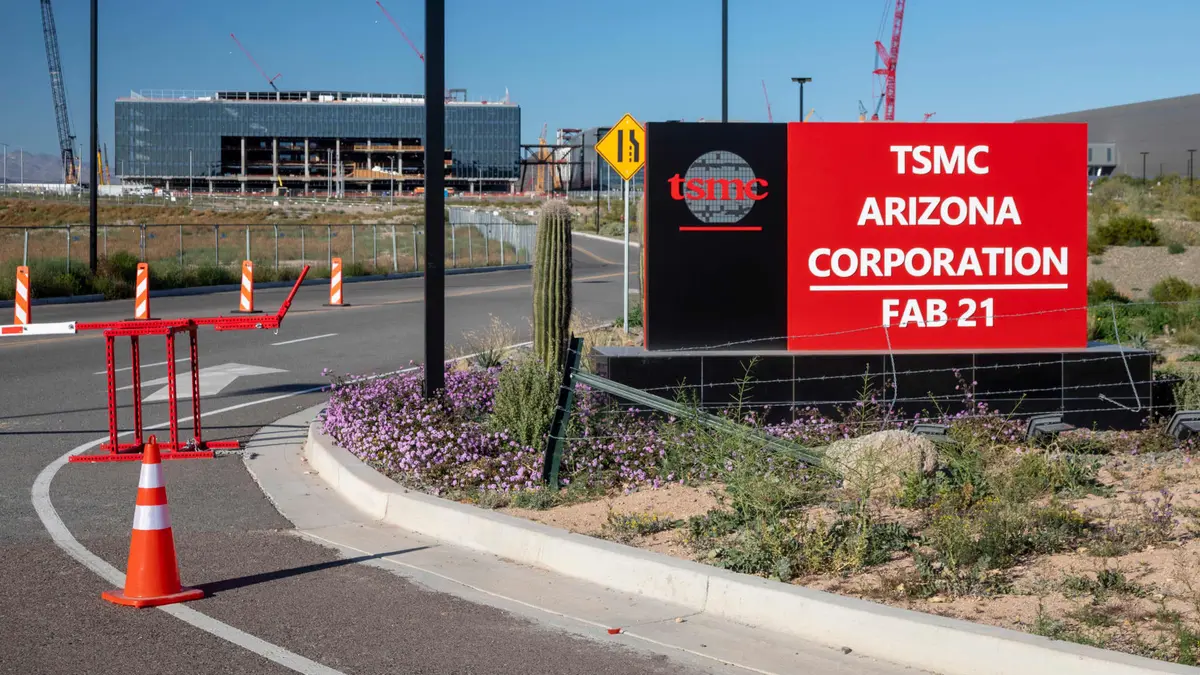
TSMC's U.S. manufacturing buildout is turning political pressure for American-made AI chips into a margin problem for the world's largest contract chipmaker, CNBC reported.
The Taiwan-based company has announced $200 billion in U.S. manufacturing commitments since President Donald Trump returned to power in 2025, including a $100 billion advanced semiconductor and packaging plan unveiled last week.
The contrast is scale against cost.
The U.S. projects give Washington a clearer domestic supply chain for advanced chips, but overseas fabs are already diluting the chipmaker's profitability while AI demand keeps the company expanding.
Other Asian chipmakers, including SK Hynix, are also developing U.S. facilities, but the largest disclosed commitment belongs to the Taiwanese manufacturer.
TSMC's U.S. Fabs Carry A Margin Cost
On an earnings call, CFO Wendell Huang identified gross margin ahead of guidance, with overseas fab dilution offsetting part of the benefit.
Huang put the expected dilution from overseas fab ramp-up at 2% to 3% in the early stages, widening to 3% to 4% in later stages over the next several years.
Second-quarter profit rose 77.4% year on year, another record quarter for the contract-chip manufacturing business.
The margin pressure comes from the geography of the manufacturing buildout rather than a demand slowdown in AI chips.
Huang also characterised customer demand as a multi-year AI trend.
The U.S. factory programme remains a capacity-planning decision as well as a political supply-chain commitment, because overseas production adds cost while advanced-node investment still depends on high margins.
Trump administration officials framed the investment as an industrial-policy win.
A White House spokesperson told CNBC that semiconductor investments by TSMC and other companies flowed from the administration's trade and economic policy, and Commerce Secretary Howard Lutnick linked the additional $100 billion commitment to American jobs and advanced semiconductor manufacturing.
Analysts See Higher U.S. Production Costs
Morningstar senior equity analyst Phelix Lee estimated that U.S.-made chips from the company could cost 20-50% more than chips produced in Taiwan, depending on subsidy timing, tax-credit recognition and other cost swings.
Lee expected customers to absorb more of those higher production costs, especially as customers seek geographic diversification after pandemic-era supply disruptions.
Gartner VP analyst Gaurav Gupta told CNBC that a large share of increased costs would have to be absorbed by clients because the company has limited material competition in leading-edge nodes and some buyers face U.S. government pressure to source local chips.
The business still has room to manage the gap.
D.A. Davidson technology research head Gil Luria viewed the margin difference as affordable because overall margins remain high, with the latest quarter still above the prior period.
Pricing Remains The Customer Test
Nikkei reported on Tuesday that potential price increases for both advanced and mature chip production could reach up to 10% in 2027.
The chipmaker gave no pricing comment.
For AI chip customers, the manufacturing shift changes the sourcing equation before it changes chip availability.
The U.S. fab expansion adds domestic capacity and political resilience, while the disclosed margin dilution and analyst cost estimates leave buyers facing the unresolved question of how much of the American-made chip premium reaches their own AI infrastructure budgets.
Summary version for Medium
TSMC U.S. Fab Push Squeezes AI Chip Margins
Why this hardware shift matters for AI and compute buyers
Quick Summary: TSMC has announced $200 billion in U.S. manufacturing commitments since 2025, but overseas fab expansion is already diluting margins as AI chip customers face higher domestic production costs.
TSMC's U.S. Fabs Carry A Margin Cost
On an earnings call, CFO Wendell Huang identified gross margin ahead of guidance, with overseas fab dilution offsetting part of the benefit. Huang put the expected dilution from overseas fab ramp-up at 2% to 3% in the early stages, widening to 3% to 4% in later stages over the next several years.
Analysts See Higher U.S. Production Costs
Morningstar senior equity analyst Phelix Lee estimated that U.S.-made chips from the company could cost 20-50% more than chips produced in Taiwan, depending on subsidy timing, tax-credit recognition and other cost swings.
- Point 1: The central topic is chips-semiconductors, with the announcement framed around concrete operating detail.
- Point 2: Lee expected customers to absorb more of those higher production costs, especially as customers seek geographic diversification after pandemic-era supply disruptions.
AI deployments now depend on where models, data, approvals and operating teams meet.
Pricing Remains The Customer Test
Nikkei reported on Tuesday that potential price increases for both advanced and mature chip production could reach up to 10% in 2027. The chipmaker gave no pricing comment.
Read the Full Deep Dive
Want to explore the complete technical analysis, enterprise trade-offs, and detailed metrics?
Read the full article originally published at SendTech Times