IBM Claims Sub-1 Nanometre Chip Path With Production Still Five Years Away
IBM says its nanostack architecture can put nearly 100 billion transistors on a fingernail-sized chip and move sub-1 nanometre technology into production within five years. The claim targets AI efficiency, but IBM has not named customers or manufacturing partners for the process.
IBM Frames Sub-1 Nanometre Chips As An AI Efficiency Play
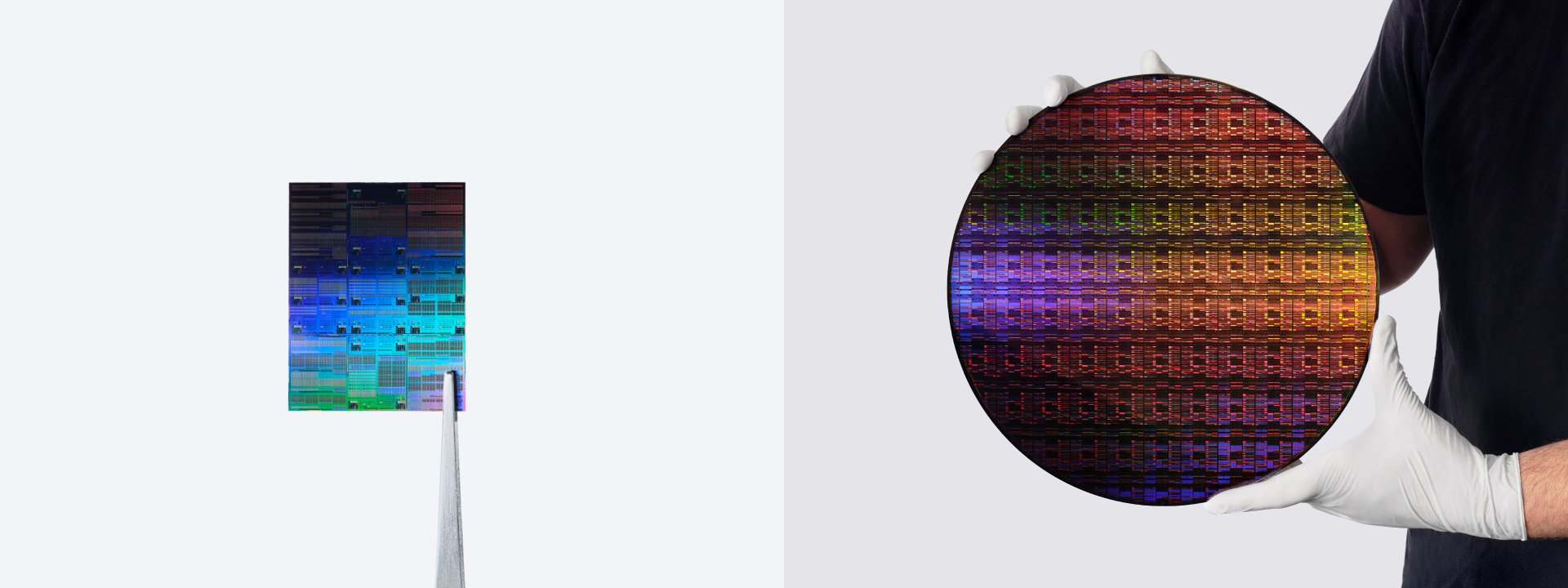
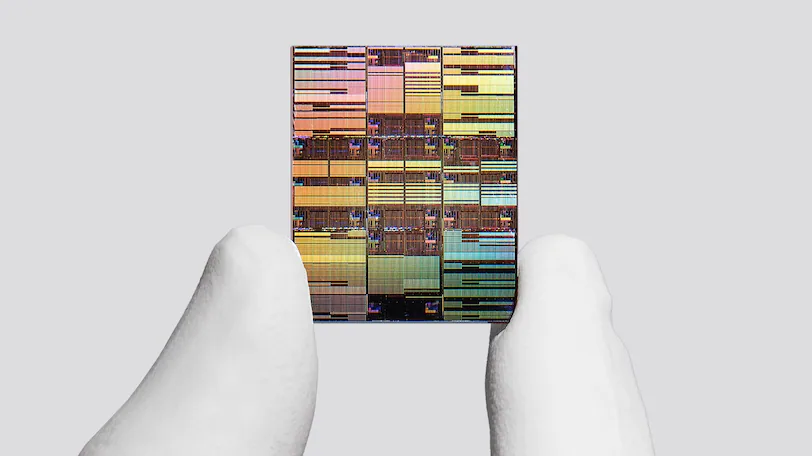
IBM says it has unveiled the world's first sub-1 nanometre chip technology, claiming a path to nearly 100 billion transistors on a chip the size of a fingernail.
The company is presenting the architecture as a response to AI data centers that need more computing efficiency as power demand rises.
The announcement centers on a nanostack architecture.
Jay Gambetta, director of IBM research, said the work moves chip design beyond the nanometre era and toward the scale of atoms.
He said IBM is changing how chips are built to deliver more power and energy efficiency.
IBM expects the technology to enter production within the next five years.
That timeline leaves the claim short of a commercial deployment today, and the announcement does not name customers, foundry partners or first products.
Nanostack Claim Targets Transistor Density
IBM says the new approach can place nearly 100 billion transistors on a fingernail-sized chip.
The company described the technology as a way to keep performance and efficiency gains possible as conventional scaling becomes harder.
The AI link is energy.
Data centers used for AI expansion are placing pressure on electricity grids, and chipmakers are trying to deliver more compute per watt.
IBM's claim is that smaller and differently structured transistors can help address that efficiency problem.
The company did not provide benchmark systems, customer workloads or power-consumption figures in the announcement.
That leaves the near-term evidence focused on IBM's architecture claim and production timeline rather than deployed AI infrastructure.
IBM Uses Research Legacy To Re-enter The Chip Debate
IBM is no longer a consumer PC maker, but it remains active in AI cloud computing, consulting, quantum computer hardware and technology research.
The company also has semiconductor history, including the PowerPC architecture alliance with Apple and Motorola in the 1990s.
The new claim arrives as AI demand keeps chip design in the center of technology investment.
Nvidia's CPUs and graphics processing unit designs have become closely associated with AI infrastructure buildout.
IBM is positioning its research as another route to future compute efficiency.
The company also points to its current focus on AI cloud computing, consulting, quantum computer hardware and technology research rather than consumer PC manufacturing.
That makes the announcement a research-led bid for future chip relevance, with production evidence still tied to IBM's five-year target.
Investors reacted to the announcement.
IBM's stock rose 4 per cent and reached $268.85 on Friday morning, one day after the chip announcement.
Production Timeline Is The Main Missing Proof
IBM's claim is material because it links transistor density, AI compute and data-center energy pressure.
It is still a research-to-production story, not a customer rollout.
IBM says production is expected within five years.
The announcement does not identify a manufacturing partner, product line, price, customer deployment or measured data-center power savings for the sub-1 nanometre technology.
Summary version for Medium
IBM Claims Sub-1 Nanometre Chip Path With Production Still Five Years Away
Why this hardware shift matters for AI and compute buyers
Quick Summary: IBM says its nanostack architecture can put nearly 100 billion transistors on a fingernail-sized chip and move sub-1 nanometre technology into production within five years. The claim targets AI efficiency, but IBM has not named customers or manufacturing partners for the process.
IBM Frames Sub-1 Nanometre Chips As An AI Efficiency Play
IBM says it has unveiled the world's first sub-1 nanometre chip technology, claiming a path to nearly 100 billion transistors on a chip the size of a fingernail. The company is presenting the architecture as a response to AI data centers that need more computing efficiency as power demand rises.
Nanostack Claim Targets Transistor Density
IBM says the new approach can place nearly 100 billion transistors on a fingernail-sized chip.
- Point 1: The central topic is chips-semiconductors, with the announcement framed around concrete operating detail.
- Point 2: The company described the technology as a way to keep performance and efficiency gains possible as conventional scaling becomes harder.
The important shift is not the AI label, but the operating boundary it creates for teams.
IBM Uses Research Legacy To Re-enter The Chip Debate
IBM is no longer a consumer PC maker, but it remains active in AI cloud computing, consulting, quantum computer hardware and technology research. The company also has semiconductor history, including the PowerPC architecture alliance with Apple and Motorola in the 1990s.
Read the Full Deep Dive
Want to explore the complete technical analysis, enterprise trade-offs, and detailed metrics?
Read the full article originally published at SendTech Times