SK hynix Ships HBM4E Samples. AI Memory Buyers Still Need Volume Proof.
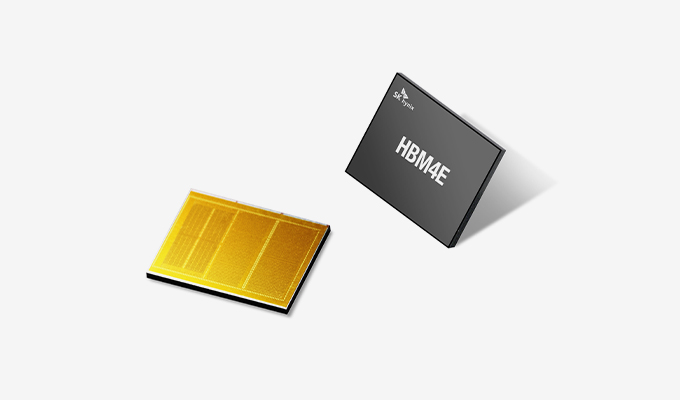
SK hynix has sent 12-layer HBM4E samples to major customers, citing 16Gbps per pin speed and a 48GB stack. The announcement moves the AI memory race from specification claims toward customer qualification and production timing.
HBM4E Moves From Roadmap To Customer Labs
SK hynix said on June 18, 2026, that it has shipped samples of HBM4E, its next-generation DRAM for AI systems, to major customers.
The company described the shipment as a scheduled 12-stack sample delivery, not a full production launch.
That distinction keeps the story grounded.
Sample shipments put memory in customer qualification pipelines, where chipmakers, accelerator vendors and data-center system builders test performance, thermals and reliability before committing designs at scale.
SK hynix said it will work with partners for mass production in a timely manner, but it did not give a mass-production date or name the customers receiving the samples.
The Useful Numbers Are Speed, Capacity And Heat
The 12-layer HBM4E product has a maximum data processing speed of 16Gbps per pin, according to SK hynix.
The company also said power efficiency is up more than 20 percent from previous models, a claim aimed at AI training and inference systems where memory bandwidth and energy use are both design constraints.
Capacity is another part of the pitch.
SK hynix said its Advanced MR-MUF process lets the HBM4E stack reach 48GB while maintaining structural stability.
The same packaging technology improved heat resistance by 17 percent compared with the preceding HBM4, which matters because high-bandwidth memory is stacked vertically and must move heat out of dense compute packages.
Packaging Is Becoming Part Of The AI Compute Sale
HBM competition is no longer only a density contest.
The SK hynix announcement puts packaging, latency and thermal handling into the same commercial frame as raw speed.
The company said the latest interface and design optimization reduce data-transfer latency while keeping operation stable in high-bandwidth environments.
For AI data centers and large-scale computing systems, those claims point to a practical bottleneck: accelerators can sit idle if memory cannot feed them fast enough, and power or heat limits can cap performance before peak specifications are reached.
SK hynix links HBM4E to that bottleneck by saying the product is designed to improve data processing for AI training and inference.
The company also frames HBM4E as a supply-chain continuation rather than a one-off laboratory part.
It says its work on HBM3, HBM3E and HBM4 gives it mass-production and supply experience for customers planning next-generation infrastructure.
That is the commercial argument behind the sample shipment: buyers need performance, but they also need a supplier that can qualify, package and deliver memory reliably enough for AI systems.
Qualification Is The Hard Part
SK hynix has already supplied HBM3, HBM3E and HBM4, and it is using that record to argue that customers can move toward next-generation infrastructure with less supply risk.
Ahn Hyun, the company’s President and Chief Development Officer, said HBM4E builds on its technological capabilities and manufacturing expertise.
The company is headquartered in Korea and supplies DRAM and NAND flash for global customers.
That background matters here only because HBM4E depends on both memory design and stacked-chip manufacturing discipline; a sample that meets a speed target still has to survive customer validation, thermal testing and production planning.
The missing evidence is customer-side validation.
The source confirms samples, headline specifications and the packaging approach; it does not confirm purchase orders, named accelerator platforms, volume commitments or a production schedule.
The next evidence to watch is narrow and concrete: customer qualification results, mass-production timing, and whether HBM4E appears in announced AI server or accelerator designs.