SendTech Times
News
AI SHIFT:

Visa And Mastercard Push Tokens Into The Trust Layer For AI Shopping

Article summary

Visa and Mastercard are building agentic-commerce payment frameworks around tokenized credentials, authenticated agents and permissioned transactions. Consumer data shows 45% comfort with AI agents completing purchases, but 95% still have at least one concern, making trust and fraud protection the real adoption test.
Visa And Mastercard Push Tokens Into The Trust Layer For AI Shopping

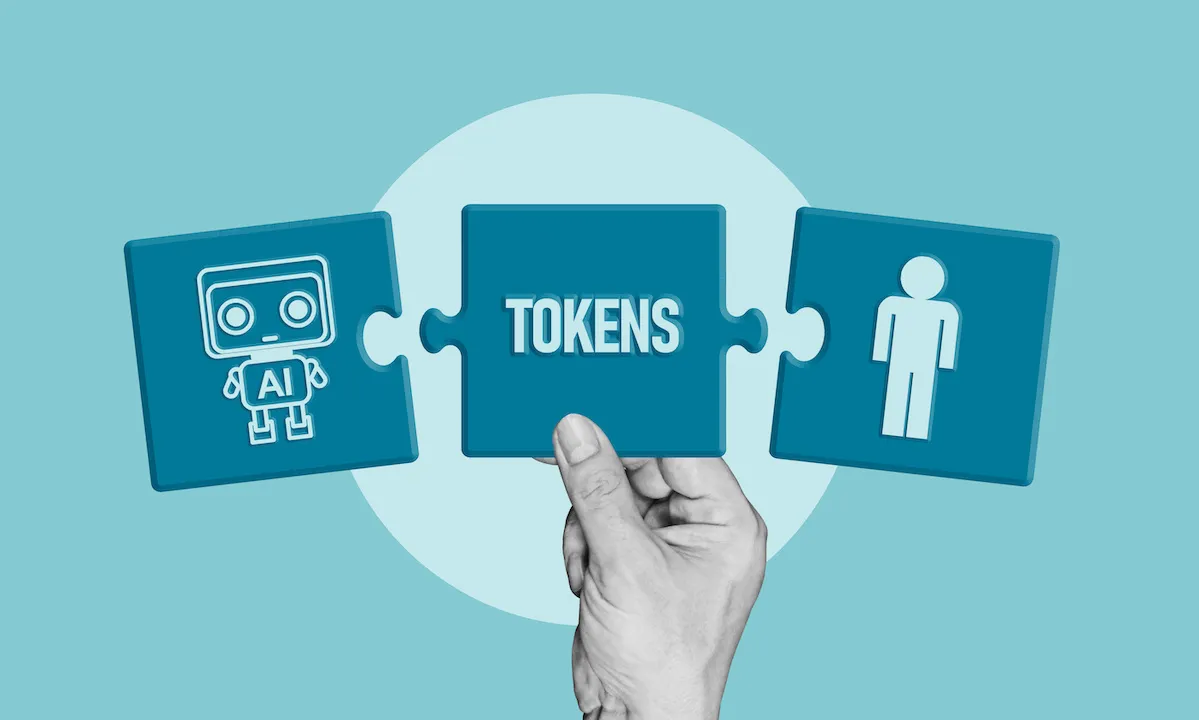
Tokens Become The Permission Layer

Visa and Mastercard are pushing agentic commerce into the payment infrastructure layer, not just the checkout screen.

The central issue is whether a merchant, issuer and network can tell that an AI agent is allowed to act for a shopper before money moves.

The source material points to tokenized credentials as the control point.

In a standard online transaction, tokenization can replace card data with a secure credential.

In an AI-assisted purchase, the same idea has to carry more information: who authorized the agent, what permission was granted, and whether the transaction fits the limits set by the consumer.

That is why the battle around agentic shopping is less about a single chatbot and more about the systems beneath it.

OpenAI, Google and Perplexity are named among the companies trying to make assistants useful for shopping decisions.

Visa and Mastercard are working on the payment rails that would let those assistants transact without exposing raw account details or leaving merchants unsure about authority.

Consumer Interest Still Runs Into Trust

The consumer data in the source shows both demand and friction.

A study with Worldpay found that 45% of consumers are comfortable allowing AI agents to complete purchases on their behalf, while 95% express at least one concern about agentic commerce.

The gap is important for payment networks because trust, not recommendation quality, becomes the gating factor once software can initiate a purchase.

The same research found that half of U.S. consumers would trust agentic commerce more if fraud protections were clearly established.

That puts fraud controls, authentication and permission records near the center of the product test.

For merchants, the operating question is also different from normal e-commerce.

A store can verify a card credential, but an AI shopping agent may be acting on instructions given hours, days or weeks earlier.

The merchant then needs evidence that the software is approved, the credential is valid and the purchase still matches the consumer's instructions.

Visa And Mastercard Choose Frameworks Over Assistants

Visa's recent work includes Agent Score, Agentic Directory and token capabilities intended to add assurance signals around AI-driven purchases.

Those tools point to a network-level role: help issuers and merchants assess whether a transaction is coming from an approved participant in an agentic-commerce environment.

Mastercard is moving along a similar path through Mastercard Agent Pay and tokenized payment credentials.

Its work with Wizard and Stripe is framed around an AI shopping environment where product discovery and payment execution remain tied to visible authority over who is acting and under what conditions.

Neither company needs to control every consumer AI assistant for this strategy to matter.

The stronger position is below the assistant layer, where credentials, identity checks and transaction permissions are accepted by merchants and issuers.

If agentic commerce grows, that layer decides whether autonomous software can actually complete a purchase.

The Checkpoint Is Permission Proof

The next test is practical: whether consumers, merchants and issuers accept tokenized agent credentials as enough proof for AI-initiated purchases.

Visa and Mastercard can describe frameworks, but the system only works if shoppers understand the permission model and merchants can process the signal without adding checkout friction.

The source does not prove that agentic commerce has reached mass adoption.

It shows that the payment networks are preparing for a market in which the assistant may change often, while the authorization layer must remain stable.

The clearest checkpoint is whether fraud protections and permission limits become visible enough to convert consumer curiosity into trusted transactions.


Share this article
inXf

Related articles

More
Quant Firms Turn Prediction Markets Into a Crypto Trading Infrastructure Test
Crypto/Web3

Quant Firms Turn Prediction Markets Into a Crypto Trading Infrastructure Test

DRW, Wintermute and IMC are building or hiring for prediction-market trading desks as Polymarket and Kalshi attract institutional attention. During 2025, Polymarket handled a reported $22 billion to $40 billion across politics, economics and sports, while three sports markets topped $730 million together. The practical test is whether institutional trading models can exploit cross-platform inefficiencies without displacing specialist sports-betting groups.

Thailand Launches Bitcoin and Ethereum ETFs to Boost Digital Assets
Crypto/Web3

Thailand Launches Bitcoin and Ethereum ETFs to Boost Digital Assets

Thailand is set to launch Bitcoin and Ethereum-based ETFs in Q3 2026, making digital assets more accessible to investors. This move is part of a broader strategy to position Thailand as a digital asset hub in Southeast Asia. The initiative aligns with regional trends in tokenization and stablecoin adoption.

Bitcoin Sell-Off Tests Strategy's Treasury Signal as Standard Chartered Holds Its Call
Crypto/Web3

Bitcoin Sell-Off Tests Strategy's Treasury Signal as Standard Chartered Holds Its Call

Bitcoin fell more than 12% in a painful week after Strategy disclosed its first sale of some holdings since 2022. Geoffrey Kendrick of Standard Chartered kept his $100,000 year-end call, while LSEG data showed more than $2 billion in net outflows from large bitcoin ETFs in the week to Tuesday. The next signal is whether Strategy buys back after a sale equal to 0.004% of its holdings.

Bitcoin Drops Below USD 66,000 as AI-Led Stocks Hit Records
Crypto/Web3

Bitcoin Drops Below USD 66,000 as AI-Led Stocks Hit Records

Bitcoin fell 6.4% over 24 hours to a low of USD 65,708, extending its weekly decline to 12.3%. Ether, Solana, BNB, Dogecoin and Tron also declined as spot bitcoin ETF outflows crossed USD 3.2 billion. The immediate test is whether bitcoin can hold the USD 65,000 area while AI-linked equity indexes remain near record highs.

Keep Reading

More Stories

Latest
Pramaana Labs Raises $27 Mn To Make AI Prove Its AnswersAIJun 18, 2026Pramaana Labs Raises $27 Mn To Make AI Prove Its AnswersBengaluru-based Pramaana Labs raised $27 Mn in seed funding led by Khosla Ventures to build a verification layer for AI in regulated industries. The company says its system turns questions into formal statements, runs a proof engine and refuses to answer when a proof cannot be established. The financing points to a tougher enterprise AI test: whether models can support tax, law, finance and healthcare work where hallucinations carry legal risk.DIFC Puts AI Challenger Banks At The Center Of Dubai’s Finance Hub TestEconomyJun 18, 2026DIFC Puts AI Challenger Banks At The Center Of Dubai’s Finance Hub TestDIFC launched a Future of Finance paper arguing that AI-native and cloud-first challenger banks are forcing traditional lenders to rebuild operating models. The paper puts the downside at USD 170bn by 2030 if banks delay decisive transformation, while DIFC points to Dubai’s role between Asia, the Gulf and Africa. The checkpoint is whether banks use Dubai’s regulatory environment to test AI model accuracy, governance and new client services before regional scale-up.SandboxAQ Gets $500 Million CHIPS Bet For AI-Designed Chip MaterialsChips & SemiconductorsJun 18, 2026SandboxAQ Gets $500 Million CHIPS Bet For AI-Designed Chip MaterialsThe US Commerce Department is awarding SandboxAQ $500 million in CHIPS Act funds to use AI simulation software on semiconductor materials, PFAS-free processes, rare-earth alternatives and battery inputs.Revolut Has UAE Licences. Now Comes The Hard Part.EconomyJun 17, 2026Revolut Has UAE Licences. Now Comes The Hard Part.Revolut has secured UAE central bank permissions for stored value and retail payment services, moving the fintech closer to a full local launch while it builds partnerships and operations.CPP Investments Puts ₹70 Billion Behind India’s AI Data-Center BuildoutCloud & Data CentersJun 17, 2026CPP Investments Puts ₹70 Billion Behind India’s AI Data-Center BuildoutCPP Investments is backing CtrlS with up to ₹70 billion, adding pension-capital weight to India’s race to build data centers for cloud and AI workloads.Plasma One Tests Whether Stablecoins Can Behave Like Everyday BankingEconomyJun 17, 2026Plasma One Tests Whether Stablecoins Can Behave Like Everyday BankingPlasma has launched Plasma One, a stablecoin banking app that combines wallet, payments, yield and underlying blockchain infrastructure into one consumer account.Arada's London Debut Tests Gulf Capital In Prime Residential DevelopmentReal EstateJun 17, 2026Arada's London Debut Tests Gulf Capital In Prime Residential DevelopmentSharjah developer Arada has unveiled 100 Avenue Road in Swiss Cottage, a 172-apartment London project that extends its UK expansion after acquiring Regal and backing Thameside West.Spotify's AI Music Push Faces A Global Consent TestAIJun 17, 2026Spotify's AI Music Push Faces A Global Consent TestSpotify has about 761 million users in 184 markets, but its next AI music tools will be judged by whether licensed covers, remixes and artist identity protections can scale across non-English growth markets.Flagright Raises $12.5 Million As AI Compliance Moves From Tools To WorkflowsFintech & Digital PaymentsJun 17, 2026Flagright Raises $12.5 Million As AI Compliance Moves From Tools To WorkflowsFlagright raised a $12.5 million Series A led by Infinity Ventures to expand explainable AI workflows for financial crime compliance, with banks, fintechs and credit unions as the stated market focus.Intel 18A-P Enters Risk Production, But Foundry Proof Still Runs Through YieldChips & SemiconductorsJun 17, 2026Intel 18A-P Enters Risk Production, But Foundry Proof Still Runs Through YieldIntel has started risk production of its 18A-P node, adding performance and power claims to its foundry pitch while outside-customer commitments, Arm manufacturing proof and packaging capacity remain the next tests.AWS WAF Turns AI Bot Access Into A Paid Edge ControlAIJun 17, 2026AWS WAF Turns AI Bot Access Into A Paid Edge ControlAWS WAF added AI traffic monetization for CloudFront-protected content, letting publishers set per-request prices for verified and unverified AI agents while routing x402 stablecoin payments through third-party facilitators.UAE Creates AI And Data Authority To Put Agentic AI Inside GovernmentPoliticsJun 17, 2026UAE Creates AI And Data Authority To Put Agentic AI Inside GovernmentThe UAE has approved a new Artificial Intelligence and Data Authority that will combine public data, AI and digital-government functions under one Cabinet-linked body. Omar Sultan Al Olama will chair the authority, which takes over mandates previously spread across the AI office, the TDRA digital government sector and the UAE Data Office. The move makes federal data quality, AI platforms and digital service design part of one operating structure as the government pushes agentic AI into public administration.