Sakana Fugu Pitches Model Orchestration As Export-Control Hedge
Sakana AI launched Fugu and Fugu Ultra as generally available orchestration models, but its benchmark and beta claims still depend on enterprise users accepting a routed multi-model system.
Fugu Turns Model Choice Into The Product
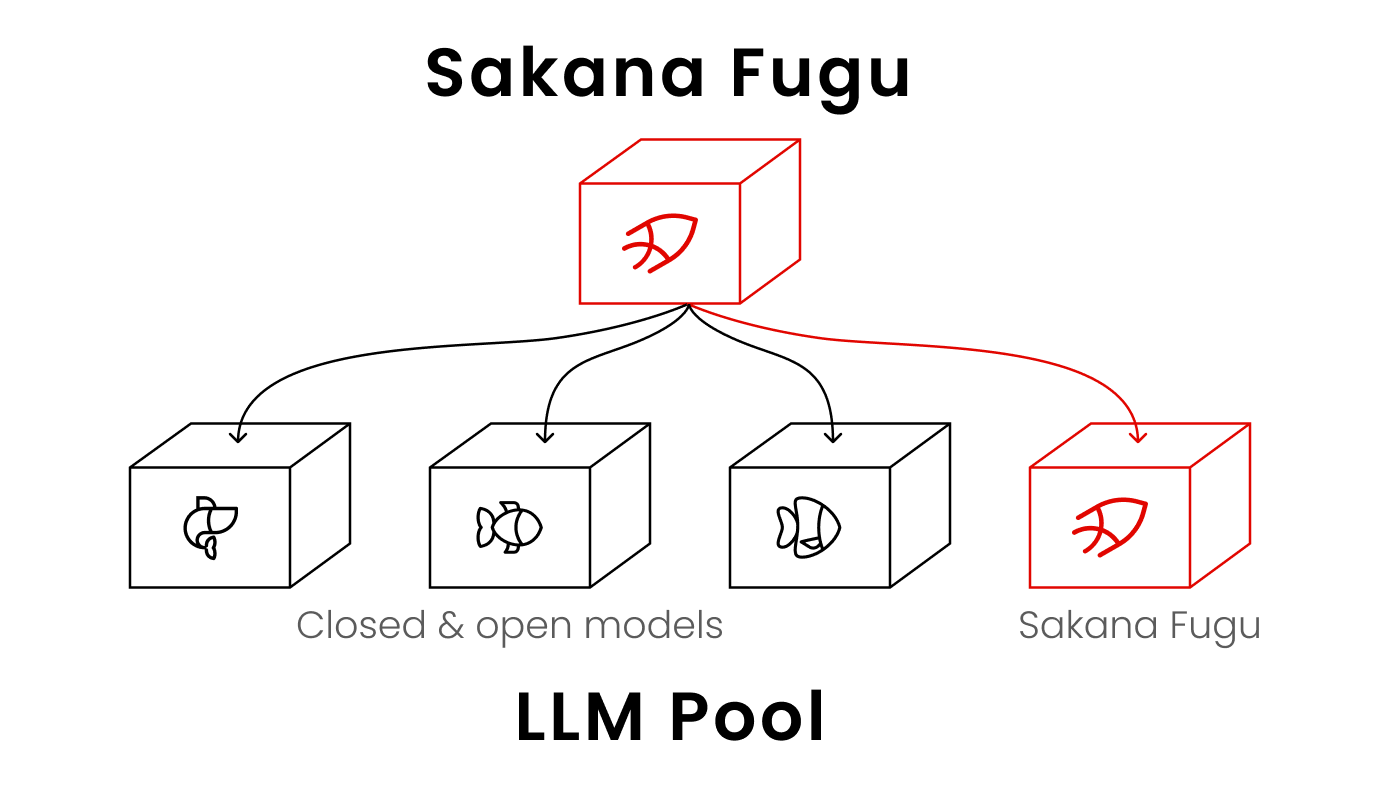
Sakana AI has made Fugu generally available, pitching the system as a single-model interface that can route work across a pool of expert models.
The Tokyo-based AI company says Fugu and Fugu Ultra are accessible through one OpenAI-compatible API and are designed to handle complex, multi-step tasks without forcing developers to build their own multi-agent stack.
The launch frames model orchestration as more than a performance trick.
Sakana argues that organizations and governments face operational risk when they depend on one model provider for critical infrastructure, finance or governance.
The company links that risk to recent export-control restrictions around Anthropic’s Fable and Mythos models.
Fugu is itself described as a language model trained to decide when to solve a request directly, when to delegate work, how agents should communicate and how to synthesize the results.
From the customer’s side, the promise is one endpoint.
Inside the system, Sakana says model selection, delegation, verification and synthesis happen without exposing multi-agent complexity to application code.
Two Models Target Different Workloads
The launch includes two versions.
Fugu is positioned for everyday work, lower latency and interactive uses such as coding tools, code review, chatbots and other services.
Sakana says teams with data, privacy or compliance requirements can opt specific agents out of the pool.
Fugu Ultra is aimed at harder multi-step work where answer quality matters more than speed.
The company says early users applied it to AI research, paper reproduction, cybersecurity analysis, literature reviews and patent investigations.
Sakana also claims Fugu Ultra stands alongside Fable 5 and Mythos Preview across engineering, scientific and reasoning benchmarks.
The benchmark comparison carries caveats in the company’s own release: baseline scores are provider-reported, and Fable 5 and Mythos Preview are not in Fugu’s agent pool because they are not publicly accessible.
Early Users Provide Use Cases, Not Full Adoption Proof
Sakana says its beta involved close to 500 early users.
The company cites examples from automated data science research, code review, enterprise platform work and security assessment analysis.
One software engineer quoted by the company said Fugu Ultra found more than 20 issues in code review where other tools flagged about three.
Those examples give the launch more substance than a simple model announcement, but they are still early-user claims rather than audited customer deployment metrics.
Sakana did not disclose paid customer count, revenue, retention, workload volume, service-level guarantees or how often users opt agents out for compliance reasons.
For enterprise buyers, the useful question is operational.
A routed model system can reduce single-vendor exposure and improve long-running task coordination, but it also asks customers to trust an orchestration layer that decides which models see which parts of a task.
General Availability Starts The Governance Test
Sakana says Fugu is available through subscriptions for routine users, with usage-based access for heavier enterprise workloads.
The company also plans to expand the expert-agent pool with open models and its own models, and to give users more control over how Fugu works on their behalf.
That roadmap puts governance at the center of the product.
Enterprises will need clear controls for data routing, agent selection, audit trails, cost management and failure handling before orchestration becomes part of sensitive workflows.
For Sakana AI, the unresolved evidence is commercial rather than technical: the company has not disclosed paid adoption, workload volume or enterprise compliance results for Fugu after general availability.
Summary version for Medium
Sakana Fugu Pitches Model Orchestration As Export-Control Hedge
What the announcement means beyond the headline
Quick Summary: Sakana AI launched Fugu and Fugu Ultra as generally available orchestration models, but its benchmark and beta claims still depend on enterprise users accepting a routed multi-model system.
Fugu Turns Model Choice Into The Product
Sakana AI has made Fugu generally available, pitching the system as a single-model interface that can route work across a pool of expert models. The Tokyo-based AI company says Fugu and Fugu Ultra are accessible through one OpenAI-compatible API and are designed to handle complex, multi-step tasks without forcing developers to build their own multi-agent stack.
Two Models Target Different Workloads
The launch includes two versions.
- Point 1: The central topic is ai, with the announcement framed around concrete operating detail.
- Point 2: Fugu is positioned for everyday work, lower latency and interactive uses such as coding tools, code review, chatbots and other services.
The important shift is not the AI label, but the operating boundary it creates for teams.
Early Users Provide Use Cases, Not Full Adoption Proof
Sakana says its beta involved close to 500 early users. The company cites examples from automated data science research, code review, enterprise platform work and security assessment analysis.
Read the Full Deep Dive
Want to explore the complete technical analysis, enterprise trade-offs, and detailed metrics?
Read the full article originally published at SendTech Times