Tencent Takes WorkBuddy AI Agent Global In Enterprise Productivity Push
Tencent Cloud launched WorkBuddy for overseas users after an earlier China rollout. The agent can run tasks through messaging apps and connect with GitHub, Jira, Google Drive, Gmail, Notion, and Slack. Miora and TokenHub show Tencent building a wider enterprise AI stack around agents, creative work, and model access.
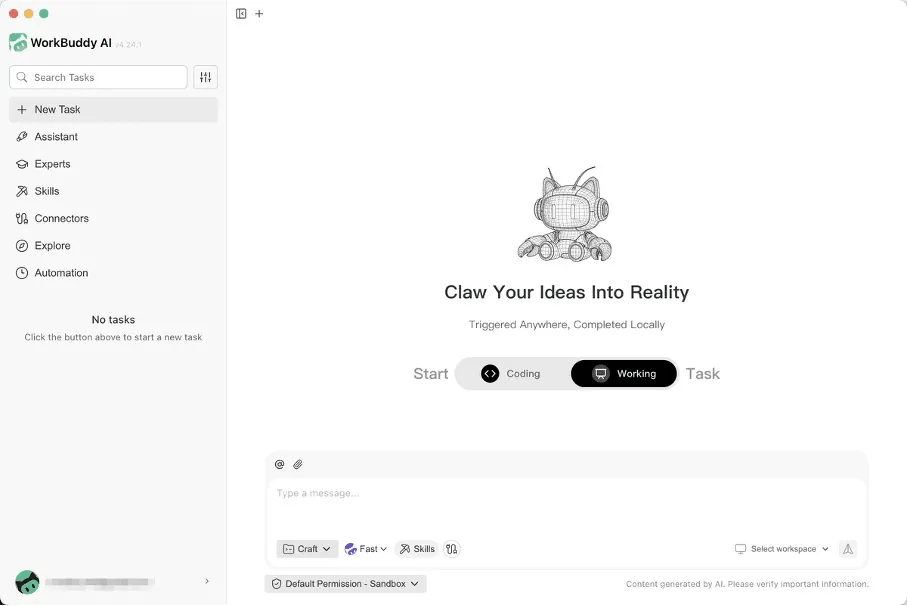
Tencent Cloud has moved WorkBuddy, its office-focused AI agent, into overseas markets after an earlier China launch.
The release is a useful signal because Chinese cloud and internet groups are trying to turn large-model work into products inside daily enterprise workflows.
The Product Move
WorkBuddy is designed for users who want an agent to execute work rather than only respond in a chat window.
Tencent says a user can write a natural-language request and the system can read resources, break the request into tasks, call outside tools, and return project files.
The source describes use cases across coding, analysis, productivity, presentations, spreadsheets, and research briefs.
That places WorkBuddy in the same competitive category as other enterprise AI agents that promise to reduce manual coordination across documents, code repositories, and collaboration systems.
Workflow Integrations
The important detail is where Tencent wants the agent to live.
WorkBuddy can be triggered through Slack, Telegram, Discord, and WeChat, so it is meant to operate inside messaging channels rather than as a separate destination app.
Tencent also says the product connects through MCP with GitHub, GitLab, Jira, Confluence, Google Drive, Gmail, Notion, and Slack.
Those integrations are central to the pitch: the agent becomes more valuable if it can work across files, tickets, email, and repositories with clear user permission.
Ecosystem Impact
The launch was not isolated.
Tencent also introduced Miora, an AI-native creative studio for brand and campaign assets, and TokenHub, a model-as-a-service platform that provides access to Tencent Hunyuan models and third-party models through a unified gateway.
Together, the products show Tencent building a workplace AI stack: agent execution, creative production, and model access.
The company is trying to convert its cloud and AI capabilities into tools that enterprises can test without heavy infrastructure setup.
Adoption Barrier
The main test is trust.
WorkBuddy's value depends on access to sensitive workplace systems, including code platforms, documents, email, and project-management tools.
Tencent says tasks run in a sandboxed environment by default and that local folder access needs explicit permission, but enterprise buyers will still examine security controls carefully.
The second test is whether the output is reliable enough for repeated use.
More than 100 built-in expert roles and support for user-selected large language models may lower adoption friction, but users will judge the product by whether it produces usable files and saves time.
What To Watch
WorkBuddy gives Tencent a clearer international position in AI agents.
The next indicators are adoption outside China, the depth of third-party tool support, and whether companies treat the agent as a daily productivity layer rather than an experimental assistant.
Summary version for Medium
Tencent Takes WorkBuddy AI Agent Global In Enterprise Productivity Push
What the announcement means beyond the headline
Quick Summary: Tencent Cloud launched WorkBuddy for overseas users after an earlier China rollout. The agent can run tasks through messaging apps and connect with GitHub, Jira, Google Drive, Gmail, Notion, and Slack.
The Product Move
WorkBuddy is designed for users who want an agent to execute work rather than only respond in a chat window. Tencent says a user can write a natural-language request and the system can read resources, break the request into tasks, call outside tools, and return project files.
Workflow Integrations
The important detail is where Tencent wants the agent to live.
- Point 1: The central topic is ai, with the announcement framed around concrete operating detail.
- Point 2: WorkBuddy can be triggered through Slack, Telegram, Discord, and WeChat, so it is meant to operate inside messaging channels rather than as a separate destination app.
Stateful isolation is becoming a first-class cloud primitive, not just an implementation detail.
Ecosystem Impact
The launch was not isolated. Tencent also introduced Miora, an AI-native creative studio for brand and campaign assets, and TokenHub, a model-as-a-service platform that provides access to Tencent Hunyuan models and third-party models through a unified gateway.
Read the Full Deep Dive
Want to explore the complete technical analysis, enterprise trade-offs, and detailed metrics?
Read the full article originally published at SendTech Times