NVIDIA Agent Toolkit Adds Runtime Controls But No Rollout Counts
NVIDIA is packaging Nemotron open models, NemoClaw blueprints and OpenShell runtime support for specialized enterprise agents, but the company did not disclose pricing, deployment dates or rollout counts.

NVIDIA Packages Models, Tools And Runtime Controls
NVIDIA is positioning its Agent Toolkit as a modular base for enterprise AI agents, with open models, workflow tools, skills and runtime support bundled around its platform.
The company-owned blog post frames the toolkit as a way for enterprises and developers to build specialized agents that can be customized and controlled inside existing work systems.
The source is a NVIDIA Nemotron Labs post, so vendor-favorable claims about safer, faster or lower-cost AI coworkers should be read as NVIDIA's product positioning rather than independent market evidence.
The concrete change is the packaging: Nemotron open models provide the reasoning layer, NemoClaw blueprints supply patterns for agent behavior, and the OpenShell runtime is described as the place where agents operate inside enterprise systems.
NVIDIA says the toolkit can work with third-party agent harnesses or orchestration frameworks, including Hermes Agents and OpenClaw.
The post describes a modular stack that connects agents to internal tools, domain skills and infrastructure rather than a single-purpose application.
NVIDIA Points To Enterprise Workflows Without Production Evidence
The company describes specialized agents as systems that combine models, tools, skills, runtime and infrastructure so workers can apply AI to complex tasks.
It gives examples across life sciences, healthcare, software, cybersecurity, industrial operations and customer workflows.
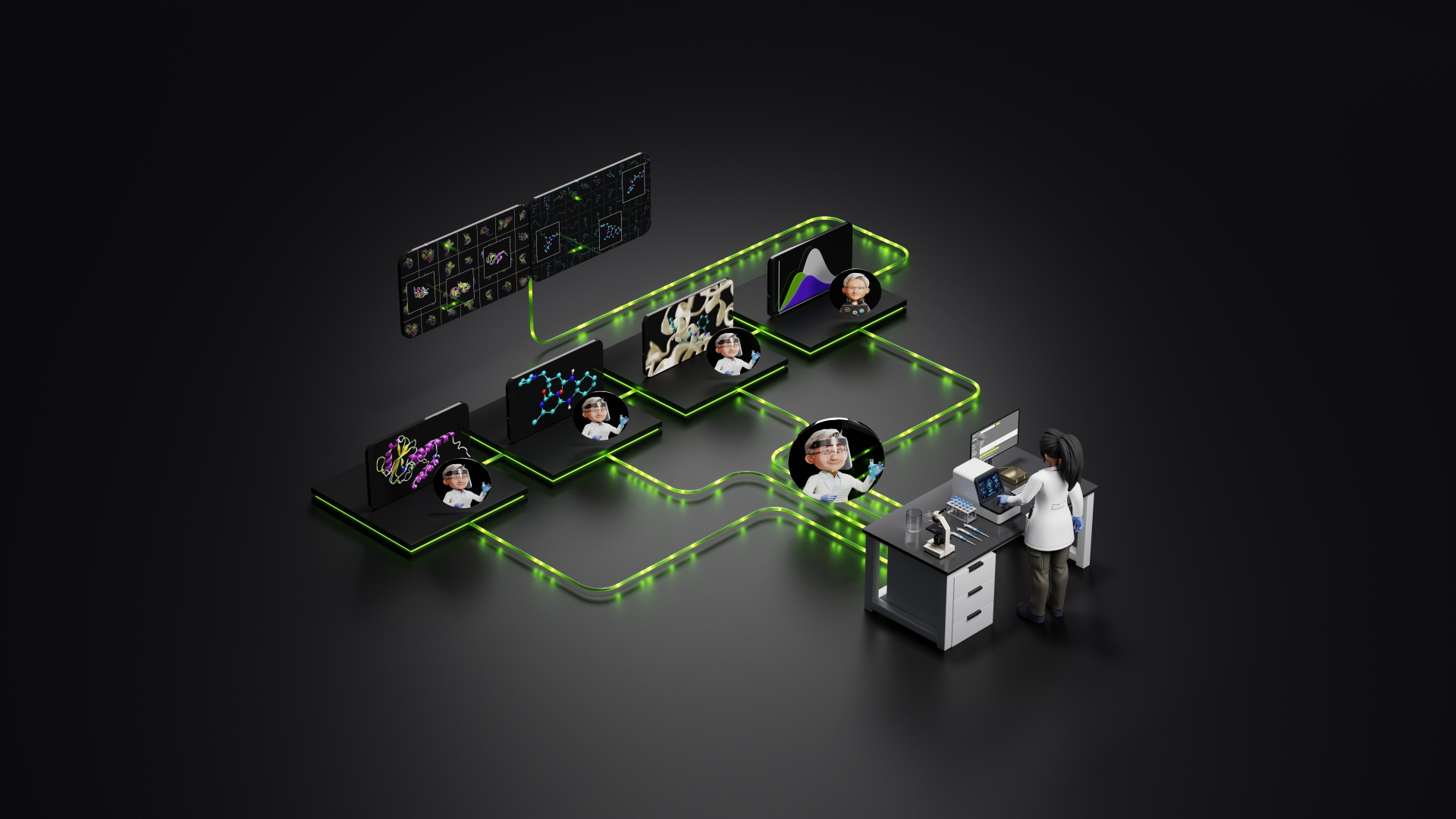
In life sciences, NVIDIA says agents can use domain models for protein work, virtual screening, genome analysis and biomarker discovery.
It also says the BioNeMo Toolkit can move some work that previously took months into days.
The post does not include an independent benchmark method for that timing claim or name a customer validation for the BioNeMo statement.
In healthcare, NVIDIA points to clinical documentation, clinical decision support and care coordination.
It also says physical agents in robotics systems trained in digital twins of hospitals could support surgical assistance and hospital automation.
The post does not identify a named hospital deployment, regulatory approval or production rollout for those healthcare examples.
Named Platform Partners Give The Toolkit Early Distribution
NVIDIA names several enterprise software and security companies in the post.
Cadence and Synopsys are described as building autonomous agents for chip design and engineering workflows.
CrowdStrike is cited as running specialized security agents that triage alerts with 98.5% accuracy, while Palantir, SAP, ServiceNow, Siemens and Dassault Systèmes are described as embedding agent capabilities in enterprise platforms.
The CrowdStrike accuracy figure is a vendor-cited performance claim inside NVIDIA's post.
NVIDIA did not define whether accuracy means precision, recall, F1 score or another security metric, and it did not include independent benchmark methodology, a test sample size or third-party validation for that number in the public text.
NVIDIA names partners whose platforms sit in chip design, security, enterprise software and industrial workflows.
The post frames Agent Toolkit around approved tools, workflow boundaries and deployment locations, but it does not provide rollout counts showing how many enterprises run those agents in production.
NVIDIA Does Not Name Pricing Or Rollout Counts
NVIDIA presents the open stack as a control layer for how agents reason, act and connect to internal systems.
The toolkit packages models, blueprints, runtime support and accelerated infrastructure without presenting the product as a closed single-purpose assistant.
The post also leaves important commercial evidence outside the public record.
NVIDIA did not disclose pricing, deployment dates, named enterprise rollout counts or independent benchmark methodology for the Agent Toolkit.
Summary version for Medium
NVIDIA Agent Toolkit Adds Runtime Controls But No Rollout Counts
What the announcement means beyond the headline
Quick Summary: NVIDIA is packaging Nemotron open models, NemoClaw blueprints and OpenShell runtime support for specialized enterprise agents, but the company did not disclose pricing, deployment dates or rollout counts.
NVIDIA Packages Models, Tools And Runtime Controls
NVIDIA is positioning its Agent Toolkit as a modular base for enterprise AI agents, with open models, workflow tools, skills and runtime support bundled around its platform. The company-owned blog post frames the toolkit as a way for enterprises and developers to build specialized agents that can be customized and controlled inside existing work systems.
NVIDIA Points To Enterprise Workflows Without Production Evidence
The company describes specialized agents as systems that combine models, tools, skills, runtime and infrastructure so workers can apply AI to complex tasks.
- Point 1: The central topic is ai, with the announcement framed around concrete operating detail.
- Point 2: It gives examples across life sciences, healthcare, software, cybersecurity, industrial operations and customer workflows.
The important shift is not the AI label, but the operating boundary it creates for teams.
Named Platform Partners Give The Toolkit Early Distribution
NVIDIA names several enterprise software and security companies in the post. Cadence and Synopsys are described as building autonomous agents for chip design and engineering workflows.
Read the Full Deep Dive
Want to explore the complete technical analysis, enterprise trade-offs, and detailed metrics?
Read the full article originally published at SendTech Times