Nvidia AI Push Names Banks, Carmakers And RIKEN
Tech Wire Asia reported that Nvidia used a country visit by Jensen Huang to connect Nemotron open models, DGX B200 systems and Blackwell supercomputers with local banks, carmakers, hospitals and research groups. The report said pilot-to-production conversion, audited benchmark results and chip-order volumes remain outside the public record.
Banks, carmakers, medical-imaging groups and national research labs sit at the centre of Nvidia's latest country-level AI campaign in Asia.
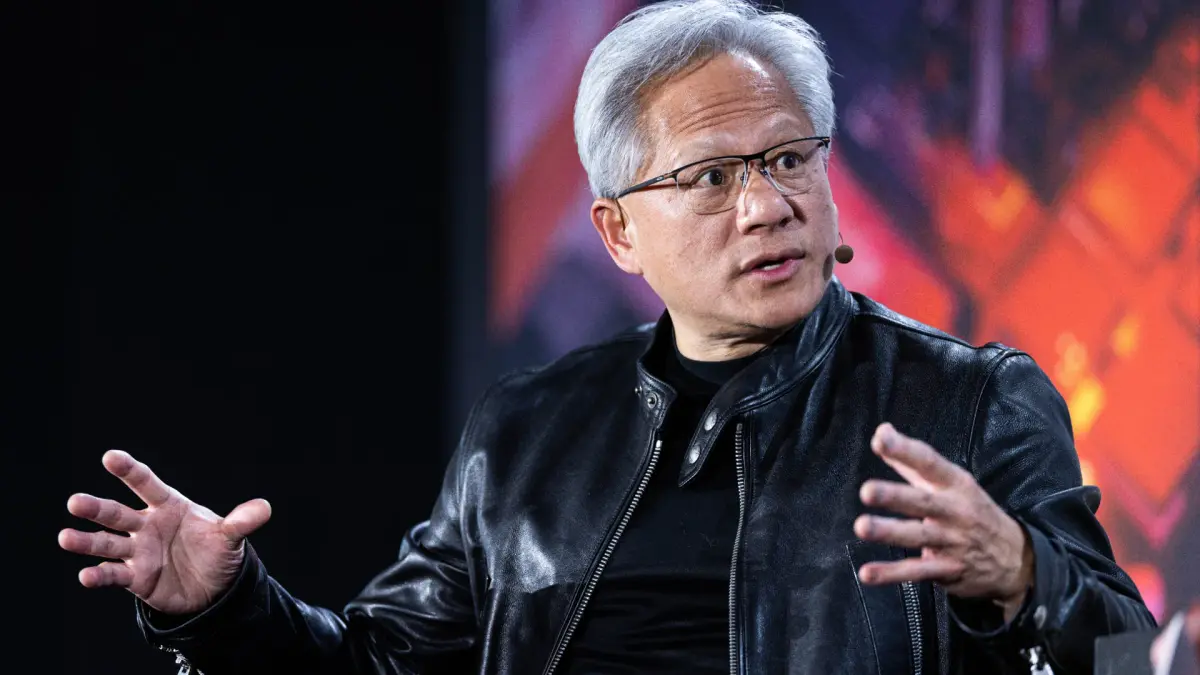
Tech Wire Asia reported that Jensen Huang presented the partner list during his first visit to the country in about nine months.
The programme includes Nemotron open-weight models and a separate company blog announcement.
The partner list includes Toyota, Kawasaki Heavy Industries, Mizuho, SMBC Group's Japan Research Institute, Canon, Fujifilm, RIKEN and SEGA.
Nemotron Models Anchor The Local AI Push
The account reported that the chipmaker is using the Nemotron model family as the software layer for the strategy.
The release gives companies open model weights, supporting datasets and training material that can be adapted to domestic data and run locally.
Several Japanese organisations are already attached to that stack.
The Institute of Science Tokyo used Nemotron data for its Swallow foundation models.
SB Intuitions, the SoftBank subsidiary, used Nemotron libraries for its Sarashina series, while Sakana AI is bringing Nemotron into its Fugu model-routing platform.
NTT DATA, Hitachi and ENEOS are building Japanese-language applications on top of the models.
Huang has described sovereign AI as a strategy that now spans more than 20 countries, according to the report.
In the local rollout, that framing connects domestic model development with the company's hardware, because open models still need GPU systems for training, inference and enterprise deployment.
Banks And Research Groups Name AI Factory Plans
Mizuho plans what it expects to be the largest on-premises AI factory in the country's banking sector, starting on DGX B200 systems.
The on-premises design is intended to let agents work against sensitive bank data without that data leaving the building.
SMBC Group's Japan Research Institute has deployed a Nemotron-based AI factory.
Rakuten Bank is building transaction foundation models on tens of millions of banking and card accounts held across the group.
RIKEN is bringing two Blackwell-based supercomputers online, including a quantum-HPC system linked to on-premises quantum processors.
The company also described the country as the first international partner in the US government's Genesis Mission, an AI-for-science initiative.
Healthcare And Robotics Claims Remain Vendor-Led
The healthcare section includes the Tokyo-1 drug-discovery consortium run by Xeureka.
Tech Wire Asia said the group now includes Astellas, Daiichi Sankyo, Ono Pharmaceutical and, since April, Eisai, with screening and generative-design workloads running on BioNeMo.
SyntheticGestalt unveiled two molecular models that it says lead public drug-discovery benchmarks.
The report described that benchmark claim as company testing rather than independent evaluation.
Kawasaki is developing surgical-support, nursing and transport robots.
Toyota is extending an existing partnership to build driver-assistance systems on DRIVE, run factory simulations in Omniverse and train a vision-language model through Woven.
OMRON, Fujitsu, Hitachi and Shimizu are using the Metropolis toolkit for factory inspection, rail maintenance and construction-site safety.
Canon and Fujifilm have begun shipping next-generation CT systems built on the company's GPUs.
The same account cited vendor and partner efficiency figures, including a 15% cut in rail maintenance and energy costs, while noting that those figures came from the vendors and their partners.
Export Controls Sit Behind The Rollout
The campaign follows tighter US export controls that the account said have limited the chipmaker's ability to sell into China's data-centre market.
The report said Washington tightened controls again in May to cover the Blackwell line.
On July 14, the company rolled out a stricter compliance regime for Asian customers, according to the same account.
The reported whitelist disqualified more than half of past buyers and added end-user scrutiny in Singapore, Malaysia and the country covered by the rollout to reduce chip rerouting into China.
The same report cited China's LineShine system reclaiming the top spot on the June TOP500 list.
The ranking appeared in the same account alongside the Asian rollout and the US restrictions narrowing the company's China data-centre sales.
The report did not identify how many local deployments have moved from pilot to production, publish independent benchmark results for the vendor-led claims, or disclose chip-order volumes tied to the partner list.
Summary version for Medium
Nvidia AI Push Names Banks, Carmakers And RIKEN
Why this hardware shift matters for AI and compute buyers
Quick Summary: Tech Wire Asia reported that Nvidia used a country visit by Jensen Huang to connect Nemotron open models, DGX B200 systems and Blackwell supercomputers with local banks, carmakers, hospitals and research groups. The report said pilot-to-production conversion, audited benchmark results and chip-order volumes remain outside the public record.
Nemotron Models Anchor The Local AI Push
The account reported that the chipmaker is using the Nemotron model family as the software layer for the strategy. The release gives companies open model weights, supporting datasets and training material that can be adapted to domestic data and run locally.
Banks And Research Groups Name AI Factory Plans
Mizuho plans what it expects to be the largest on-premises AI factory in the country's banking sector, starting on DGX B200 systems.
- Point 1: The central topic is chips-semiconductors, with the announcement framed around concrete operating detail.
- Point 2: The on-premises design is intended to let agents work against sensitive bank data without that data leaving the building.
The important shift is not the AI label, but the operating boundary it creates for teams.
Healthcare And Robotics Claims Remain Vendor-Led
The healthcare section includes the Tokyo-1 drug-discovery consortium run by Xeureka. Tech Wire Asia said the group now includes Astellas, Daiichi Sankyo, Ono Pharmaceutical and, since April, Eisai, with screening and generative-design workloads running on BioNeMo.
Read the Full Deep Dive
Want to explore the complete technical analysis, enterprise trade-offs, and detailed metrics?
Read the full article originally published at SendTech Times