Analysis
CAPACITY TEST:

Nokia And NVIDIA Push AI-RAN Roadmap Toward 2027 Field Tests

Newsroom brief

Nokia announced an AI-native RAN platform with NVIDIA Aerial integration and claimed demonstrated spectral-efficiency gains of more than 20%, while its larger 50% and 100% capacity targets remain tied to 2027 and 2028 roadmap milestones.
Verified against source materialEdited by SendTech Times Chips & Compute Desk
Nokia And NVIDIA Push AI-RAN Roadmap Toward 2027 Field Tests

More than 20% spectral-efficiency gains have already been demonstrated for AI-native RAN work, according to a July 15 company announcement that also sets 50% and more than 100% roadmap targets for later releases.

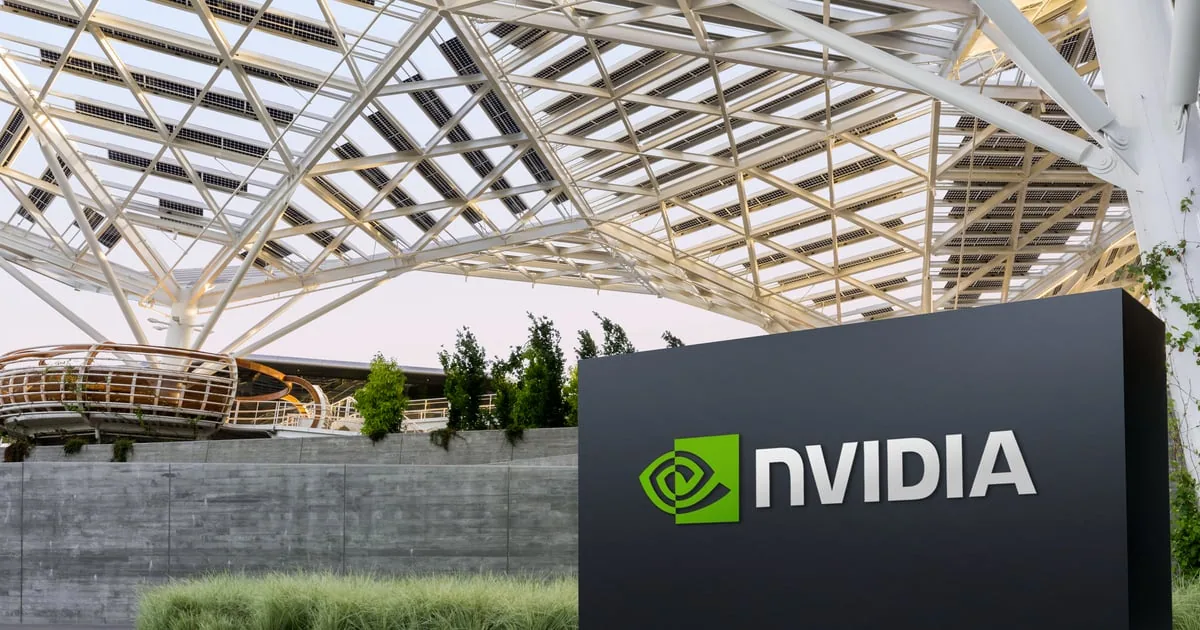
The new platform combines the company's AI-native anyRAN software with NVIDIA's Aerial AI-RAN platform.

The vendor announcement presents the system as a commercial path for using AI and accelerated computing inside radio access networks serving 4G, 5G and future network evolution.

The release describes the platform as a way to run radio functions and AI workloads on accelerated infrastructure.

It also connects the product direction to the same anyRAN software, ORAN compliance plans and new accelerated baseband options, giving operators a roadmap that spans software, compute and radio equipment.

AI-RAN Pitch Starts With Spectrum Efficiency

Mobile operators usually have to add spectrum, sites or equipment to expand radio capacity.

The platform pitch instead focuses on better use of existing spectrum through AI-assisted radio processing and accelerated computing.

The roadmap uses those performance targets as supplier milestones.

Operator field evidence will be needed before they can be treated as live-network capacity results across dense traffic, rural coverage and enterprise campus deployments.

NVIDIA Aerial Extends The Mobile Infrastructure Stack

The announcement links the radio software stack with NVIDIA Aerial, extending AI accelerator positioning from data centres into mobile network infrastructure.

The release says AI workloads and RAN functions can run on accelerated computing infrastructure.

The anyRAN roadmap also includes support for three new accelerated computing baseband platforms.

The existing portfolio is described as fully ORAN compliant, tying the platform to operator interest in open interfaces and more flexible supplier choices.

Commercial timing remains partly forward-looking.

The announcement calls the platform commercial while placing larger efficiency targets in 2027 and 2028, so near-term adoption will depend on available components, operator trials and comparisons with conventional RAN upgrades.

AI-RAN changes the radio discussion from base-station refresh cycles alone to a combined software, silicon and cloud-infrastructure decision.

Operators would have to align radio planning, edge-compute capacity, security review and automation tools before wide deployment.

The platform also arrives as networks prepare for heavier machine-to-machine traffic, enterprise private-network demand and future sensing workloads.

Those use cases increase interest in more adaptive radio systems, but they also raise the standard for predictable performance under congestion and mixed device behavior.

A second buyer question is operational control.

If radio optimization depends on AI models and accelerated compute, carriers will need clear procedures for testing updates, isolating faults and measuring whether an optimization improves customer experience rather than only radio-layer indicators.

Operator Evidence Is Still The Missing Layer

AI-RAN adoption will depend on site power, integration cost, transport design, interoperability and performance across different traffic patterns.

Those operating factors determine whether the efficiency gains improve network economics after hardware, software and deployment work are counted.

The public record still lacks named operator deployments for the new platform, live-network trial results, site-level cost models, power-use data and service-level measurements.

Those are the missing evidence points for judging whether the roadmap becomes a near-term investment case or a longer 6G transition path across live urban, suburban and enterprise networks.

Share this article
inXf

Related articles

More
Nvidia 6G Radio Chip Plan Moves AI-RAN Into Telecom Edge
Chips & Semiconductors

Nvidia 6G Radio Chip Plan Moves AI-RAN Into Telecom Edge

Nvidia is working on a GPU-based chip for 6G radio units, extending AI-RAN into low-PHY radio processing while power, supplier integration and RAN spending remain the key tests.

Nokia-Indosat AI-RAN Deal Turns Indonesia Into A Live 5G Testbed
Telco & Connectivity

Nokia-Indosat AI-RAN Deal Turns Indonesia Into A Live 5G Testbed

Nokia and Indosat have moved their Nvidia-backed AI-RAN collaboration from demonstrations toward a nationwide 5G modernization plan, with live-network field trials targeted by the end of 2026 and broader commercial deployment expected in 2027.

Indosat Bases AI Grid Plan On 80% Mid-Band 5G Rollout
Telco & Connectivity

Indosat Bases AI Grid Plan On 80% Mid-Band 5G Rollout

Indosat says its Nokia 5G modernisation will add low-band 5G nationwide and mid-band 5G to about 80% of its network over three and a half years, but it has not disclosed site counts, capex or named AI Grid customers.

UMC Starts Singapore Silicon Photonics Production For AI Networks
Chips & Semiconductors

UMC Starts Singapore Silicon Photonics Production For AI Networks

CNBC reported that United Microelectronics Corporation has started mass production of silicon photonics wafers in Singapore with SILITH Technology after an 18-month development push. The company plans a 12-inch platform for customer product development by 2027, while the report did not name first customers or supply commitments.

Onsemi Synaptics Deal Adds Edge AI Compute With Approval Still Pending
Chips & Semiconductors

Onsemi Synaptics Deal Adds Edge AI Compute With Approval Still Pending

Onsemi is buying Synaptics in an all-stock deal valued at about $7 billion to add edge AI compute, wireless connectivity and human-machine interface assets. The transaction is expected to close in mid-2027 if regulators approve it, but customer deployments and integration milestones remain undisclosed.

Samsung UFS 5.0 Turns Phone Storage Into An On-Device AI Constraint
Chips & Semiconductors

Samsung UFS 5.0 Turns Phone Storage Into An On-Device AI Constraint

Samsung says its UFS 5.0 storage reaches 10.8 GB/s read speed, improves power efficiency by more than 40% and will enter mass production in the fourth quarter of this year.

Keep Reading

More Stories

Latest
Cadence Adds AuraStack AI Agent For PCB And Advanced Packaging DesignChips & SemiconductorsJul 16, 2026Cadence Adds AuraStack AI Agent For PCB And Advanced Packaging DesignThe Register reported that Cadence Design Systems introduced AuraStack, an agentic AI system for PCB and advanced packaging workflows. Cadence cited a 15x productivity claim and named Nvidia among customers, but The Register did not include pricing, availability dates, full customer names or independent benchmark results.OpenAI Backs State AI Safety Baseline As Federal Cyber Tests NearCapital & PolicyJul 16, 2026OpenAI Backs State AI Safety Baseline As Federal Cyber Tests NearOpenAI said California, New York and Illinois have advanced frontier AI safety legislation with shared disclosure, incident-reporting and audit elements, while a federal cyber-testing framework is still targeted for early August.Intel Ships Panther Lake Chips Built With ASML High NA EUVChips & SemiconductorsJul 16, 2026Intel Ships Panther Lake Chips Built With ASML High NA EUVIntel has shipped selected Panther Lake processors made on Intel 18A with ASML High NA EUV lithography, Interesting Engineering reported, giving Intel production data while customer names, shipment volumes and wider node timing remain undisclosed.Thinking Machines Releases Inkling Open-Weights Model With 975 Billion ParametersAIJul 16, 2026Thinking Machines Releases Inkling Open-Weights Model With 975 Billion ParametersSiliconANGLE reported that Thinking Machines Lab has released Inkling, its first foundation model, with full open weights and fine-tuning through Tinker. The account cited 975 billion total parameters, about 41 billion active parameters per average prompt and training on about 45 trillion tokens, while leaving customer deployments and independent benchmark validation undisclosed.OpenAI Keeps GPT-Red Attack Model Private After Prompt-Injection TestsAIJul 16, 2026OpenAI Keeps GPT-Red Attack Model Private After Prompt-Injection TestsThe Next Web reported that OpenAI has built GPT-Red, an internal automated red-team model for prompt-injection attacks, but is keeping the attacker private. The report cited attack success rates above 90% against an older GPT-5 and below 23% against GPT-5.6, while noting that human testers still catch cases GPT-Red misses.OpenAI Adds Usage Analytics And Spend Controls For ChatGPT WorkAIJul 15, 2026OpenAI Adds Usage Analytics And Spend Controls For ChatGPT WorkOpenAI said GPT-5.6 uses 54% fewer output tokens and 57% less time per task in a named coding-agent index, while its enterprise guidance tells ChatGPT Work admins to manage AI spend by accepted outcomes, usage analytics and governance controls rather than token price alone.IMEC Outlines CMOS 2.0 Path As AI Compute Demand RisesAIJul 15, 2026IMEC Outlines CMOS 2.0 Path As AI Compute Demand RisesCommonWealth Magazine English reported that IMEC's new CEO Patrick Vandenameele outlined semiconductor roadmap work tied to AI inference demand, CMOS 2.0 stacking, memory placement and optical interconnects. CommonWealth reported that Vandenameele estimated a 150-fold workload increase as AI shifts from training to inference, while TSMC's Kevin Zhang pointed to nanosheet, CFET and 3D stacking work.Allstate Says Broadcom Ordered Four Audits After VMware ExitCapital & PolicyJul 15, 2026Allstate Says Broadcom Ordered Four Audits After VMware ExitArs Technica reported that a June filing accused Broadcom of starting four audits after Allstate chose not to renew VMware and CA contracts. VMware and CA have separate cases against the insurer, while the filings leave its current virtualisation stack and production impact undisclosed.Oracle Adds AI-Native Builder For Fusion Agentic ApplicationsAIJul 15, 2026Oracle Adds AI-Native Builder For Fusion Agentic ApplicationsYahoo Tech, republishing Verdict, said Oracle introduced an AI-native builder inside AI Agent Studio for Fusion Applications. Oracle said the builder supports no-code, low-code and pro-code work, runs inside Oracle Fusion Cloud Applications, and can extend over 1,000 existing AI agents and 22 Fusion Agentic Applications.Quantum Data Centre Push Shifts From Qubit Counts To Hybrid WorkloadsCloud & Data CentersJul 15, 2026Quantum Data Centre Push Shifts From Qubit Counts To Hybrid WorkloadsData Center Knowledge reported that quantum computing work is shifting toward hybrid systems that connect QPUs with GPU and CPU infrastructure. Hyperion estimated the market at $1.4 billion in 2025 and projected about $3 billion by 2028, while the article did not identify production customers, signed deployment contracts or facility-level power loads.ASML Raises 2026 Sales Forecast As AI Chip Orders Lift Capacity PlansChips & SemiconductorsJul 15, 2026ASML Raises 2026 Sales Forecast As AI Chip Orders Lift Capacity PlansASML said 2026 sales should now reach 43 billion euros to 45 billion euros after stronger AI-chip equipment demand, up from its earlier 36 billion euro to 40 billion euro range. The company also targeted 30% additions to 2026 low NA EUV and DUV immersion capacity, but it did not name customer order volumes or ramp dates.Zoom Opens AI Receptionist To Non-Zoom Phone SystemsAIJul 15, 2026Zoom Opens AI Receptionist To Non-Zoom Phone SystemsNo Jitter reported that Zoom Virtual Agent Receptionist can now work with any business phone system, extending a product that first launched inside Zoom Phone. Omdia estimated the reachable phone-system base at about 201.4 million subscriptions or licences, while standalone customer counts, call volumes and retention data remain outside the public record.