Nokia-Indosat AI-RAN Deal Turns Indonesia Into A Live 5G Testbed
Nokia and Indosat have moved their Nvidia-backed AI-RAN collaboration from demonstrations toward a nationwide 5G modernization plan, with live-network field trials targeted by the end of 2026 and broader commercial deployment expected in 2027.
Indonesia Becomes The Deployment Test
Nokia and Indosat have turned a year-long AI-RAN collaboration with Nvidia into a commercial network modernization plan for Indonesia.
The agreement makes Nokia the key supplier for Indosat’s low- and mid-band 5G RAN rollout nationwide, while Nvidia’s GPU-accelerated AI-RAN platform becomes the compute base for AI-enhanced radio functions and edge AI workloads.
The deal matters because it moves AI-RAN from conference proof points toward a live operator network in a large and uneven geography.
Indonesia has dense urban demand, underserved areas outside Java and a national ambition to build a more advanced digital economy under the Golden Indonesia 2045 vision.
A nationwide 5G upgrade tied to AI-RAN gives the country a more direct test of whether the technology can improve coverage and capacity without simply adding hardware and power cost.
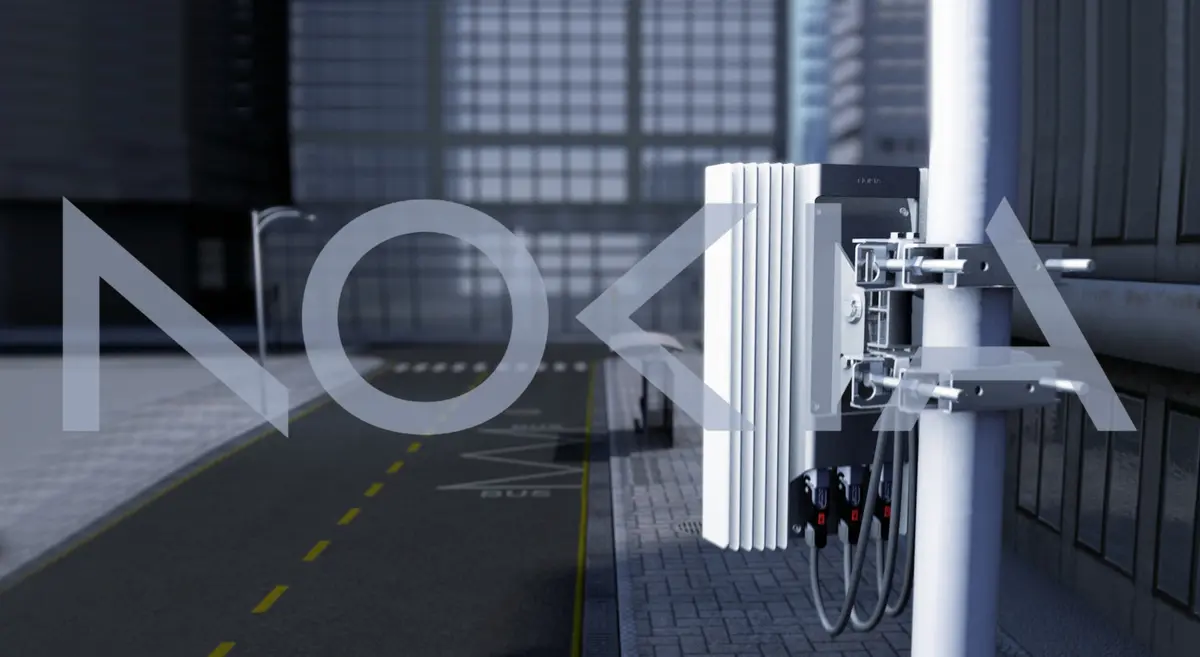
Nokia’s radio refresh includes Habrok and Pandion models, the Levante baseband platform, C-RAN systems, and network management and automation tools.
That makes the project broader than a narrow GPU trial.
It is a radio access modernization program designed around AI-ready infrastructure from the start.
From Demos To Field Trials
The partnership began with an MoU at MWC 2025, followed later in 2025 by an AI-RAN Research Centre in Surabaya.
At MWC 2026, the three partners showed a real-time AI-powered 5G call between Barcelona and Jakarta, a demonstration described as Southeast Asia’s first of that kind.
The new agreement adds the operational timetable that the earlier demonstrations lacked.
Field trials on Indosat’s live network in Indonesia are planned by the end of 2026.
Those trials are intended to test spectral efficiency, energy savings and AI service performance outside controlled lab conditions.
If the results support deployment, broad commercial AI-RAN rollout across Indosat’s footprint is expected to begin in 2027.
That sequence is important for operators watching AI-RAN from the sidelines.
Vendor claims around efficiency and automation are easier to show in demonstrations than in heterogeneous field networks.
Indonesia’s mix of islands, traffic patterns and infrastructure quality creates a more demanding proof point.
One Platform For Radio And Edge AI
The planned architecture combines AI-for-RAN, AI-on-RAN and AI-and-RAN on software-defined infrastructure.
AI-for-RAN applies machine learning to network operations such as traffic prediction, interference management and dynamic resource allocation.
AI-on-RAN uses the same hardware base for edge inference workloads such as video analytics or generative AI.
AI-and-RAN treats the platform as shared infrastructure for connectivity and third-party AI workloads.
Technically, the design uses Nokia anyRAN and Cloud RAN software for cloud-native distributed and centralized unit functions, with Kubernetes orchestration on GPU-accelerated servers.
Nvidia supplies the AI Aerial platform and GPUs.
Indosat’s target is an intelligent AI mesh that combines centralized AI processing with distributed AI-RAN nodes for millions of devices and users.
The most immediate service implications are low-latency consumer and enterprise workloads.
Potential uses include AR/VR, cloud gaming, city traffic monitoring and factory private 5G video analytics if the network performs as planned.
Economics Remain The Hard Part
The unresolved question is not whether the partners can demonstrate AI-RAN.
It is whether the economics work in a tight-ARPU market.
The open objections center on the capital cost, operating cost and power profile of sites built around GPU acceleration, especially when operators compare them with purpose-built RAN silicon.
Energy efficiency is the decisive claim to watch.
Nokia and Nvidia argue that the architecture can improve spectral efficiency and optimize power use, but the end-of-2026 field trials are where those claims must be tested.
If GPU-based cell sites consume too much power or require too much capital, the commercial case weakens even if the technology performs.
The deal also extends the Nokia-Nvidia telecom alliance.
Nvidia has committed a $1 billion investment in Nokia, and Indosat joins early AI-RAN operators that include T-Mobile US, SoftBank and Vodafone.
For Indonesia, the outcome will show whether AI-RAN can become national digital infrastructure rather than a premium network experiment.
Summary version for Medium
Nokia-Indosat AI-RAN Deal Turns Indonesia Into A Live 5G Testbed
What the announcement means beyond the headline
Quick Summary: Nokia and Indosat have moved their Nvidia-backed AI-RAN collaboration from demonstrations toward a nationwide 5G modernization plan, with live-network field trials targeted by the end of 2026 and broader commercial deployment expected in 2027.
Indonesia Becomes The Deployment Test
Nokia and Indosat have turned a year-long AI-RAN collaboration with Nvidia into a commercial network modernization plan for Indonesia. The agreement makes Nokia the key supplier for Indosat’s low- and mid-band 5G RAN rollout nationwide, while Nvidia’s GPU-accelerated AI-RAN platform becomes the compute base for AI-enhanced radio functions and edge AI workloads.
From Demos To Field Trials
The partnership began with an MoU at MWC 2025, followed later in 2025 by an AI-RAN Research Centre in Surabaya.
- Point 1: The central topic is AI RAN, with the announcement framed around concrete operating detail.
- Point 2: At MWC 2026, the three partners showed a real-time AI-powered 5G call between Barcelona and Jakarta, a demonstration described as Southeast Asia’s first of that kind.
AI deployments now depend on where models, data, approvals and operating teams meet.
One Platform For Radio And Edge AI
The planned architecture combines AI-for-RAN, AI-on-RAN and AI-and-RAN on software-defined infrastructure. AI-for-RAN applies machine learning to network operations such as traffic prediction, interference management and dynamic resource allocation.
Read the Full Deep Dive
Want to explore the complete technical analysis, enterprise trade-offs, and detailed metrics?
Read the full article originally published at SendTech Times