Texas Grid Rules Push AI Data Centres To Pay Interconnection Costs
Texas regulators are moving AI data-centre projects into a stricter grid-planning process that adds financial security, interconnection charges and curtailment disclosure.
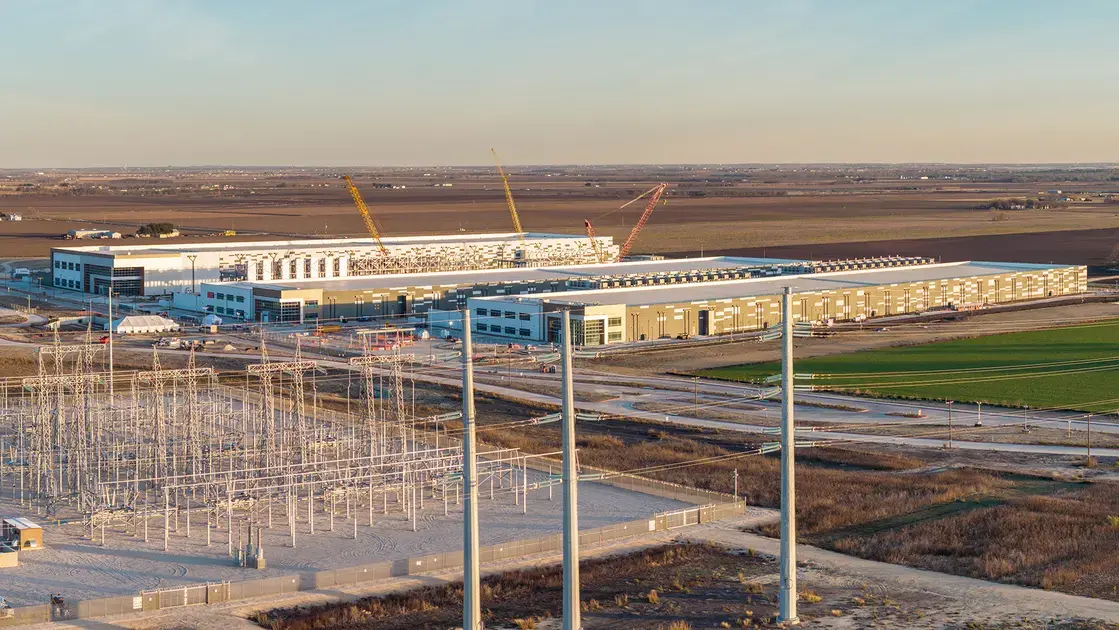
Texas regulators are moving AI data centres from ordinary customer requests into grid-planning obligations, after Data Center Knowledge reported that Gov. Greg Abbott ordered the Public Utility Commission of Texas to shift more connection costs onto large computational loads.
The order shifts the capacity rush toward a cost-allocation dispute.
AI campuses can bring economic development, but the Texas review focuses on whether residential customers and small businesses should carry transmission upgrades built for data-centre expansion.
PUCT Rulemaking Targets Interconnection Costs
Abbott said in his June 10 directive that PUCT should lower residential transmission costs, make data centres carry a larger share of grid infrastructure spending and prepare further protections as large computational loads grow.
Entry into ERCOT planning studies would no longer be a simple queue request for large-load customers.
Applicants would have to lodge financial security, provide operating data and cover the direct work needed to connect their sites.
Transmission charges would begin once reserved capacity is available, rather than waiting for a facility to start drawing power.
PUCT expects to complete the rulemaking by December.
Chairman Thomas Gleeson's written response framed the policy around affordability, reliability and the interests of residents who depend on the grid, while still leaving room for responsible economic development.
Batch Zero Tests Submitted Megawatts Together
ERCOT's Batch Zero process changes how proposed AI-scale loads enter the planning queue.
Instead of checking each project separately, the one-time study groups proposed loads of at least 75 MW and measures available capacity by location and year through 2032.
That collective review determines which qualified projects receive transmission capacity and which upgrades are needed for developments treated as committed.
ERCOT is expected to make future batch studies part of its permanent planning process in 2027.
Neil Osnato, founder of Persistence Analytics Group, told Data Center Knowledge that the shift changes large-load review from isolated customer requests into system-planning assumptions.
His main caveat is whether eligibility standards can separate submitted megawatts from projects that are financeable, buildable and durable.
Cost Review Names Ratepayer Exposure
The transmission cost review tied rapid computational-load growth to major grid spending and warned that existing policies could push higher bills onto households and small businesses.
Cost-allocation revisions are now being written so larger loads absorb more of the expense.
Completed actions already change the forecasting side of the process.
Utilities must bring new large loads into ERCOT demand forecasts under standardised requirements, and existing generation cannot simply be rerouted to serve a new data-centre project.
The operating effect is a tighter link between project queues, available power and who pays when grid capacity is reserved.
Financial security may discourage speculative applications, but it is not the same as proof that a site will be built.
Osnato warned that even a well-capitalised developer may postpone a project, shrink it, move it, sell it, change its power plan or walk away.
Reliability Programme Adds Curtailment Disclosure
A Senate Bill 6 reliability programme under development by PUCT and ERCOT would pay major electricity users to cut demand ahead of expected grid emergencies.
Data-centre developers would have to identify whether they can reduce operations or switch to backup generation during those periods.
The commission is asking lawmakers for direct ERCOT communication with large computational load customers, mandatory registration with ERCOT and PUCT, and coverage of large computational load owners under the Lone Star Infrastructure Protection Act.
Abbott said he would pursue legislation on water-efficient cooling, annual electricity and water reporting, incentive repeal, setbacks and noise-reduction measures.
ERCOT's response was not available at publication.
Summary version for Medium
Texas Grid Rules Push AI Data Centres To Pay Interconnection Costs
Why Texas Grid Rules Push matter now for cloud infrastructure teams
Quick Summary: Texas regulators are moving AI data-centre projects into a stricter grid-planning process that adds financial security, interconnection charges and curtailment disclosure.
PUCT Rulemaking Targets Interconnection Costs
Abbott said in his June 10 directive that PUCT should lower residential transmission costs, make data centres carry a larger share of grid infrastructure spending and prepare further protections as large computational loads grow. Entry into ERCOT planning studies would no longer be a simple queue request for large-load customers.
Batch Zero Tests Submitted Megawatts Together
ERCOT's Batch Zero process changes how proposed AI-scale loads enter the planning queue.
- Point 1: The central topic is cloud-data-centers, with the announcement framed around concrete operating detail.
- Point 2: Instead of checking each project separately, the one-time study groups proposed loads of at least 75 MW and measures available capacity by location and year through 2032.
AI deployments now depend on where models, data, approvals and operating teams meet.
Cost Review Names Ratepayer Exposure
The transmission cost review tied rapid computational-load growth to major grid spending and warned that existing policies could push higher bills onto households and small businesses. Cost-allocation revisions are now being written so larger loads absorb more of the expense.
Read the Full Deep Dive
Want to explore the complete technical analysis, enterprise trade-offs, and detailed metrics?
Read the full article originally published at SendTech Times