Google Lease Guarantees Put $44bn Behind AI Data Centres
The Next Web reported that Google has agreed to cover as much as $44bn of data-centre lease payments if tenants default, turning TPU demand from Anthropic and other AI customers into a financing obligation outside owned facilities.
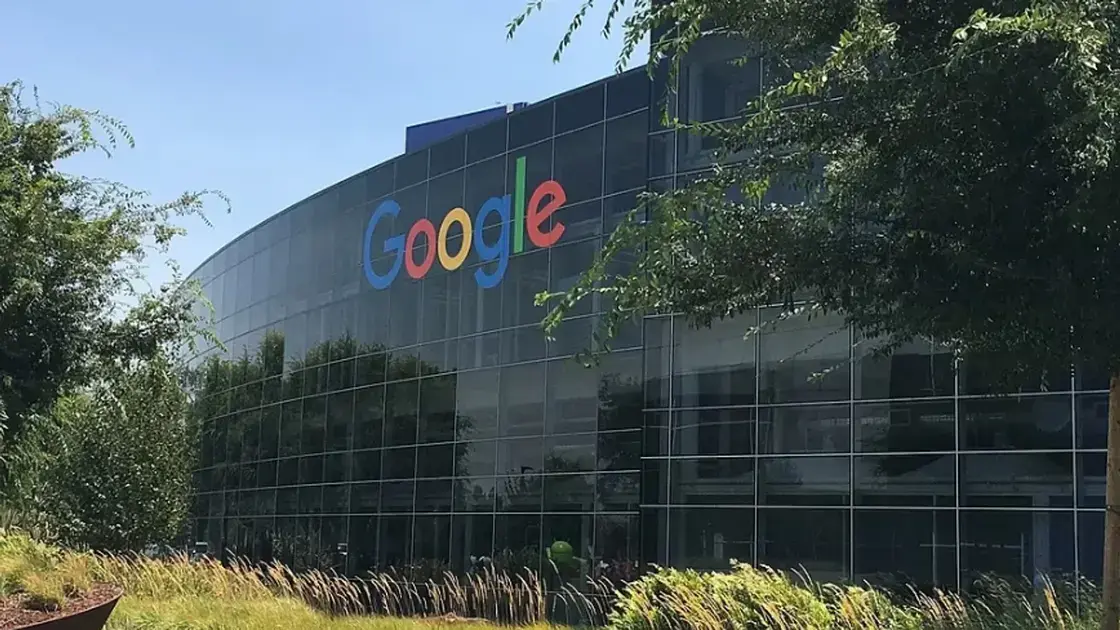
Google's AI infrastructure financing has moved beyond owned data-centre projects.
The Next Web reported that Google has agreed to cover as much as $44bn of lease payments on third-party data-centre buildings if the tenant stops paying, a structure tied to demand for the company's tensor processing units.
The Information reported that the commitment stood at $6.5bn at the end of September, leaving Google with a much larger off-balance-sheet exposure within nine months.
The mechanism gives developers a stronger credit backstop, lets them borrow at lower cost and creates capacity that can buy Google's TPUs for customers such as Anthropic.
Lease Guarantees Carry The TPU Expansion
The buildings sit outside Google's ownership and occupancy.
The obligation activates only if the data-centre tenant defaults, but lenders treat the guarantee as support from a company with one of the strongest balance sheets in technology.
The financing route changes the path for Google's in-house AI chips.
TPUs compete with Nvidia systems for large AI workloads, and project guarantees help data-centre developers finance buildings that can host Google silicon.
Anthropic rents the resulting capacity instead of building every facility itself.
TNW identified a Lake Mariner guarantee of $3.2bn in western New York, a $7bn River Bend commitment in Louisiana and a $1.4bn Texas backstop.
The disclosed total now gathers those project-level guarantees into a single financing figure for TPU-linked AI capacity.
Off-Balance-Sheet Debt Moves With AI Demand
The guarantee commits no cash at signing but becomes costly if a tenant fails.
That difference lets Google expand TPU-linked capacity without placing every building or loan on its own property ledger, while still giving developers and lenders enough confidence to fund construction.
The structure also pushes more of the AI buildout into accounting lines that are harder to read than ordinary debt.
TNW put aggregate off-balance-sheet AI debt across five US technology giants at $1.65tn, more than those companies report as outright debt.
Google, Microsoft, Meta, Amazon and Oracle have all sought additional routes to support AI capacity without carrying every facility on the balance sheet in the same way.
Credit backing can make a marginal data-centre project financeable for developers.
Google receives a route to stronger TPU demand, but the same structure leaves contingent lease risk if the ultimate tenant cannot keep paying for the capacity.
Anthropic Demand Brings Real Estate Risk
Anthropic is the named customer in the financing chain.
Its model-training and inference demand gives Google a route to sell or rent more TPU capacity, while the real estate obligation remains attached to buildings Google does not own.
The financing chain depends on chip supply, power access, buildings, leases and tenant credit moving together before TPU capacity becomes usable computing service.
A default in one part of the structure can push risk back toward Google even when the facility is not on Google's property books.
The disclosed guarantee also changes how investors compare AI expansion with older hyperscale spending.
Direct data-centre ownership kept more of the capital burden visible through capital expenditure and depreciation.
Lease guarantees add a second layer in which the cash cost may appear only if the customer or tenant fails.
The Default Risk Remains Outside Normal Capex
The $44bn figure does not mean Google has spent $44bn in cash.
It is a promise to cover lease payments under a failure scenario, which makes tenant quality and AI workload durability central to the financing model.
The September comparison also leaves the pace of new guarantees visible without turning the exposure into conventional data-centre capex.
A tenant-by-tenant schedule for the full $44bn exposure remains outside the public record.
Customer utilisation and default conditions remain the key missing proof behind the TPU-backed data-centre financing chain.
Summary version for Medium
Google Lease Guarantees Put $44bn Behind AI Data Centres
Why Google Lease Guarantees matter now for cloud infrastructure teams
Quick Summary: The Next Web reported that Google has agreed to cover as much as $44bn of data-centre lease payments if tenants default, turning TPU demand from Anthropic and other AI customers into a financing obligation outside owned facilities.
Lease Guarantees Carry The TPU Expansion
The buildings sit outside Google's ownership and occupancy. The obligation activates only if the data-centre tenant defaults, but lenders treat the guarantee as support from a company with one of the strongest balance sheets in technology.
Off-Balance-Sheet Debt Moves With AI Demand
The guarantee commits no cash at signing but becomes costly if a tenant fails.
- Point 1: The central topic is cloud-data-centers, with the announcement framed around concrete operating detail.
- Point 2: That difference lets Google expand TPU-linked capacity without placing every building or loan on its own property ledger, while still giving developers and lenders enough...
AI deployments now depend on where models, data, approvals and operating teams meet.
Anthropic Demand Brings Real Estate Risk
Anthropic is the named customer in the financing chain. Its model-training and inference demand gives Google a route to sell or rent more TPU capacity, while the real estate obligation remains attached to buildings Google does not own.
Read the Full Deep Dive
Want to explore the complete technical analysis, enterprise trade-offs, and detailed metrics?
Read the full article originally published at SendTech Times