Insilico Phase III Trial Tests AI Drug Discovery Timelines
Insilico Medicine has moved Rentosertib into the late-stage clinical record in China, after company disclosures put its fastest AI-supported candidate nomination at nine months.
A shortened AI discovery cycle is reaching a slower clinical-trial checkpoint.
AI News reported that Insilico Medicine has moved Rentosertib towards a Phase III trial in China, after company disclosures put its fastest AI-supported candidate nomination at nine months and its usual nomination timeline near 13 months.
Candidate nomination remains an early research milestone rather than proof of an approved medicine.
Rentosertib still needs larger human-study evidence, manufacturing validation and regulatory review before any commercial sale.
Nine-Month Nomination Reaches Late-Stage Testing
According to Insilico chief executive Alex Zhavoronkov, the fastest company programme reached candidate nomination in nine months.
The same source account put the conventional route to that milestone at about four-and-a-half years.
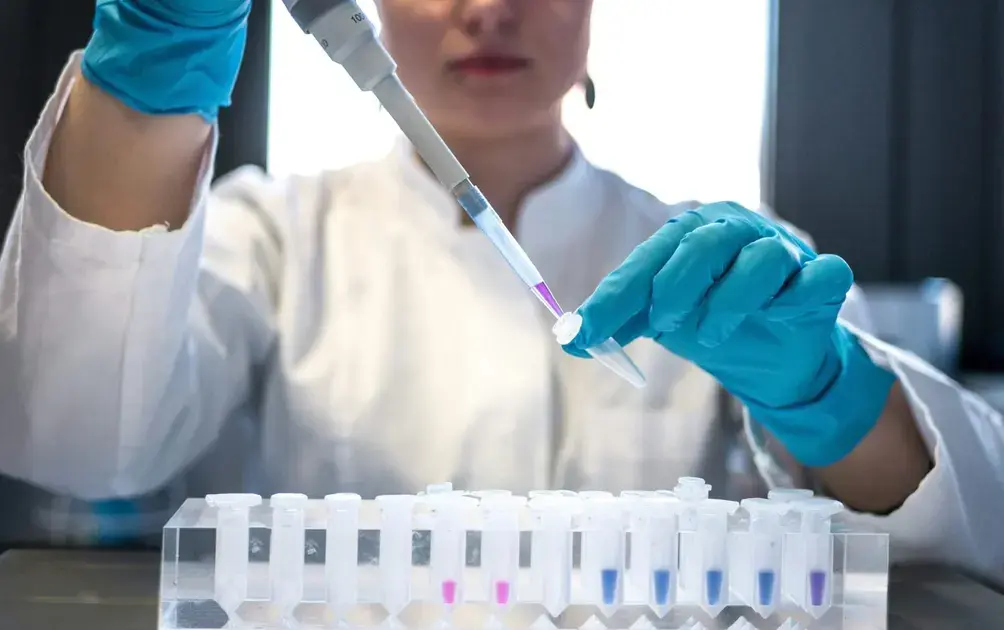
The workflow uses generative AI to choose biological targets, design possible drug molecules and decide which compounds move into laboratory testing.
Company disclosures list a typical 12 to 18 month path to preclinical-candidate nomination after researchers synthesise and test between 60 and 200 molecules.
Laboratory experiments keep the model claims bounded.
Biological activity and drug properties still have to be checked outside the AI system before a compound can move deeper into development.
Rentosertib Trial Covers China Sites And Lung Function
Rentosertib is the programme now moving beyond discovery-stage evidence.
The late-stage study covers 320 participants, 47 centres in China and a 52-week comparison between the oral idiopathic pulmonary fibrosis drug and a placebo.
ClinicalTrials.gov updated the record on July 7.
The listing marked the trial as not yet recruiting, with enrolment expected to begin in August 2026 and primary completion estimated for October 2029.
A smaller Phase IIa study has already been completed.
The larger trial will test whether a molecule whose target and structure were generated and optimised with AI can produce clinical evidence across a bigger patient group and a longer study period.
Shanghai Lab Work Carries The AI Platform
The operating model places software research and experimental validation in different locations.
The company conducts AI research in Montreal and Abu Dhabi, while biological testing, screening and laboratory scale-up are concentrated in Shanghai.
Zhavoronkov said China's research infrastructure, operating costs and regulatory environment contributed to the shorter development cycle.
A Pfizer executive told Reuters that Chinese clinical development can run three times faster and at about half the cost of equivalent European work.
China's drug-review system also changed the timetable for some applications.
The source account describes China's 2025 pathway as giving eligible Class I innovative-drug clinical-trial applications a 30-working-day review route, while more complex files can move into a 60-working-day period.
Commercial partnerships put the same discovery workflow in front of larger pharmaceutical counterparties.
The company has research and development agreements with Eli Lilly and Japan's Takeda.
A proposed strategic alliance with Taiwan-based Bora Pharmaceuticals carries a possible value above $2.5 billion, but only if the companies sign definitive agreements and fully implement the collaboration.
Pipeline Counts Stop Short Of Approval Proof
Company pipeline disclosures list 31 preclinical candidates since 2021 and 13 investigational new drug clearances.
Insilico says Rentosertib is its first programme to reach Phase III and that none of its experimental medicines has received commercial approval.
The broader success record for AI-designed drugs remains limited.
According to AI News, a 2024 analysis found Phase I success rates between 80% and 90% and Phase II success near 40%, with the number of Phase II programmes too small to prove a later-stage advantage.
The customer base is also geographically split from much of the laboratory work.
More than 90% of company revenue comes from Western pharmaceutical customers, according to Zhavoronkov, while geopolitical concerns have limited most software sales inside China.
Automation changes the operating risk inside the company as well as the research timeline.
Zhavoronkov estimated that about 40% of the software-side workforce could be automated or displaced, but he did not present the figure as an announced staff cut or a sector-wide forecast.
AI News put company headcount at about 400 people.
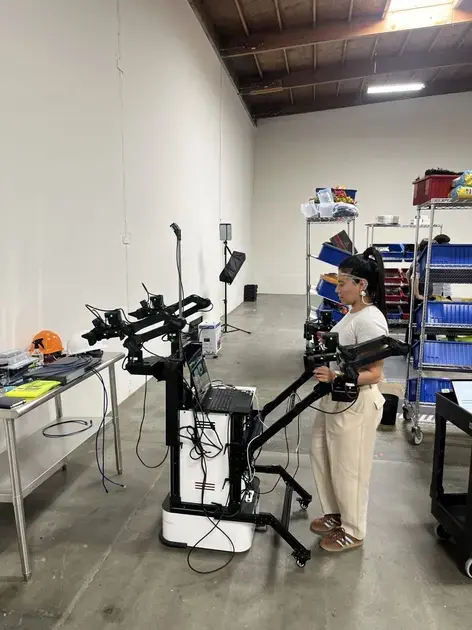
Retraining now covers AI evaluation systems, laboratory robots and automated equipment for both laboratory scientists and software engineers.
ClinicalTrials.gov estimates primary completion in October 2029.
The study measures lung function and safety across 320 participants over 52 weeks.
Summary version for Medium
Insilico Phase III Trial Tests AI Drug Discovery Timelines
What the announcement means beyond the headline
Quick Summary: Insilico Medicine has moved Rentosertib into the late-stage clinical record in China, after company disclosures put its fastest AI-supported candidate nomination at nine months.
Nine-Month Nomination Reaches Late-Stage Testing
According to Insilico chief executive Alex Zhavoronkov, the fastest company programme reached candidate nomination in nine months. The same source account put the conventional route to that milestone at about four-and-a-half years.
Rentosertib Trial Covers China Sites And Lung Function
Rentosertib is the programme now moving beyond discovery-stage evidence.
- Point 1: The central topic is ai, with the announcement framed around concrete operating detail.
- Point 2: The late-stage study covers 320 participants, 47 centres in China and a 52-week comparison between the oral idiopathic pulmonary fibrosis drug and a placebo.
AI deployments now depend on where models, data, approvals and operating teams meet.
Shanghai Lab Work Carries The AI Platform
The operating model places software research and experimental validation in different locations. The company conducts AI research in Montreal and Abu Dhabi, while biological testing, screening and laboratory scale-up are concentrated in Shanghai.
Read the Full Deep Dive
Want to explore the complete technical analysis, enterprise trade-offs, and detailed metrics?
Read the full article originally published at SendTech Times