Texas AI Campus Rules Put 525.5 MW Behind One Wind Interconnection
Texas regulators are considering whether Crusoe and Ensign Infrastructure must curtail a second AI data-centre load behind the Goodnight 1 wind farm during grid emergencies. The case tests Senate Bill 6 rules as the combined behind-the-meter load would reach 525.5 MW.
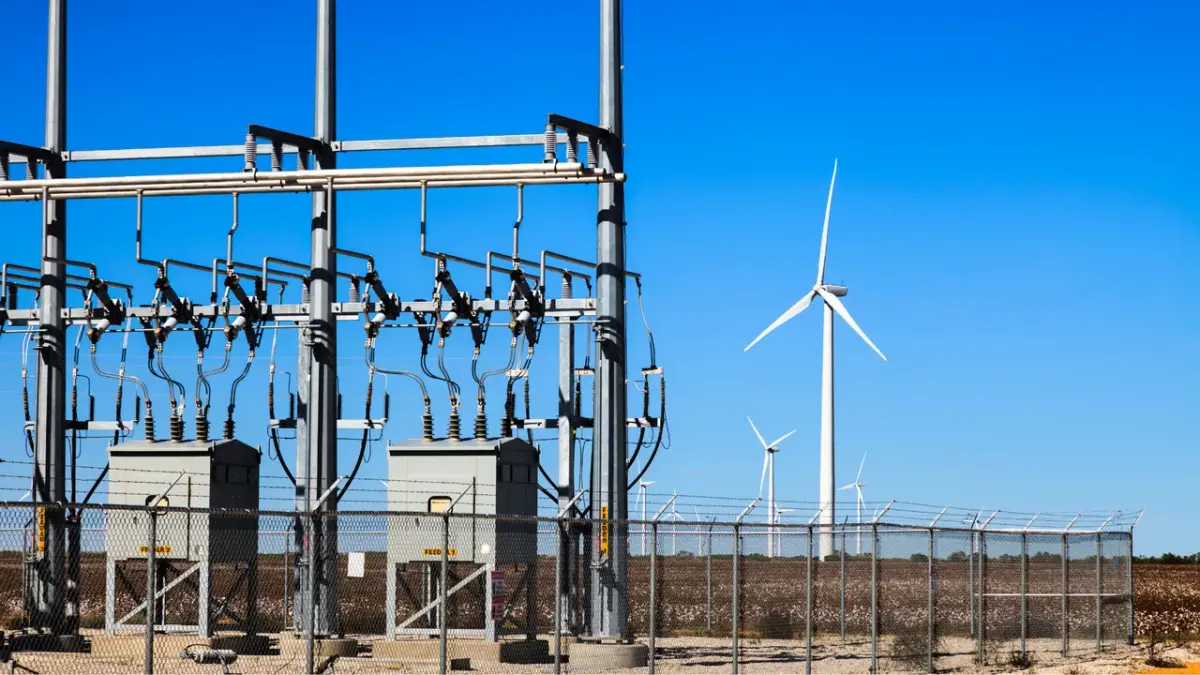
Crusoe Load 2 Faces Emergency-Curtailment Conditions
Texas regulators are testing how far AI data-centre loads can grow behind an existing power-plant interconnection before grid-emergency conditions tighten.
PUCT staff endorsed operating conditions proposed by ERCOT for Crusoe and Ensign Infrastructure's plan to add a 260 MW Crusoe Load 2 AI data centre behind the 265.5-MW Goodnight 1 wind farm in Armstrong County.
The application would sit behind the wind farm's existing point of interconnection with the ERCOT grid.
The proposed expansion follows the previously approved 265.5-MW Crusoe Load 1.
Together, the two AI data-centre loads would create 525.5 MW of behind-the-meter demand sharing Goodnight 1's existing interconnection.
Behind-the-meter means the data centres would be electrically located on the generator side of the interconnection.
That structure can shorten the time needed to secure power, but the Texas proceeding shows how reliability obligations can expand when a large load depends on an existing generator connection.
PUCT Staff Backs Six Operating Conditions
In a June 26, 2026 initial brief, PUCT staff recommended approving Crusoe Load 2 subject to the same six operating conditions previously imposed on Crusoe Load 1.
Those conditions include a requirement for Crusoe Load 2 to curtail within 30 minutes when ERCOT determines Goodnight 1's generation is needed for a transmission emergency or an Energy Emergency Alert.
The timing could fall to 10 minutes if the facility later demonstrates that capability.
PUCT staff and ERCOT argue that both AI facilities should remain able to curtail so Goodnight 1's output can be made available to the ERCOT market during emergencies.
The dispute follows PUCT Rule 25.205, which implements Senate Bill 6 procedures for net-metering arrangements between existing generators and large loads sharing a point of interconnection.
ERCOT also said the developers could have avoided this review by building a separate point of interconnection for the expansion.
By choosing the existing connection, ERCOT argues the second load became subject to the Senate Bill 6 review process.
Ensign Says Load 1 Already Covers The Deficit
Ensign does not dispute the Commission's authority to impose reliability conditions.
The company argues instead that ERCOT's proposed requirements exceed what PURA §39.169 authorises for this project.
Ensign says Crusoe Load 1 already must curtail up to 265.5 MW during emergency conditions.
In Ensign's view, that first-load obligation is enough to return Goodnight 1's generation to the ERCOT market, so a second full curtailment requirement is not justified for Crusoe Load 2.
The company also urged regulators to evaluate net system effects rather than total behind-the-meter load.
Ensign pointed to ERCOT study results that, in the company's account, did not show thermal problems, voltage problems or required transmission additions.
PUCT staff rejected that reading.
Staff said the shared point of interconnection should govern the analysis, not the sequence in which projects were added behind it.
ERCOT also said Goodnight 2, a planned wind project, falls outside the current review and leaves Crusoe Load 2 tied to Goodnight 1 for this application.
Texas Decision Could Shape AI Power Siting
Chris Talley, co-founder of Interconnection.fyi, said the Commission's decision could affect future AI campus designs in Texas.
He said the precedent is about proportionality because ERCOT's position could place 100% curtailment risk on the full colocated load, plus exclusion from demand-response programmes.
Talley pointed to Ensign's hypothetical of a 1 GW data centre colocated with a 50 MW generator.
He said a full-curtailment approach would make colocation most viable for developers able to build on-site backup generation sized for the entire facility load.
Talley also cited Amazon Data Services' Project Spectrum filing at the Comanche Peak nuclear plant.
In that structure, he said, the data centre would move onto customer-owned backup generation while the nuclear plant's output returns to the grid in emergencies.
A PUCT decision is expected later this summer.
PUCT has not issued a final ruling, and the record does not name final curtailment terms, demand-response eligibility, backup-generation commitments or any construction timetable for Crusoe Load 2.
Summary version for Medium
Texas AI Campus Rules Put 525.5 MW Behind One Wind Interconnection
Why Texas AI Campus Rules matter now for cloud infrastructure teams
Quick Summary: Texas regulators are considering whether Crusoe and Ensign Infrastructure must curtail a second AI data-centre load behind the Goodnight 1 wind farm during grid emergencies. The case tests Senate Bill 6 rules as the combined behind-the-meter load would reach 525.5 MW.
Crusoe Load 2 Faces Emergency-Curtailment Conditions
Texas regulators are testing how far AI data-centre loads can grow behind an existing power-plant interconnection before grid-emergency conditions tighten. PUCT staff endorsed operating conditions proposed by ERCOT for Crusoe and Ensign Infrastructure's plan to add a 260 MW Crusoe Load 2 AI data centre behind the 265.5-MW Goodnight 1 wind farm in Armstrong County.
PUCT Staff Backs Six Operating Conditions
In a June 26, 2026 initial brief, PUCT staff recommended approving Crusoe Load 2 subject to the same six operating conditions previously imposed on Crusoe Load 1.
- Point 1: The central topic is cloud-data-centers, with the announcement framed around concrete operating detail.
- Point 2: Those conditions include a requirement for Crusoe Load 2 to curtail within 30 minutes when ERCOT determines Goodnight 1's generation is needed for a transmission emergency or an...
The important shift is not the AI label, but the operating boundary it creates for teams.
Ensign Says Load 1 Already Covers The Deficit
Ensign does not dispute the Commission's authority to impose reliability conditions. The company argues instead that ERCOT's proposed requirements exceed what PURA §39.169 authorises for this project.
Read the Full Deep Dive
Want to explore the complete technical analysis, enterprise trade-offs, and detailed metrics?
Read the full article originally published at SendTech Times