South Korea Tests AI-RAN And 5G For Industrial Robot Networks
RCR Wireless reports that South Korea has put KRW17.2 billion ($11.6 million) behind SK Telecom and KT-led AI-RAN trials for shipyards, factories and robot workloads.

South Korea is testing whether AI-RAN can move from telecom network optimisation into factory robotics, with a government-backed project that RCR Wireless reported at KRW17.2 billion ($11.6 million).
The National Information Society Agency has selected consortia led by SK Telecom and KT to demonstrate Hyper AI Network Infrastructure for industrial AI sites, not just carrier network software.
AI-RAN is often discussed as a way to improve radio access networks.
This project puts standalone 5G, multi-vendor network equipment and AI-RAN into shipyards and manufacturing facilities where robots need low-latency communications, reliable uplink capacity and control loops that work on the factory floor.
NIA Selects SK Telecom And KT Consortia
RCR Wireless identified two consortia for the programme, one led by SK Telecom and one led by KT.
The project scope spans field validation of robot workloads and network operations across industrial environments, including shipyards and manufacturing facilities.
The budget gives the pilot enough scale to test network architecture, robot workloads and industrial service models together.
The pilot remains a field trial where carriers, equipment suppliers and public agencies can test whether network intelligence changes how robots are coordinated in complex industrial locations.
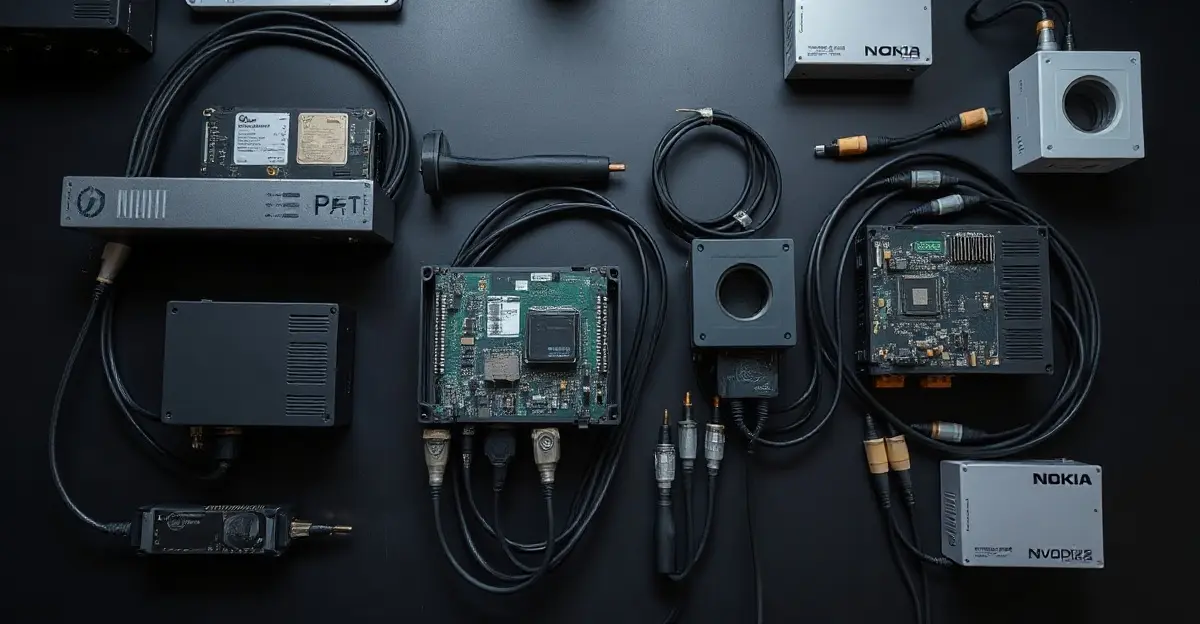
SK Telecom named Samsung Networks, Nokia, Ericsson and HFR as equipment suppliers involved in the infrastructure.
Industrial networks usually have to integrate radio equipment, edge systems, control software and site-specific operational technology, not one isolated carrier platform.
Industrial Robots Are The First Workload
Initial demonstrations will cover AI-powered welding, painting and patrol robots.
RCR Wireless put humanoid robot demonstrations on the project timeline from 2027.
The trials will evaluate recognition, judgement and control performance in complex environments and collaborative operations involving multiple robots.
A welding or patrol robot sends sensor data and receives instructions while operating around people, machinery and changing site conditions.
The network has to handle recognition data, control decisions and coordinated movement before the AI layer can become a factory workflow.
NIA director Kim Hyung-chul linked physical AI deployment to Hyper-AI networks that support ultra-low latency, high-reliability communications and large-capacity uplink.
His statement framed the programme as a way to verify next-generation AI network technologies, spread physical AI service models for industrial sites and accelerate AI transformation across national industry.
Trial Still Needs Paying Industrial Customers
Omdia principal analyst Pascal Remy told RCR Wireless that South Korea's approach highlights AI-RAN potential beyond traditional network optimisation.
Countries with strong manufacturing sectors, advanced industrial automation and sovereign AI ambitions are the most likely candidates for similar initiatives.
The public-agency role also separates this project from a carrier-only technology trial.
Remy connected NIA's coordination role to industrial AI enablement, where government agencies may have more influence than they do in pure network optimisation projects because factory automation touches industrial policy, safety, manufacturing productivity and national AI capacity.
The commercial question remains narrower than the technical one.
Remy argued that demonstrating the viability of the business case may be more important than proving technical feasibility, because AI-RAN stakeholders need field evidence that pilots can become repeatable deployments.
The project record still lacks paying industrial customers, production-scale robot counts and procurement commitments beyond the demonstration consortia.
Those fields will decide whether Hyper AI Network Infrastructure becomes a deployable industrial network model or stays a publicly funded validation programme.
Summary version for Medium
South Korea Tests AI-RAN And 5G For Industrial Robot Networks
What the announcement means beyond the headline
Quick Summary: RCR Wireless reports that South Korea has put KRW17.2 billion ($11.6 million) behind SK Telecom and KT-led AI-RAN trials for shipyards, factories and robot workloads.
NIA Selects SK Telecom And KT Consortia
RCR Wireless identified two consortia for the programme, one led by SK Telecom and one led by KT. The project scope spans field validation of robot workloads and network operations across industrial environments, including shipyards and manufacturing facilities.
Industrial Robots Are The First Workload
Initial demonstrations will cover AI-powered welding, painting and patrol robots.
- Point 1: The central topic is telco-connectivity, with the announcement framed around concrete operating detail.
- Point 2: RCR Wireless put humanoid robot demonstrations on the project timeline from 2027.
AI deployments now depend on where models, data, approvals and operating teams meet.
Trial Still Needs Paying Industrial Customers
Omdia principal analyst Pascal Remy told RCR Wireless that South Korea's approach highlights AI-RAN potential beyond traditional network optimisation. Countries with strong manufacturing sectors, advanced industrial automation and sovereign AI ambitions are the most likely candidates for similar initiatives.
Read the Full Deep Dive
Want to explore the complete technical analysis, enterprise trade-offs, and detailed metrics?
Read the full article originally published at SendTech Times