Ericsson Wins UK Defence 5G Role Under £8 Billion RM6393 Framework
RCR Wireless News reported that Ericsson has been selected for services and components under the UK Ministry of Defence RM6393 tactical communications framework, while Nokia is pursuing defence 5G through partner channels.
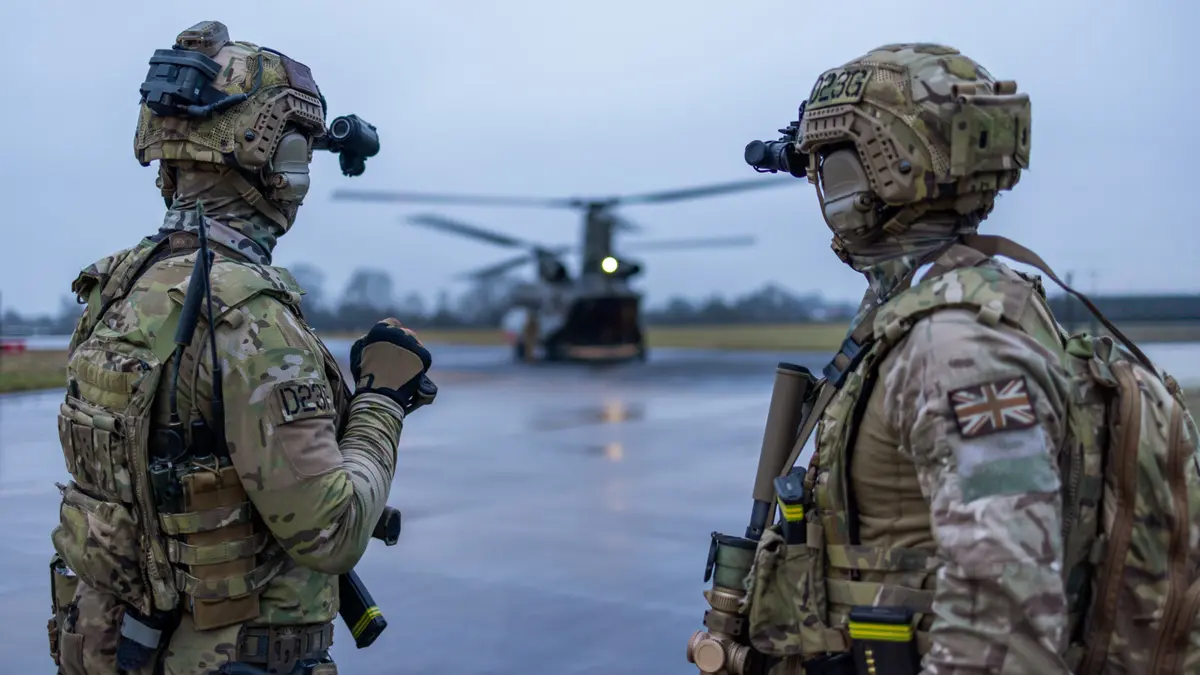
Ericsson has won a direct place on the UK Ministry of Defence's £8 billion RM6393 tactical communications framework, giving the company a route to supply private 5G services and equipment for military networks.
RCR Wireless News reported that the framework supports Project Morpheus, the programme replacing the UK's legacy Bowman battlefield communications system.
The RM6393 framework runs to June 2034 and is split into services, systems and components.
Ericsson was selected for the services and components lots, while the supplier roster put BT in the systems lot and named KNL, CDW, Exponential-e, Airbus, BAE, Babcock, Elbit, CGI IT and other suppliers among the wider roster.
Ericsson Gets Services And Components Slots
Ericsson's appointment lets it bid directly for design, integration, deployment support and physical network equipment including base stations and ruggedised cores.
Nadine Allen, head of Ericsson in the UK, said modern defence needs data-driven connectivity and secure, resilient communications for the country's digital defence capabilities.
The framework is designed for military-grade connectivity across personnel, sensors, vehicles and weapons.
Its scope combines private 5G with satellite, mesh and high-frequency radio networks that can keep data moving when other links are jammed or unavailable.
RCR Wireless News listed 55 suppliers for lot one, 67 for lot two and 74 for lot three, with overlap between categories and no direct position for another tier-one UK mobile operator beyond BT's systems role.
Project Morpheus Uses Parallel Network Paths
Project Morpheus is intended to overhaul core battlefield communications by replacing Bowman with a more modular architecture.
Frontline soldiers can route local drone-feed data over 5G into the battlefield network, while the MoD also uses the Skynet satellite network and high-frequency failover for longer-range links.
Mobile ad-hoc network mesh systems are also part of the model.
Approved equipment vendors such as Silvus Technologies and Persistent Systems can make vehicles, drones and soldiers act as signal routers for local coverage before traffic feeds back into the Morpheus system.
The RCR Wireless News account also cited a June 2024 Vodafone UK rollout of a portable 5G SA private network for a British MoD pilot on Salisbury Plain.
The Project Salus / Avon work was led by UK-based defence technology company L2T and was described as a separate example of private cellular systems moving into military field testing.
The report said the Defence Investment Plan adds £15 billion, takes the four-year defence budget to £298 billion and seeks to raise defence spending to 2.7 percent of GDP by 2029.
Nokia Uses Indirect Defence Channels
Nokia was not named on the RM6393 supplier roster.
Its UK military route remains partner-led through defence primes, integrators and specialist companies.
Nokia's defence business bought Fenix Group in 2024, and the source linked Fenix's portable Banshee network-in-a-box to tactical deployments.
Nokia has also signed arrangements with KNDS, Kongsberg, NestAI and Lockheed Martin around deployable 5G, battlefield communications and allied-force connectivity.
For Ericsson, the RM6393 accreditation creates a pre-certified public-sector route for both hardware and architecture work.
A named Ericsson fielding date for a specific RM6393 private 5G system remains outside the public record.
Summary version for Medium
Ericsson Wins UK Defence 5G Role Under £8 Billion RM6393 Framework
What the announcement means beyond the headline
Quick Summary: RCR Wireless News reported that Ericsson has been selected for services and components under the UK Ministry of Defence RM6393 tactical communications framework, while Nokia is pursuing defence 5G through partner channels.
Ericsson Gets Services And Components Slots
Ericsson's appointment lets it bid directly for design, integration, deployment support and physical network equipment including base stations and ruggedised cores. Nadine Allen, head of Ericsson in the UK, said modern defence needs data-driven connectivity and secure, resilient communications for the country's digital defence capabilities.
Project Morpheus Uses Parallel Network Paths
Project Morpheus is intended to overhaul core battlefield communications by replacing Bowman with a more modular architecture.
- Point 1: The central topic is telco-connectivity, with the announcement framed around concrete operating detail.
- Point 2: Frontline soldiers can route local drone-feed data over 5G into the battlefield network, while the MoD also uses the Skynet satellite network and high-frequency failover for...
AI deployments now depend on where models, data, approvals and operating teams meet.
Nokia Uses Indirect Defence Channels
Nokia was not named on the RM6393 supplier roster. Its UK military route remains partner-led through defence primes, integrators and specialist companies.
Read the Full Deep Dive
Want to explore the complete technical analysis, enterprise trade-offs, and detailed metrics?
Read the full article originally published at SendTech Times