Meta Smart Glasses Face Privacy Backlash As Courtroom Bans Spread
Yahoo Tech reported that backlash against AI-enabled smart glasses is growing as Meta expands camera-equipped eyewear, with courthouse bans, facial-recognition concerns and cloud-review warnings shaping the privacy debate.
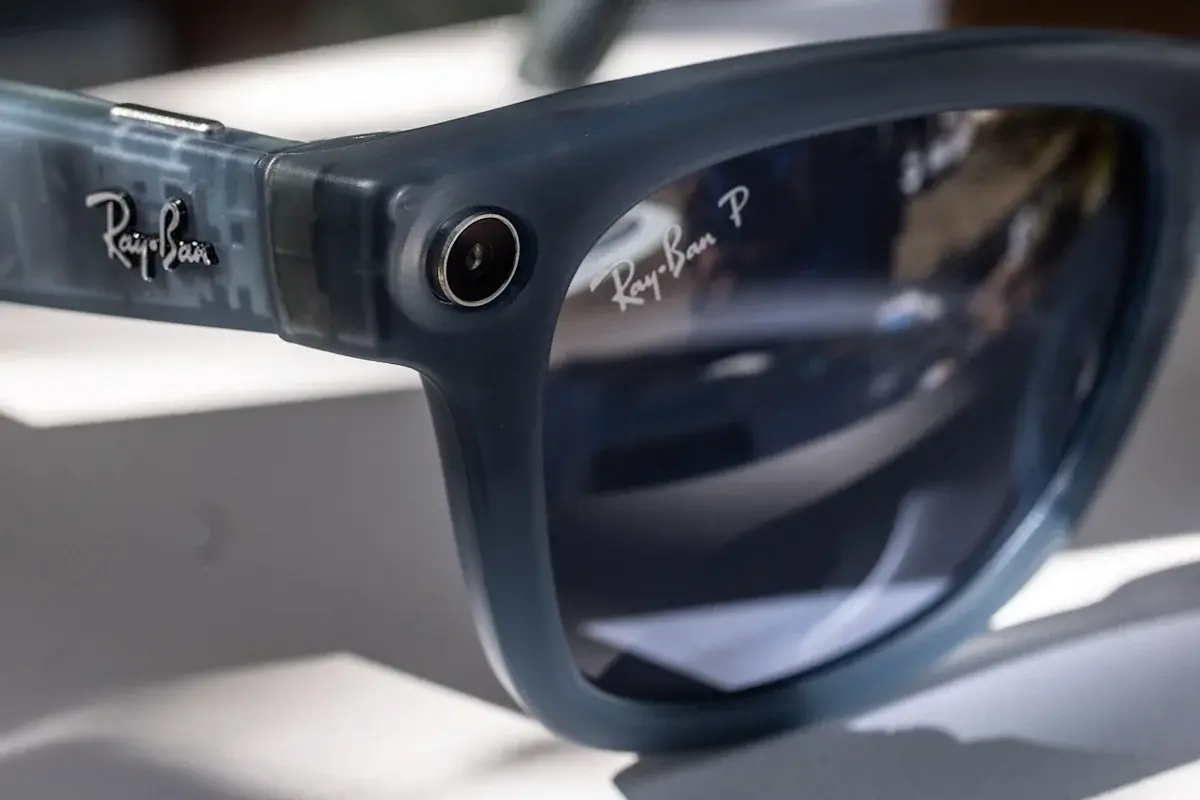
Yahoo Tech described widening public backlash against AI-enabled smart glasses as camera-equipped wearables move toward mainstream use.
The report describes the devices as face-worn computers that combine cameras, microphones and AI and can record audio or video while blending into ordinary eyewear.
The report cited restrictions already appearing around the devices, including Philadelphia's First Judicial District courthouse ban and a statewide New York courtroom restriction scheduled to start on July 20.
Meta Pushes Smart Glasses Toward Wider Use
The report placed the Facebook parent's eyewear business at the front of the sector over the past two years and cited 7 million pairs sold during 2025.
The company launched additional lower-priced models this year, including a Kylie Jenner-branded version.
The report separated real-world camera glasses from more niche augmented-reality glasses made by companies such as Xreal.
Those devices are used more for media consumption or virtual-reality-style gaming than for recording the surrounding environment.
Meta CEO Mark Zuckerberg described smart glasses as central to the company's future during a January earnings call.
He compared the shift with the move from flip phones to smartphones and stated that it was difficult to imagine most glasses not becoming AI glasses in several years.
Recording And Facial Recognition Drive Privacy Concerns
Recording without consent is the central privacy concern.
Yahoo Tech cited accounts from women who described being recorded without their knowledge by men wearing smart glasses, with some footage later posted online.
Meta's glasses include an indicator light during recording, and the company states that the camera is disabled if that light is obstructed or altered.
Yahoo Tech noted that some users have found ways to make recording less visible.
Facial-recognition work connected to the glasses has also drawn attention.
Wired found that Meta added NameTag facial-recognition code for smart glasses to its Meta AI mobile app, although the code was not activated.
The New York Times covered NameTag in February as an internal feature name for identifying people captured by smart-glasses cameras and creating a faceprint.
The Information described renewed work on the facial-recognition technology in May of that year.
Meta disputed Wired's report and stated that it had previously disclosed exploration of these kinds of features.
The company also described Meta Glasses as including settings and safeguards for user sharing choices and the privacy of people nearby.
EFF Warns About Cloud Review And Social Friction
Electronic Frontier Foundation senior security and privacy activist Thorin Klosowski told Yahoo Tech that users should consider whether they trust the company with information from the glasses.
Cloud-submitted recordings may potentially be reviewed by a person for AI-training purposes, according to the interview.
Potential buyers should limit use to the purpose for which they bought the device and avoid wearing the glasses in public spaces where others may be uncomfortable, according to the EFF activist.
People wearing smart glasses should also be willing to stop when someone nearby objects.
For bystanders, the devices can be hard to notice because the indicator light may be easy to miss, especially outdoors in bright light, according to the Yahoo Tech interview.
Fashion-oriented designs may make newer smart glasses less visibly recognizable than older products such as Google Glass.
Regulation Remains Difficult
Smaller smart devices, including pins, rings and potential camera-equipped earbuds, could make recording harder to detect.
The interview frames legislation as complicated because public recording with phones has also played an important role in documenting encounters with law enforcement.
Yahoo Tech wrote that Zuckerberg's metaverse push cost Meta some $80 billion over five years before the company pulled back from that effort earlier this year.
Smart glasses have not yet reached mainstream acceptance, and the interview cited reviews describing discomfort among friends and family around the devices.
Yahoo Tech did not identify a public release plan for facial recognition.
The remaining record also lacks a new shipment target beyond the 2025 sales figure and a detailed policy proposal for regulating smart-glasses recording in public spaces.
Summary version for Medium
Meta Smart Glasses Face Privacy Backlash As Courtroom Bans Spread
What the policy signal means for operators and investors
Quick Summary: Yahoo Tech reported that backlash against AI-enabled smart glasses is growing as Meta expands camera-equipped eyewear, with courthouse bans, facial-recognition concerns and cloud-review warnings shaping the privacy debate.
Meta Pushes Smart Glasses Toward Wider Use
The report placed the Facebook parent's eyewear business at the front of the sector over the past two years and cited 7 million pairs sold during 2025. The company launched additional lower-priced models this year, including a Kylie Jenner-branded version.
Recording And Facial Recognition Drive Privacy Concerns
Recording without consent is the central privacy concern.
- Point 1: The central topic is capital-policy, with the announcement framed around concrete operating detail.
- Point 2: Yahoo Tech cited accounts from women who described being recorded without their knowledge by men wearing smart glasses, with some footage later posted online.
The important shift is not the AI label, but the operating boundary it creates for teams.
EFF Warns About Cloud Review And Social Friction
Electronic Frontier Foundation senior security and privacy activist Thorin Klosowski told Yahoo Tech that users should consider whether they trust the company with information from the glasses. Cloud-submitted recordings may potentially be reviewed by a person for AI-training purposes, according to the interview.
Read the Full Deep Dive
Want to explore the complete technical analysis, enterprise trade-offs, and detailed metrics?
Read the full article originally published at SendTech Times