NVIDIA Sets Jetson T3000 And T2000 Modules For Q1 2027 Robotics Launch
NVIDIA introduced Jetson T3000 and T2000 modules for edge AI and robotics systems, with Q1 2027 availability planned and source-listed performance, memory and emulation details still tied to company-provided figures.
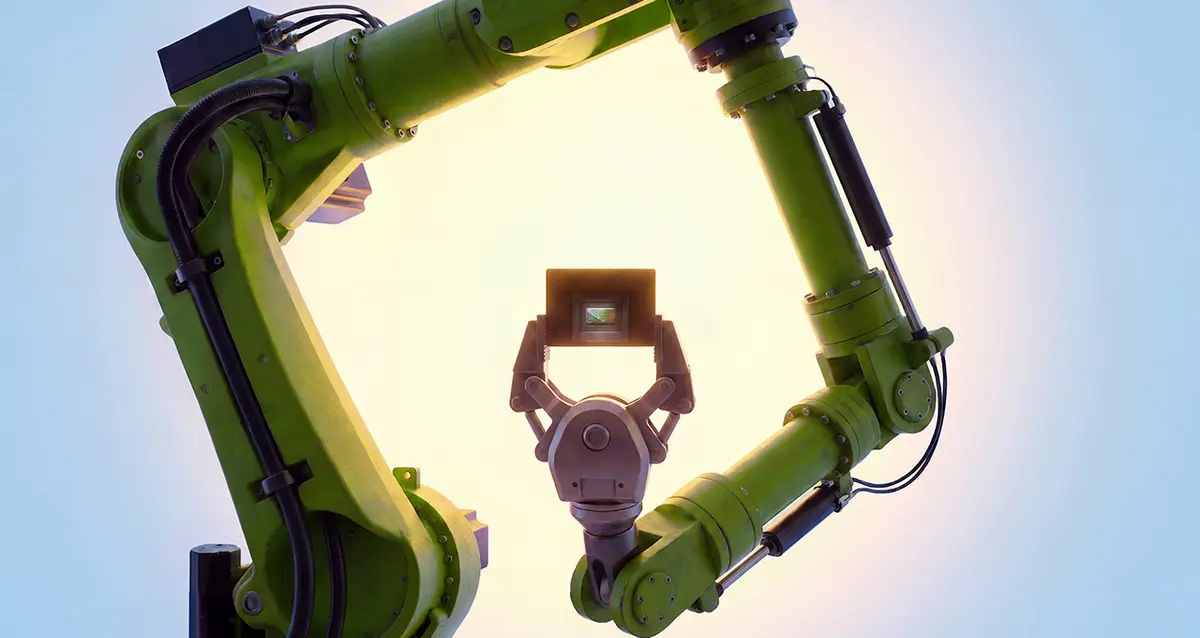
NVIDIA has introduced Jetson T3000 and T2000 modules for robotics and edge AI systems, with both modules scheduled for availability in Q1 2027.
The company announcement says the hardware uses the NVIDIA Thor architecture for humanoid robots, autonomous mobile robots, industrial manipulators and visual AI agents.
NVIDIA listed 1X, Agile Robots, Amazon Robotics, Boston Dynamics, FANUC, Hitachi and Techman Robot among companies building on the broader Jetson AGX Thor platform.
The launch gives robotics developers a smaller Blackwell-based hardware option before volume availability, but the public announcement keeps order volumes, customer deployment dates and module pricing outside the record.
Jetson T3000 Carries 865 FP4 Teraflops In A Smaller Module
The Jetson and IGX T3000 modules deliver 865 FP4 teraflops of AI compute, according to NVIDIA.
The announcement describes the form factor as roughly half the size and power of the T5000 while targeting similar inference performance on multimodal workloads.
The T3000 configuration uses a Blackwell GPU with an eight-core Neoverse Arm CPU, 32GB of LPDDR5X memory, 273GB/s of memory bandwidth and 25 GbE connectivity, according to NVIDIA.
NVIDIA said the IGX T3000 carries the same performance level with integrated functional safety and support for the NVIDIA Halos for Robotics safety system.
Those are company-provided hardware and performance claims rather than independent benchmark results.
The announcement did not include third-party testing, customer benchmark data or a price list for the new modules.
T2000 Gives Edge AI Developers A 400 FP4 Teraflop Option
The Jetson T2000 brings the same Thor architecture to lower-memory edge systems.
NVIDIA listed 400 FP4 teraflops of compute and 16GB of memory for developers working on visual AI agents, autonomous mobile robots and industrial machines.
Jetson agent skills cover memory optimisation, system configuration and deployment tasks for the software stack.
The company cited several memory-optimisation examples from its ecosystem.
UBTech, Agile Robots and Connect Tech reduced memory usage by up to 15GB, according to NVIDIA, while SandStar reduced memory use by up to 4GB and NoTraffic reduced memory use by 30% on Jetson TX2 NX.
Cosmos 3 Edge Targets On-Device Robot Inference
NVIDIA also expanded the Cosmos 3 open world foundation model family with Cosmos 3 Edge, a 4-billion-parameter model compatible with NVIDIA Thor platforms.
The company describes Cosmos 3 Edge as a lightweight model for embodied systems that need to process vision, reason in real time and generate actions through on-device inference.
For deployment preparation, NVIDIA said Cosmos 3 Edge can be adapted to particular robot forms and sensor sets in roughly a day before use on Jetson Thor for real-time vision analysis and on-device robot policy.
Support for T3000 emulation mode is due later this month with JetPack 7.2.1, while T2000 emulation mode is planned for a later release.
The public rollout also includes board and software partners.
NVIDIA named ADLINK, AAEON, Advantech, Aetina, Connect Tech, AVerMedia, ForeCR, Auvidea, JWIPC, NEXCOM Robotic Solutions, Realtimes, Seeed Studio, Twowin, TZTEK and YUAN among Thor-based solution partners.
Antmicro, Neurealm, REBOTNIX and RidgeRun were listed for emulation and migration support.
NVIDIA has not disclosed module pricing, production allocation, signed customer order volumes, third-party benchmark results or named deployment dates for robots using Jetson T3000 or T2000 modules.
Summary version for Medium
NVIDIA Sets Jetson T3000 And T2000 Modules For Q1 2027 Robotics Launch
Why this hardware shift matters for AI and compute buyers
Quick Summary: NVIDIA introduced Jetson T3000 and T2000 modules for edge AI and robotics systems, with Q1 2027 availability planned and source-listed performance, memory and emulation details still tied to company-provided figures.
Jetson T3000 Carries 865 FP4 Teraflops In A Smaller Module
The Jetson and IGX T3000 modules deliver 865 FP4 teraflops of AI compute, according to NVIDIA. The announcement describes the form factor as roughly half the size and power of the T5000 while targeting similar inference performance on multimodal workloads.
T2000 Gives Edge AI Developers A 400 FP4 Teraflop Option
The Jetson T2000 brings the same Thor architecture to lower-memory edge systems.
- Point 1: The central topic is chips-semiconductors, with the announcement framed around concrete operating detail.
- Point 2: NVIDIA listed 400 FP4 teraflops of compute and 16GB of memory for developers working on visual AI agents, autonomous mobile robots and industrial machines.
The important shift is not the AI label, but the operating boundary it creates for teams.
Cosmos 3 Edge Targets On-Device Robot Inference
NVIDIA also expanded the Cosmos 3 open world foundation model family with Cosmos 3 Edge, a 4-billion-parameter model compatible with NVIDIA Thor platforms. The company describes Cosmos 3 Edge as a lightweight model for embodied systems that need to process vision, reason in real time and generate actions through on-device inference.
Read the Full Deep Dive
Want to explore the complete technical analysis, enterprise trade-offs, and detailed metrics?
Read the full article originally published at SendTech Times