FuriosaAI Starts RNGD Accelerator Deployment At Equinix Lisbon Datacenter
FuriosaAI has begun deploying its RNGD AI accelerators at Equinix’s LS2 datacenter in Lisbon as the South Korean chip startup looks for European sovereign AI demand. The company describes 48 GB of HBM3, 1.5 TB/s memory bandwidth and 512 teraFLOPS of dense FP8 performance per card, but its Broadcom-linked next-generation accelerator still depends on HBM4 and HBM4e timing.
FuriosaAI has started a European deployment for its RNGD AI accelerator platform at Equinix’s LS2 datacenter in Lisbon, giving the South Korean chip startup a physical foothold in a market increasingly focused on sovereign AI compute.
The company’s immediate pitch is not maximum GPU-class performance.
FuriosaAI is presenting RNGD as a lower-power inference option that can run in existing air-cooled racks, while its next-generation Broadcom-linked accelerator remains tied to HBM4 and HBM4e availability.
FuriosaAI Deploys RNGD Cards At Equinix LS2
FuriosaAI said it had begun fielding its RNGD line of AI accelerators at Equinix’s LS2 datacenter in Lisbon.
The move takes a company founded in 2017 by June Paik and Hanjoon Kim beyond its South Korean base, where LG Electronics was cited among domestic customer wins.
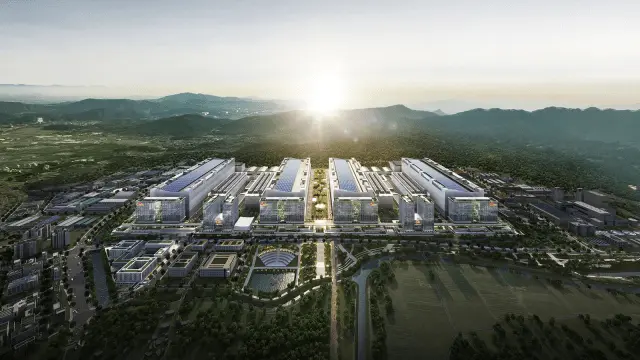
The Lisbon deployment is aimed at European demand for sovereign AI compute.
FuriosaAI has focused heavily on its home market, but the European rollout gives it a colocation setting for inference systems rather than only a chip roadmap or lab demonstration.
The selected site also shapes the technical claim.
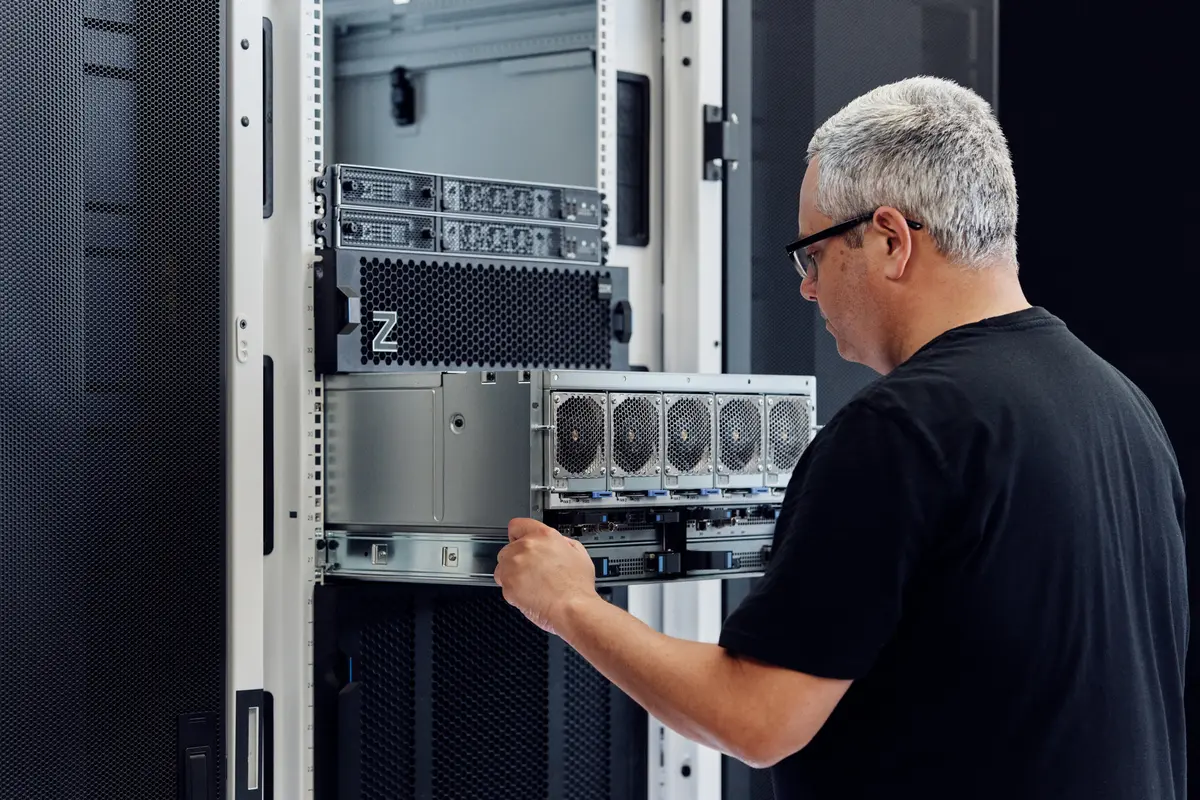
Equinix’s LS2 facility gives FuriosaAI a datacenter deployment reference for a platform that the company says can fit into existing racks because its systems are air-cooled.
RNGD Card Lists 48 GB Of HBM3
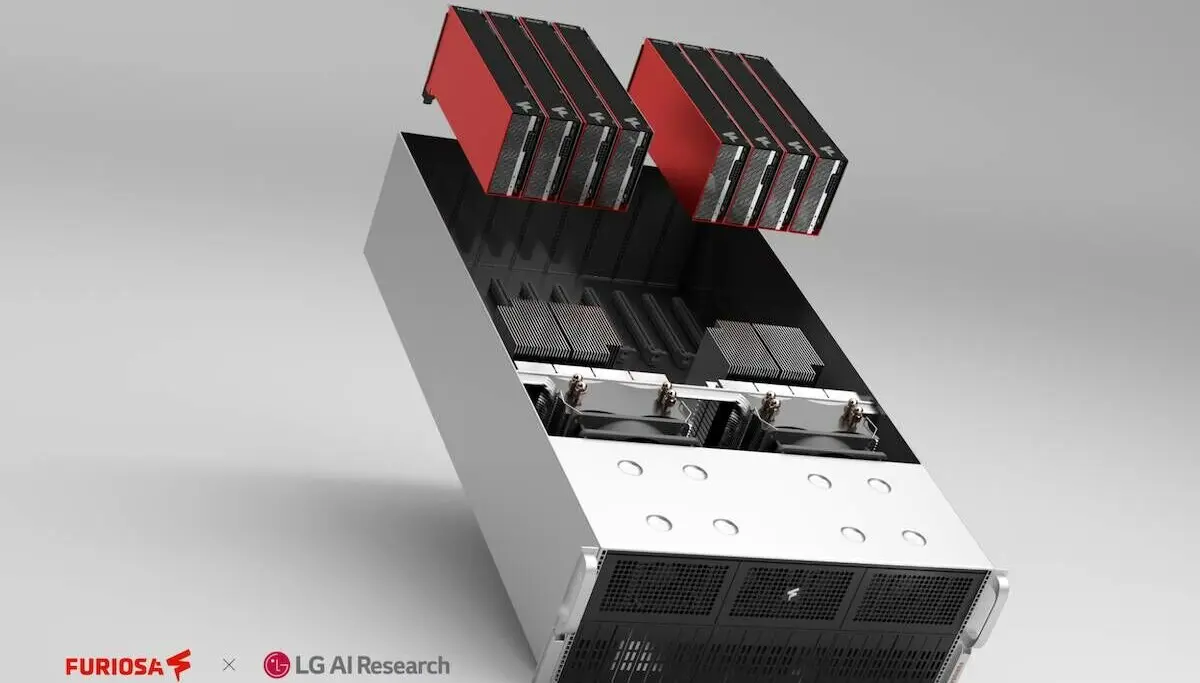
FuriosaAI’s RNGD card is built on TSMC’s 5 nm process and uses the company’s tensor contraction processor architecture.
The specification described for each PCIe card includes 48 GB of HBM3, 1.5 TB/s of memory bandwidth and 512 teraFLOPS of dense FP8 performance, according to FuriosaAI.
FuriosaAI lists each card with a TDP of 180 watts.
The article did not include independent benchmark validation for the power comparison.
FuriosaAI’s NXT RNGD Server combines eight accelerators in a 3 kW system.
The configuration is described as offering up to 384 GB of HBM, enough to run larger enterprise models including OpenAI’s gpt-oss 120B, LG’s Exaone 236B and Qwen 3-30B-A3B at large context sizes and concurrency.
Broadcom Work Points To A Later Accelerator
The European deployment comes before FuriosaAI’s third-generation accelerator is ready for broad use.
FuriosaAI says it is working with Broadcom to adapt its tensor contraction processor technology into a multi-die system-on-package using faster HBM4 or HBM4e memory.
The planned chip will also use Broadcom Ethernet and PCIe switching technology to support larger scale-up clusters than the eight-way RNGD systems FuriosaAI is already building.
Meta, OpenAI and Google have also disclosed chip collaborations involving Broadcom, though the public details differ by company and remain limited.
The timing remains unresolved.
HBM4 and HBM4e memory are only reaching the market this year and next, and FuriosaAI has not disclosed European RNGD customer names, order volumes, pricing, utilisation commitments, or a deployment date for the Broadcom-linked third-generation accelerator.
Summary version for Medium
FuriosaAI Starts RNGD Accelerator Deployment At Equinix Lisbon Datacenter
Why this hardware shift matters for AI and compute buyers
Quick Summary: FuriosaAI has begun deploying its RNGD AI accelerators at Equinix’s LS2 datacenter in Lisbon as the South Korean chip startup looks for European sovereign AI demand. The company describes 48 GB of HBM3, 1.5 TB/s memory bandwidth and 512 teraFLOPS of dense FP8 performance per card, but its Broadcom-linked next-generation accelerator still depends on HBM4...
FuriosaAI Deploys RNGD Cards At Equinix LS2
FuriosaAI said it had begun fielding its RNGD line of AI accelerators at Equinix’s LS2 datacenter in Lisbon. The move takes a company founded in 2017 by June Paik and Hanjoon Kim beyond its South Korean base, where LG Electronics was cited among domestic customer wins.
RNGD Card Lists 48 GB Of HBM3
FuriosaAI’s RNGD card is built on TSMC’s 5 nm process and uses the company’s tensor contraction processor architecture.
- Point 1: The central topic is chips-semiconductors, with the announcement framed around concrete operating detail.
- Point 2: The specification described for each PCIe card includes 48 GB of HBM3, 1.5 TB/s of memory bandwidth and 512 teraFLOPS of dense FP8 performance, according to FuriosaAI.
The important shift is not the AI label, but the operating boundary it creates for teams.
Broadcom Work Points To A Later Accelerator
The European deployment comes before FuriosaAI’s third-generation accelerator is ready for broad use. FuriosaAI says it is working with Broadcom to adapt its tensor contraction processor technology into a multi-die system-on-package using faster HBM4 or HBM4e memory.
Read the Full Deep Dive
Want to explore the complete technical analysis, enterprise trade-offs, and detailed metrics?
Read the full article originally published at SendTech Times