Chinese Brain-Mapping Chip Claims 478 Times NVIDIA A100 Speed Without Clinical Proof
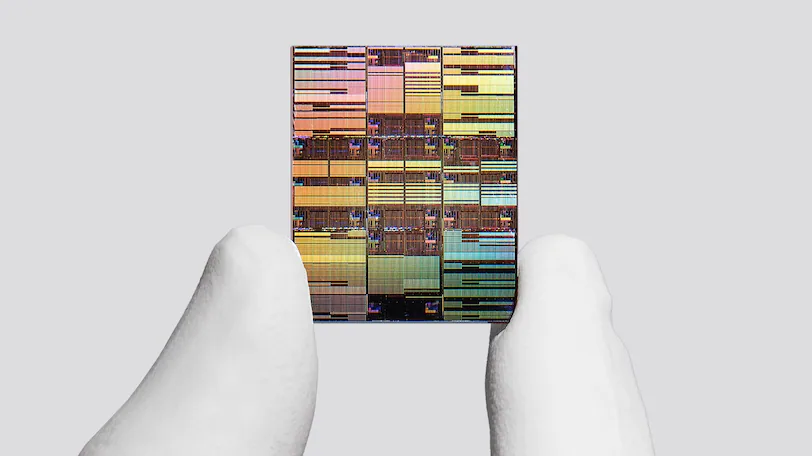
A Peking University and Chinese Academy of Sciences team reported a 40-nanometre computing-in-memory chip that maps the brain’s folded cortex in less than 0.5 seconds, but the study did not disclose clinical validation or a commercial release plan.
A Chinese brain-mapping AI chip has shifted a medical-computing benchmark from GPU acceleration to memory-side processing, after a Peking University and Chinese Academy of Sciences team reported cortex reconstruction in under half a second and up to 478 times the speed of an NVIDIA A100 GPU.
The study was published in Science, and the researchers presented the chip as a computing-in-memory design for brain-mapping workloads.
The disclosure is still a research result rather than a clinical product.
The public account describes the architecture, speed range and possible medical uses, but not a hospital deployment, regulatory approval or commercial manufacturing plan.
Peking University Team Reports 478 Times A100 Speed
The research team reported that the chip reconstructed the brain's folded cortex in less than 0.5 seconds.
It said performance was 50 to 478 times faster than systems powered by NVIDIA's A100 GPU, depending on the specific brain-mapping workload.
Cortex reconstruction is computationally heavy because the cortex has a complex folded structure that increases surface area inside the skull.
The study account said that geometry makes brain mapping demanding for conventional computer architectures.
40-Nanometre Chip Uses Computing-In-Memory Design
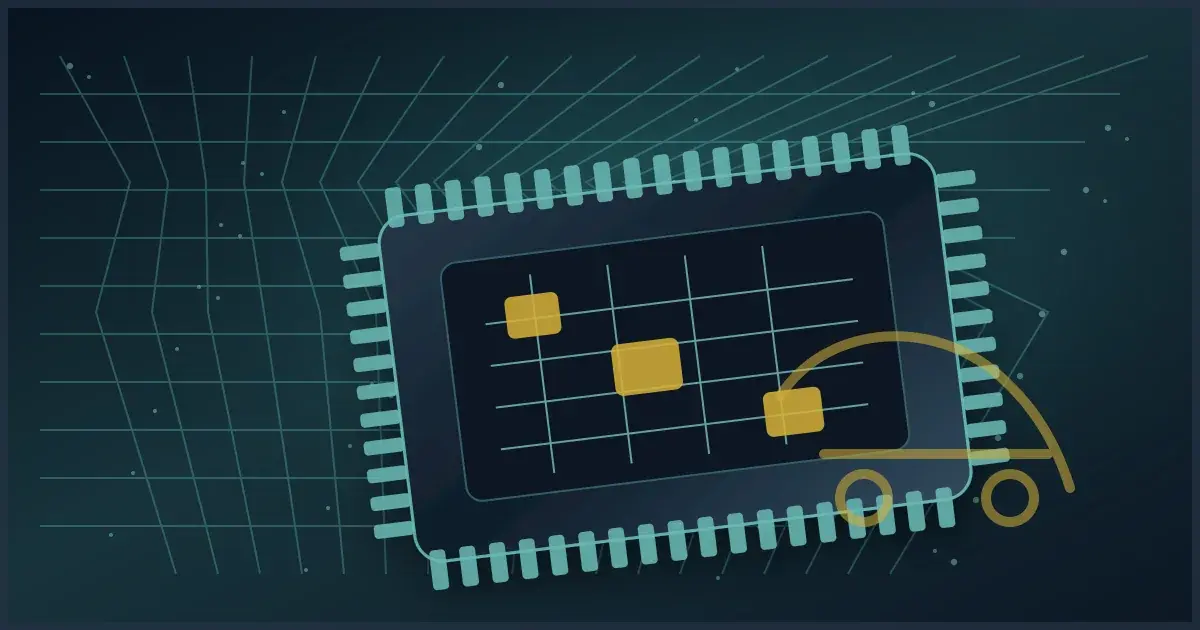
The study describes the chip as a 40-nanometre computing device that integrates an artificial neural network directly into hardware.
Instead of moving data repeatedly between separate memory and processor units, the design performs storage and computation inside the same memory array.
The researchers also used phase-change memristors.
The source account said the team repurposed conductance drift, normally treated as a hardware limitation, to perform neural dynamic computations.
The stated goal was to improve speed and energy efficiency while reducing the latency created by data movement.
Brain Mapping Use Cases Remain Research-Stage
The reported use cases are medical and research-oriented.
Researchers named surgical neuronavigation, Alzheimer's screening, brain-computer interface work and personalised brain models as possible applications.
Yang Yuchao, a professor at Peking University's School of Integrated Circuits, said the work could eventually support personalised digital brain twins for diagnosis and treatment planning.
Researchers from Germany's Juelich Research Centre contributed an accompanying analysis that framed the efficiency gain as doing the calculation where the data already sits, instead of moving the data away first.
The study did not disclose clinical trial results, patient-level validation, regulatory clearance, a fabrication partner, production yield, pricing, hospital deployment dates or a commercial release timetable for the 40-nanometre chip.
Summary version for Medium
Chinese Brain-Mapping Chip Claims 478 Times NVIDIA A100 Speed Without Clinical Proof
Why this hardware shift matters for AI and compute buyers
Quick Summary: A Peking University and Chinese Academy of Sciences team reported a 40-nanometre computing-in-memory chip that maps the brain’s folded cortex in less than 0.5 seconds, but the study did not disclose clinical validation or a commercial release plan.
Peking University Team Reports 478 Times A100 Speed
The research team reported that the chip reconstructed the brain's folded cortex in less than 0.5 seconds. It said performance was 50 to 478 times faster than systems powered by NVIDIA's A100 GPU, depending on the specific brain-mapping workload.
40-Nanometre Chip Uses Computing-In-Memory Design
The study describes the chip as a 40-nanometre computing device that integrates an artificial neural network directly into hardware.
- Point 1: The central topic is chips-semiconductors, with the announcement framed around concrete operating detail.
- Point 2: Instead of moving data repeatedly between separate memory and processor units, the design performs storage and computation inside the same memory array.
The important shift is not the AI label, but the operating boundary it creates for teams.
Brain Mapping Use Cases Remain Research-Stage
The reported use cases are medical and research-oriented. Researchers named surgical neuronavigation, Alzheimer's screening, brain-computer interface work and personalised brain models as possible applications.
Read the Full Deep Dive
Want to explore the complete technical analysis, enterprise trade-offs, and detailed metrics?
Read the full article originally published at SendTech Times