AMD Ryzen AI Halo Review Lists $3999 Price But No Deployment Proof
ServeTheHome reviewed AMD’s Ryzen AI Halo developer system with 128GB of memory and 10Gbase-T networking, but AMD did not disclose customer deployments, production volumes or independent AI benchmarks.
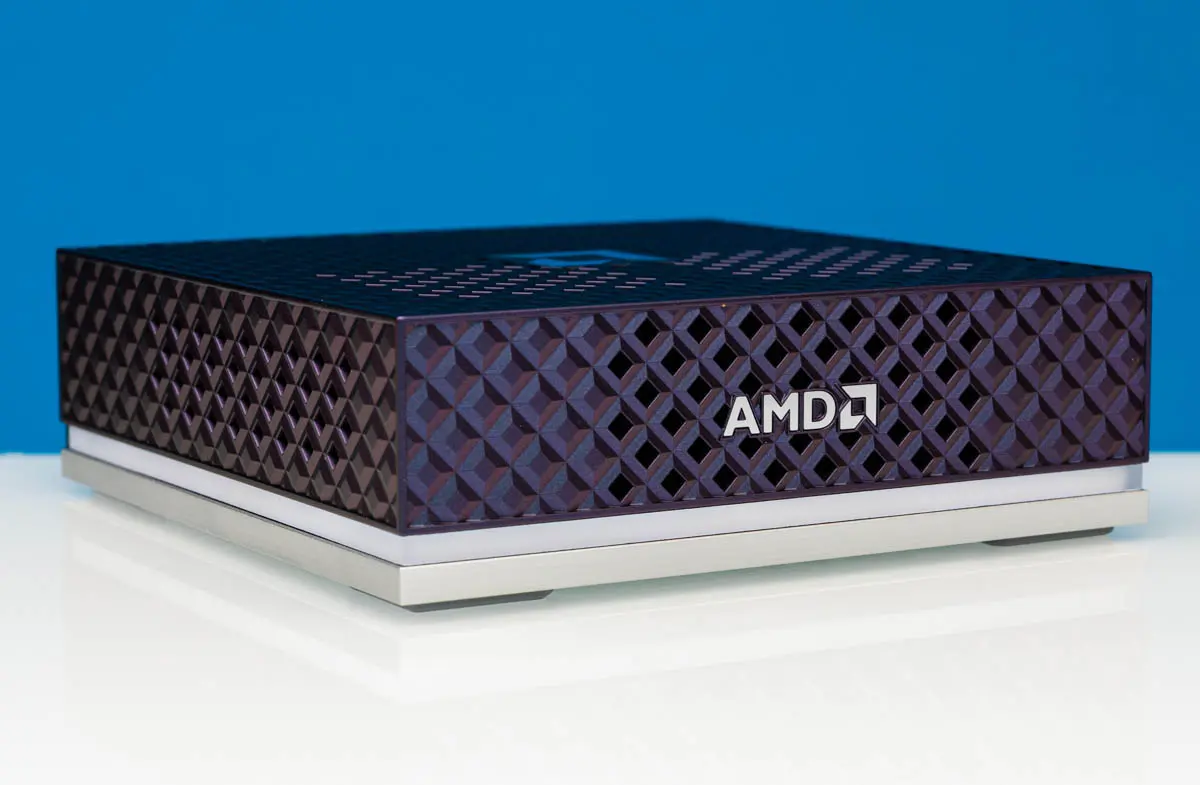
ServeTheHome Lists Ryzen AI Halo At $3999 With 128GB Memory
AMD's Ryzen AI Halo developer system is being presented as a local AI mini PC for developers, but the available review evidence still leaves enterprise deployment and benchmark proof unresolved.
ServeTheHome reviewed the AMD Ryzen AI Max Plus-based system and listed a $3999 price, 128GB of memory and a compact form factor compared with Nvidia's DGX Spark.
This is specialist trade-review material, not an AMD customer deployment announcement.
The review described the system as AMD's top-tier developer experience for local AI development, so performance and usability claims should be treated as review-source evidence until wider customer results are disclosed.
Rear Ports Include USB4, HDMI And 10Gbase-T
ServeTheHome described a chassis with a front air vent behind the AMD logo, two top vents for internal fans and another rear vent beside the ports.
The rear layout includes a power button, power input, one USB-DP Type-C port, two additional Type-C ports and HDMI.
The review said the USB-DP connector supports USB 3.2 Gen2 and DisplayPort.
It said the two other USB Type-C ports are USB4 ports.
ServeTheHome listed a 10Gbase-T port for wired networking.
AMD Omits The 200GbE Class Networking Found On GB10 Systems
The sharper limitation is networking.
ServeTheHome compared the system's shape with Nvidia GB10 platforms, but said AMD did not include a high-end ConnectX-7-style NIC.
The review said that omission makes it harder to build something comparable to an 8x Nvidia GB10 cluster.
ServeTheHome also said the missing high-end NIC means users are not learning AMD's network stack on this developer system.
That makes the product more clearly a local AI development box than a cluster-networking training platform, at least from the public hardware description in the review.
Magnetic Feet Hide The Chassis Screws
The review highlighted a smaller physical design choice: magnetic rubber feet.
ServeTheHome said the feet cover the chassis screws and avoid the adhesive used on many mini PCs.
That detail is not performance proof, but it does show the review's evidence base is hands-on hardware inspection rather than only a specification sheet.
The stronger deployment questions remain outside the article.
AMD Has Not Disclosed Deployment Proof
The review gives concrete hardware details for a local AI developer system, including memory, price, rear ports and networking limits.
AMD and the review did not disclose named enterprise customers, production volumes, independent AI benchmark results, long-term thermal data, cluster-scale validation, or a final production roadmap.
Summary version for Medium
AMD Ryzen AI Halo Review Lists $3999 Price But No Deployment Proof
Why this hardware shift matters for AI and compute buyers
Quick Summary: ServeTheHome reviewed AMD’s Ryzen AI Halo developer system with 128GB of memory and 10Gbase-T networking, but AMD did not disclose customer deployments, production volumes or independent AI benchmarks.
ServeTheHome Lists Ryzen AI Halo At $3999 With 128GB Memory
AMD's Ryzen AI Halo developer system is being presented as a local AI mini PC for developers, but the available review evidence still leaves enterprise deployment and benchmark proof unresolved. ServeTheHome reviewed the AMD Ryzen AI Max Plus-based system and listed a $3999 price, 128GB of memory and a compact form factor compared with Nvidia's DGX Spark.
Rear Ports Include USB4, HDMI And 10Gbase-T
ServeTheHome described a chassis with a front air vent behind the AMD logo, two top vents for internal fans and another rear vent beside the ports.
- Point 1: The central topic is chips-semiconductors, with the announcement framed around concrete operating detail.
- Point 2: The rear layout includes a power button, power input, one USB-DP Type-C port, two additional Type-C ports and HDMI.
The important shift is not the AI label, but the operating boundary it creates for teams.
AMD Omits The 200GbE Class Networking Found On GB10 Systems
The sharper limitation is networking. ServeTheHome compared the system's shape with Nvidia GB10 platforms, but said AMD did not include a high-end ConnectX-7-style NIC.
Read the Full Deep Dive
Want to explore the complete technical analysis, enterprise trade-offs, and detailed metrics?
Read the full article originally published at SendTech Times