Qualcomm Names Meta As First Dragonfly Data Center CPU Customer
Qualcomm said Meta will use its Dragonfly C1000 data center CPU when production starts in 2028, while the chipmaker raised its fiscal 2029 non-handset revenue projection to $40 billion.
Meta Gives Qualcomm A Data Center CPU Entry Point
Qualcomm is moving its data center ambitions from roadmap to named customer.
The chipmaker revealed the Dragonfly C1000 central processing unit for data centers and said Meta will use the CPU when production starts in 2028.
The announcement matters because Qualcomm is trying to expand beyond smartphones into infrastructure markets shaped by AI workloads.
CNBC reported that Qualcomm shares jumped 15% in extended trading after the company raised its fiscal 2029 non-handset revenue projection to $40 billion from a prior $22 billion forecast.
Qualcomm also told investors it is targeting $15 billion in data center sales for fiscal 2029.
The company said it is looking for total adjusted earnings of more than $18 a share, while analysts polled by LSEG had an EPS target of $15.26 for the same fiscal year.
Dragonfly C1000 Is Built For Agentic AI Workloads
The Dragonfly C1000 is Qualcomm’s CPU entry for data centers.
The company said the chip was built for agentic AI and focuses on computing performance without excessive power use.
That framing puts Qualcomm into a market where CPU efficiency can matter alongside GPUs and AI accelerators, especially as autonomous software agents create more general-purpose compute demand.
Qualcomm said it has a broader roadmap for data center products, including an AI chip and a product that links multiple chips together.
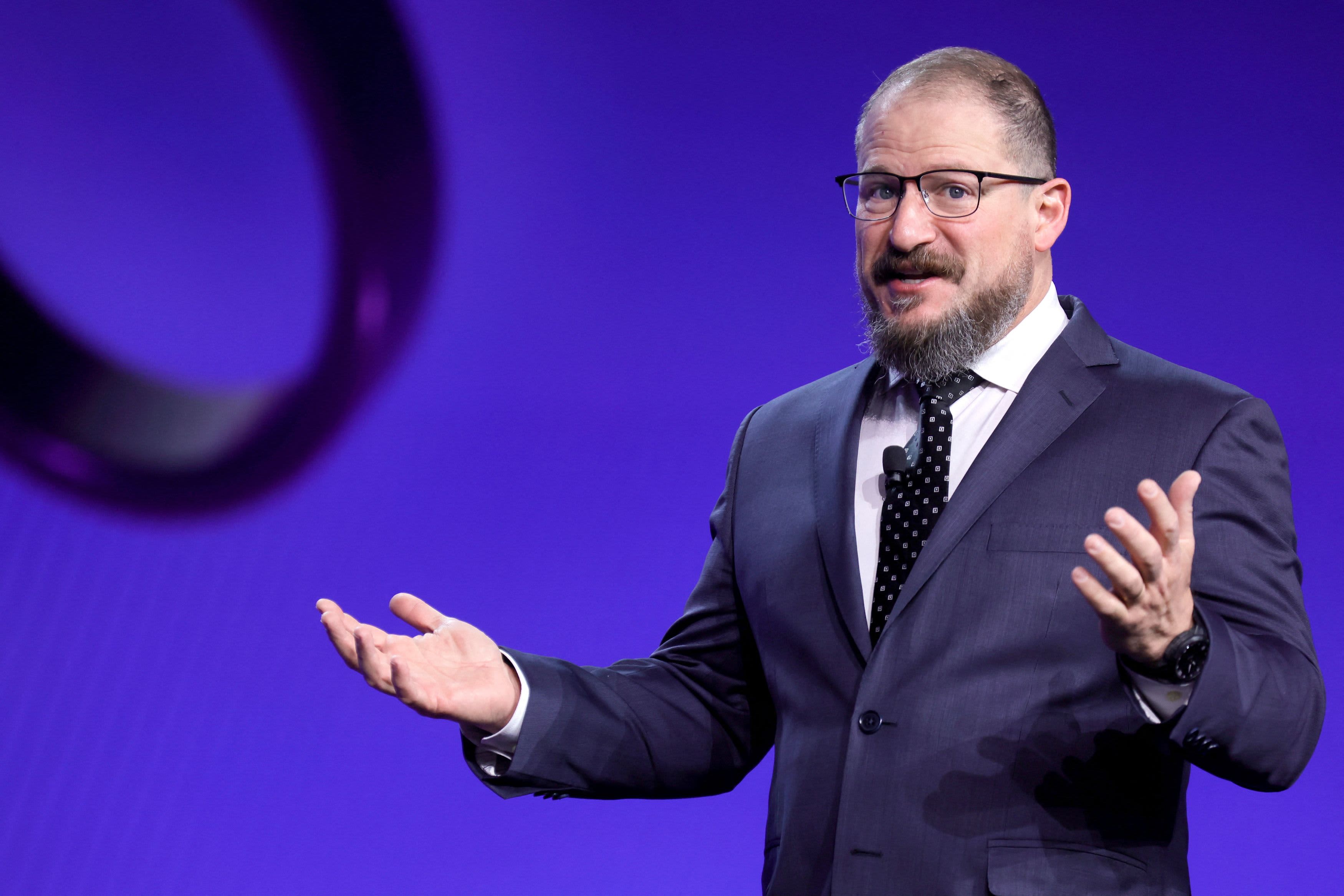
Chief executive Cristiano Amon said the company has been executing and collecting assets and now has a portfolio for the next phase of the data center.
Akash Palkhiwala, Qualcomm’s chief financial officer, said the company already has relationships with nearly every hyperscaler through smartphone chips and other existing products.
He said those relationships and Qualcomm’s edge work helped bring customers into data center discussions.
The CPU push also reflects a workload shift inside AI infrastructure.
CNBC reported that investor interest in CPUs is rising because experts expect central processors to handle more work from graphics processors and AI chips as autonomous agents run more tasks.
Palkhiwala said supply is not sufficient and that the CPU market needs multiple players.
Diversification Depends On More Than One Customer
The investor case is broader than Dragonfly C1000.
Smartphones accounted for two-thirds of Qualcomm’s product revenue in the quarter ended in March, and the company is seeking growth in cars, robots and data centers.
Qualcomm also said its automotive design-win pipeline expanded to $65 billion and set a $10 billion automotive revenue target by fiscal 2029.
Those targets make the Meta CPU plan a proof point rather than a complete data center business.
Qualcomm has a named customer and a production year for Dragonfly C1000, but the report does not include Meta deployment volumes, rack counts, contract value or power budgets.
Qualcomm’s near-term infrastructure story now rests on execution: Dragonfly C1000 must reach production in 2028, Meta must move from named customer to deployed workload, and the company must convert its $15 billion fiscal 2029 data center sales target into shipped systems rather than investor-day guidance.