AMD And Rackspace Set 30 MW AI Compute Plan For Regulated Workloads
AMD and Rackspace Technology signed a definitive agreement for an initial 30 MW of AMD-based compute across Rackspace global data centers, with deployments planned from late 2026 through 2028.

Rackspace Commits Space For AMD-Based AI Compute
AMD and Rackspace Technology have signed a definitive agreement for the staged rollout of a first 30 MW AMD compute footprint across Rackspace global data centers.
The companies said deployment is expected to begin in late 2026 and run through 2028.
The agreement turns a May 7, 2026 memorandum of understanding into a commercial framework.
AMD takes the silicon-partner role inside Rackspace's governed AI stack, while Rackspace positions the capacity for regulated enterprise workloads that need controlled infrastructure rather than unmanaged experimentation.
AMD and Rackspace identified healthcare providers as an early-interest group for accelerated compute used in clinical AI and inference at scale.
The companies did not name customers, contract values, facility locations or a financing package for the planned buildout, so the article is best read as a capacity and partnership signal rather than confirmed customer demand.
GPUs, CPUs And Managed Operations Sit In One Stack
Rackspace said the architecture will use AMD Instinct GPUs, including MI355X, MI350P and future successor solutions, alongside AMD EPYC CPUs.
The companies said the system is designed to route each workload to the right compute inside an integrated Enterprise AI Cloud architecture.
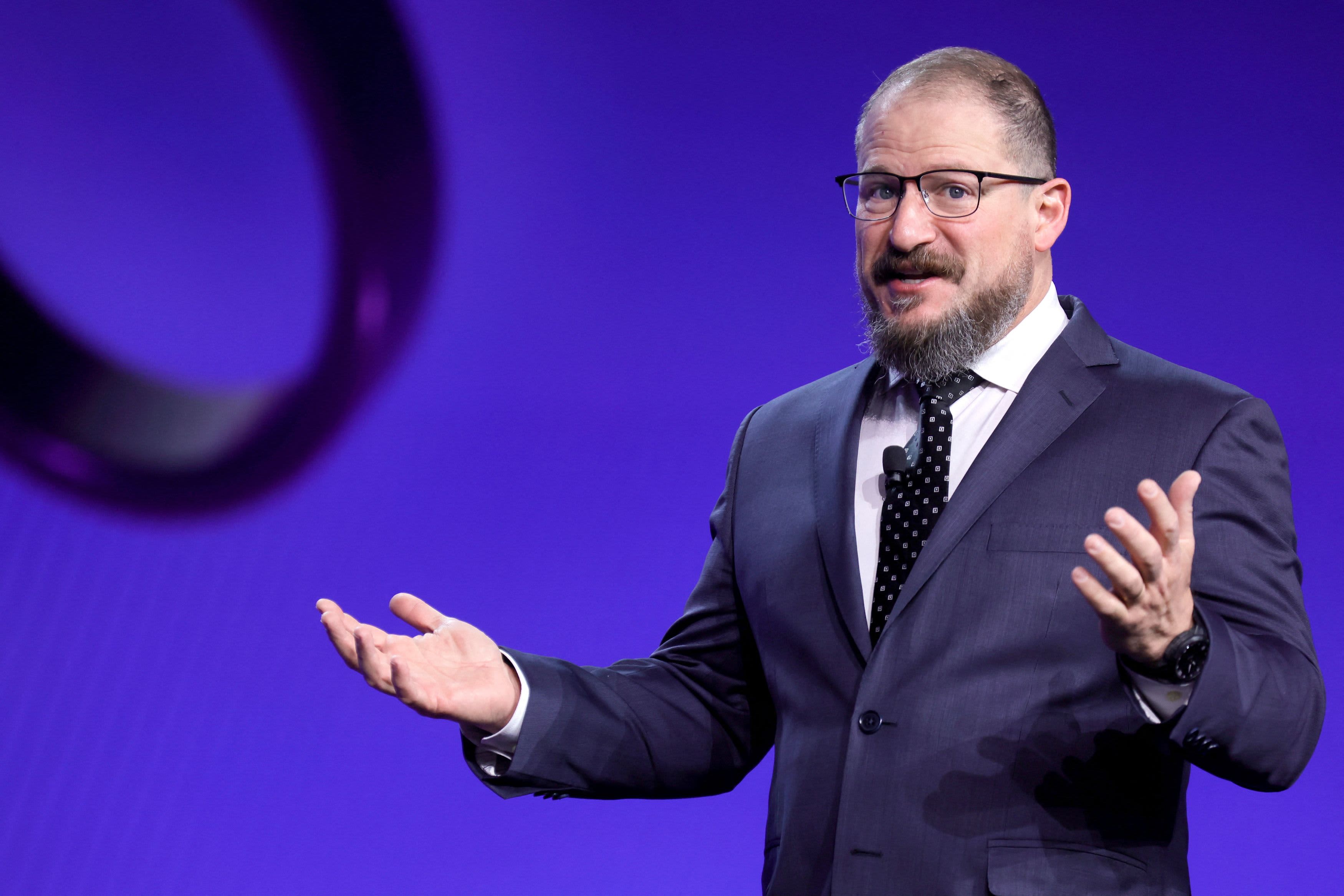
Rackspace chief executive Gajen Kandiah framed the offer around accountability for regulated industries.
He said enterprises need AI infrastructure with governance built into the operating model and a single accountable operator rather than separate vendors controlling disconnected layers.
Dan McNamara, senior vice president and general manager for Compute and Enterprise AI at AMD, said enterprise AI customers need a mix of accelerated and general-purpose compute for different workloads.
The AMD claim is tied to openness, scalability and accountability, but the release does not provide performance benchmarks, utilization targets or customer-level service metrics for the 30 MW footprint.
The companies also plan to dedicate sales and marketing resources to identify enterprise customers.
That turns the agreement into a go-to-market effort as well as an infrastructure plan, with both sides committing personnel to pursue opportunities across regulated industries.
Deployment Conditions Still Shape The Capacity Story
The companies tied the plan to four earlier MOU workstreams.
Those workstreams cover an enterprise AI cloud, an inference engine, inference delivered as a service, and bare metal deployments using AMD Instinct hardware.
Rackspace and AMD describe the package as a governed stack from bare metal compute through operated inference, aimed at enterprises moving from AI experiments into agentic workflows inside core systems.
The unresolved part sits in the deployment conditions.
AMD and Rackspace said individual deployment authorizations remain subject to separate execution, and certain commercial terms, including pricing and financial parameters, still require further agreement.
Third-party financing required to implement planned deployments also depends on availability on terms acceptable to Rackspace.
Those conditions keep the 30 MW announcement from being a fully delivered AI factory.
The agreement establishes the commercial framework and names the chip and cloud partners, while capacity delivery still depends on deployment authorizations, financing and customer uptake across regulated sectors.
For AI infrastructure buyers, the main change is that a managed cloud operator and a chip supplier are packaging governed compute as an enterprise alternative to a bare metal model.
The measurable commitment is the initial 30 MW AMD compute footprint planned from late 2026 through 2028; Rackspace and AMD still have to turn that framework into deployed capacity, signed enterprise workloads and agreed commercial terms.