SendTech Times
Cloud & Data CentersNews|June 6, 2026 at 10:07 AM
CAPACITY TEST:

Google Compute Lease Turns SpaceX Data Centers Into an AI Capacity Test

Article summary

SpaceX lined up a Google compute agreement that gives Google access to about 110,000 NVIDIA GPUs and related components. The filing-based terms call for $920 million a month from October 2026 through June 2029, with delivery protections if GPU access is not ready by September 30, 2026. The next signal is whether SpaceX can turn AI data-center capacity into reliable third-party infrastructure before Google's bridge-capacity need changes.
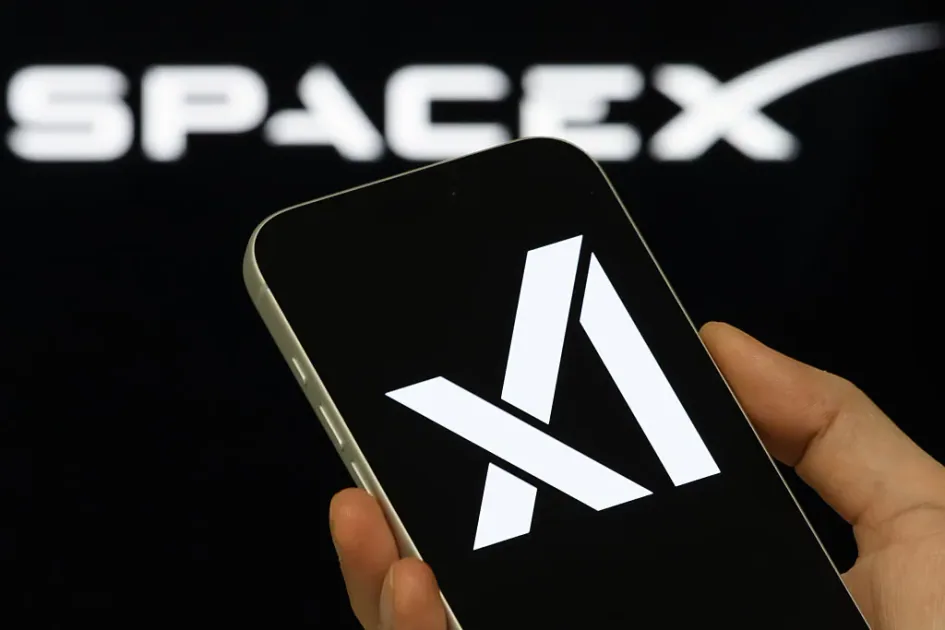
Google Compute Lease Turns SpaceX Data Centers Into an AI Capacity Test
Image source: TechCrunch / Getty Images

Google Turns to SpaceX for Bridge AI Compute

SpaceX has lined up a Google compute agreement as it moves toward a planned public listing, turning its AI data-center capacity into a near-term revenue test.

Regulatory-filing terms put the payment at $920 million per month, running from October 2026 to June 2029, in exchange for access to approximately 110,000 NVIDIA GPUs, CPUs, memory and related components.

The agreement is tied to demand for Google's agent platform, Gemini Enterprise.

A Google representative said the arrangement is a short-term bridge-capacity deal because demand for Gemini Enterprise has been higher than expected.

The practical signal is that even a large cloud operator may rent external AI capacity when enterprise demand rises faster than internal infrastructure planning.

For SpaceX, the same agreement gives its data centers a commercial customer outside xAI's original workloads.

Data-Center Timing Carries the Risk

The filing gives Google a delivery protection if the committed GPU capacity is not available on time.

If SpaceX fails to provide access to the committed amount of GPUs by September 30, 2026, Google may terminate the agreement after a one-month grace period or accept the available GPU count with reduced monthly fees.

The agreement also includes a broader exit mechanism.

Both companies can terminate the arrangement with 90 days' notice after December 31, 2026, while Google's access ramps through September at a reduced fee.

That structure makes execution more important than the headline monthly value.

SpaceX must convert data-center capacity into usable infrastructure before the full commercial rate begins, while Google is buying time for customer demand that has moved faster than expected.

SpaceX Adds a Second Compute Customer

The Google agreement follows a separate Anthropic arrangement announced in late May.

Under the late-May Anthropic arrangement, SpaceX would receive $1.25 billion per month through 2029 for available compute at the Colossus 1 data center near Memphis, Tennessee, originally built by xAI for its own artificial-intelligence work.

The newer Google deal appears to cover roughly half the compute available to Anthropic at Colossus 1, but SpaceX did not say which specific data center Google would use.

Elon Musk has previously suggested Colossus 2 would be reserved for xAI.

For AI infrastructure buyers, the affected segment is not only cloud platforms.

The deal also puts pressure on neocloud providers and other infrastructure lessors that sell access to scarce accelerator capacity.

IPO Filing Puts Numbers Under Scrutiny

SpaceX's securities paperwork puts the planned offering at about $75 billion and the target valuation near $1.75 trillion.

Because those are IPO-linked figures, they remain filing-based claims rather than operating results.

Alphabet's AI infrastructure budget is already large: its stated capital-expenditure commitment is above $180 billion this year, with spending expected to rise significantly in 2027.

It also announced an $80 billion equity sale.

The next signal is whether SpaceX can deliver the GPU access by the September 30, 2026 milestone while Google decides whether bridge capacity remains necessary after its own AI infrastructure spending increases.

Share this article
inXf

Related articles

More
AirTrunk Makes India a Bigger Test Case for AI Data Center Buildouts
Cloud & Data Centers

AirTrunk Makes India a Bigger Test Case for AI Data Center Buildouts

AirTrunk said it would invest $30 billion in India by 2030 to develop 5GW of new AI data center capacity. Bernstein’s forecast puts the country’s data center market at up to 8GW in 2030, compared with about 1.5GW today. The practical test is whether land, power and water availability can support the proposed buildout.

Iren Plans 800MW Australia AI Data Center Campus as Power Becomes the Capacity Gate
Cloud & Data Centers

Iren Plans 800MW Australia AI Data Center Campus as Power Becomes the Capacity Gate

Iren signed a transmission connection agreement for a planned 800MW data center campus in Bundey, South Australia. The project is Iren's first Australian foray and is expected to be energized in 2028 as the company shifts more cash flow toward AI cloud infrastructure. The practical test is whether Iren can turn grid-connected power, financing and GPU capacity into energized AI cloud campuses on the announced timelines.

CAS Star’s Photonics Bet Turns Into an AI Infrastructure Test
Cloud & Data Centers

CAS Star’s Photonics Bet Turns Into an AI Infrastructure Test

CAS Star founder Mi Lei says the AI boom has validated a decade-long investment thesis around photonics and other hard-tech fields. The firm has more than 200 photonics-related companies among roughly 600 portfolio companies, spanning sensing, communications, computing, storage and display. The next test is whether optical links, laser chips and photonic computing companies can turn AI data-centre demand into durable commercial scale.

AI Infrastructure Borrowing Pushes Big Tech Deeper Into Global Bond Markets
Cloud & Data Centers

AI Infrastructure Borrowing Pushes Big Tech Deeper Into Global Bond Markets

Alphabet and Amazon are using non-U.S. corporate bond markets to broaden funding for AI infrastructure and data center investment. Amazon raised 14.5 billion euros in March, while Morgan Stanley expects about 50 billion euros of hyperscaler euro debt this year. The practical test is whether international bond markets can absorb more AI-linked technology issuance without taking on greater sector volatility.

Keep Reading

More Stories

Latest
UAE CEOs Face AI Accountability Test as Boards Demand Measurable GainsAIJun 6, 2026UAE CEOs Face AI Accountability Test as Boards Demand Measurable GainsDataiku’s 2026 global CEO AI confessions study found that 79% of UAE CEOs believe their role could be at risk if AI investments fail to deliver tangible gains by the end of 2026. The study also found that 76% of UAE CEOs see AI strategy as important to investors and 59% report active board pressure to demonstrate outcomes. The practical test is whether UAE companies can turn AI programmes into measurable business results before executive accountability tightens.Microsoft Linux Push Turns Azure and Windows Into an AI Workload TestCloud & Data CentersJun 6, 2026Microsoft Linux Push Turns Azure and Windows Into an AI Workload TestMicrosoft used Build 2026 to expand Linux across Azure, Windows development tooling and a new AI workstation. The announcements include Azure Linux 4.0, Azure Container Linux, WSL-backed Windows 11 workflows and the Surface RTX Spark Dev Box. The practical test is whether developers use Microsoft's Linux-centered stack to move AI workloads between local machines and Azure infrastructure.South Korea's Ballot Shortage Is A Democratic Shame, Not A Partisan ArgumentPoliticsJun 6, 2026South Korea's Ballot Shortage Is A Democratic Shame, Not A Partisan ArgumentSouth Korea's June 3 local elections exposed a basic administrative failure: ballot papers ran short at 50 polling stations and voting was temporarily suspended at 22. University student bodies and youth protesters have framed the incident as a voting-rights issue, while much of politics and media remains trapped in partisan interpretation. The deeper test is whether South Korea can investigate the National Election Commission, political silence and media framing without reducing the issue to ideology or conspiracy.IMF Oil Inventory Warning Turns Gulf Energy Shock Into Growth TestEconomyJun 6, 2026IMF Oil Inventory Warning Turns Gulf Energy Shock Into Growth TestThe IMF warned that global oil inventories are expected to fall to about 7.5 billion barrels by July as the Iran war disrupts energy supplies. The IEA put cumulative losses at 12.8 million barrels a day, while Fitch cut its 2026 global growth forecast to 2.4 per cent and raised its Brent forecast to $87 a barrel. The next signal is whether emergency reserves and diplomatic progress can stabilize inventories before the IMF releases its July global forecast.Bluesky Warns Teen Social Media Bans Could Tighten Big Tech's GripScience & TechJun 6, 2026Bluesky Warns Teen Social Media Bans Could Tighten Big Tech's GripBluesky COO Rose Wang warned that teen social media bans could strengthen large technology platforms if compliance costs fall harder on smaller rivals. Australia's ban for under-16s requires age-verification steps and can carry fines of up to 49.5 million Australian dollars, or $35 million, for non-compliance. The practical test is whether online-safety rules can protect young users without making scale and compliance teams the main market advantage.GM Battery Pilot Line Puts Lower-Cost EV Chemistry on a 2028 ClockDevices & Consumer TechJun 6, 2026GM Battery Pilot Line Puts Lower-Cost EV Chemistry on a 2028 ClockGeneral Motors is using a new Battery Cell Development Center near Detroit to move lower-cost EV battery chemistry from research into production planning. The 500,000-square-foot facility supports GM’s $900 million EV battery push and is tied to a plan to cut EV costs by nearly 10%. The practical test is whether LMR battery cells can scale through the pilot line before GM targets vehicles on the road by 2028.Revolut Tests India Beta as UPI Scale Sets Fintech Adoption BarFintech & Digital PaymentsJun 6, 2026Revolut Tests India Beta as UPI Scale Sets Fintech Adoption BarRevolut has begun controlled onboarding for its India app before a wider launch. UPI processed 23.2 billion transactions worth ₹29.9 trillion in May, while Revolut says only a small subset of about 450,000 waitlisted users is in the beta. The next signal is whether Revolut moves from waitlisted beta users to broader onboarding without a firm launch date.Amazon Tests Conversational Warehouse Robots as Europe Rollout LoomsAIJun 6, 2026Amazon Tests Conversational Warehouse Robots as Europe Rollout LoomsAmazon unveiled a next-generation Proteus warehouse robot that can follow plain-language worker commands. The original Proteus is used in 25 U.S. fulfillment centers, and Amazon plans a Europe rollout in the first half of 2027. The practical test is whether Amazon can expand warehouse robotics while matching automation gains with skilled fulfillment roles.AI Token Costs Push Enterprises Toward a New Spend-Control LayerAIJun 6, 2026AI Token Costs Push Enterprises Toward a New Spend-Control LayerCompanies are moving from broad AI adoption to stricter control of token spending as agentic tools raise internal usage and budget pressure. The Linux Foundation unveiled plans for the Tokenomics Foundation, while Faros and Jellyfish data point to higher developer output alongside bugs, rewrites and sharply higher token consumption. The next signal is whether common token standards and spend-management tools can give enterprises enough visibility before AI budgets tighten further.Airbnb’s Chesky Tests Whether AI Needs Its Own Interface LabAIJun 6, 2026Airbnb’s Chesky Tests Whether AI Needs Its Own Interface LabBrian Chesky is preparing to support a separate AI research effort centered on interface design while keeping his Airbnb CEO role. Airbnb’s AI markers include 40% customer-support automation, conversational search built around a large language model, and a planned voice assistant later this year. The central question is whether a founder-led lab can turn interface research into useful consumer AI without a disclosed team, funding amount or timeline.Railway’s $100 Million Round Puts AI App Deployment at the Center of Cloud CompetitionCloud & Data CentersJun 6, 2026Railway’s $100 Million Round Puts AI App Deployment at the Center of Cloud CompetitionRailway raised $100 million in Series B funding to expand its AI-focused cloud deployment platform. The company says it has two million developers, more than 10 million monthly deployments and more than one trillion requests through its edge network. The practical test is whether Railway can turn developer-led usage into enterprise cloud accounts without losing deployment simplicity.Google Tests Local AI Demand With Gemma 4 12B ReleaseAIJun 5, 2026Google Tests Local AI Demand With Gemma 4 12B ReleaseGoogle released Gemma 4 12B as an open-weights multimodal AI model designed to run locally on a standard enterprise laptop. The model is described as an 11.95-billion-parameter system with an Apache 2.0 license, 16GB memory target, 256K context window and immediate availability through Google AI Edge Gallery. The practical test is whether enterprises use local multimodal inference when cloud access, latency or data handling are constraints.