Z.ai Tests Gigawatt AI Data Centre Built On Domestic Chips
Unite.AI reported that Z.ai has begun operating part of a gigawatt-class AI data centre built on Chinese-made chips, highlighting how export controls are pushing large-scale model training toward domestic compute stacks.
Gigawatt Power Becomes Z.ai's Compute Test
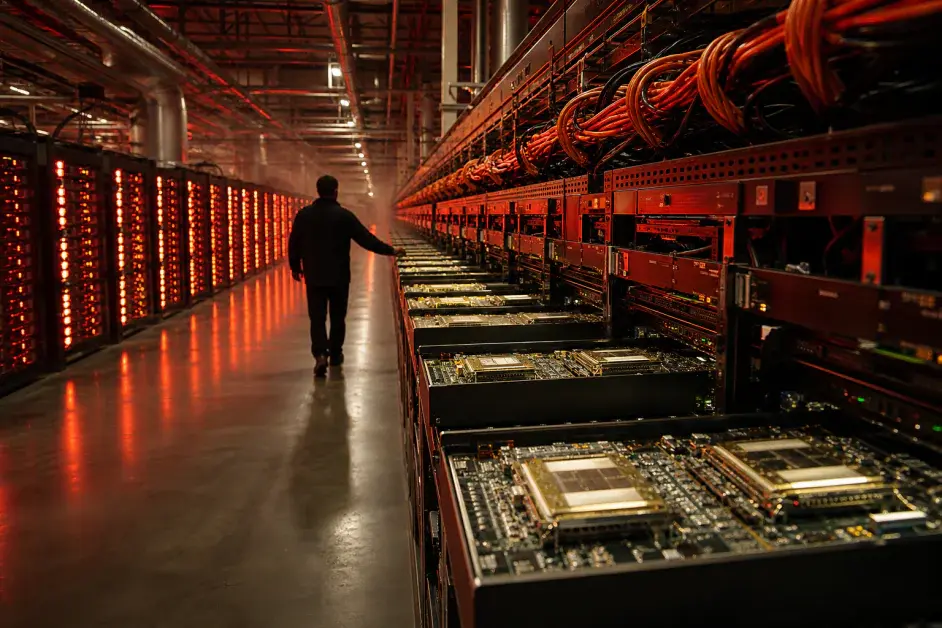
A gigawatt-class AI data centre built around domestic chips would move Z.ai's training constraint from access to Nvidia hardware toward power, cooling, networking and cluster efficiency.
Unite.AI cited Bloomberg and a person familiar with the project for the account that Z.ai has finished building the site and has begun operating part of it.
The planned draw is about 1 gigawatt, comparable to electricity for about 750,000 homes.
The project is designed to train Z.ai's GLM models without advanced Nvidia systems.
Z.ai, formerly known as Zhipu, was placed on the US Commerce Department export blacklist in January 2025, so later permission for some lower-performance Nvidia sales into China does not give the lab access to the most capable parts.
Cluster Scale Shifts The Engineering Problem
The site is not just a procurement story.
Once a model developer reaches several large clusters, the practical question becomes whether the processors, memory fabric and network links can move training data fast enough to make the installed power useful.
The cluster scale includes several computing groups with more than 10,000 chips each.
Public gaps remain around the site location, the exact accelerators and the power contract behind the build.
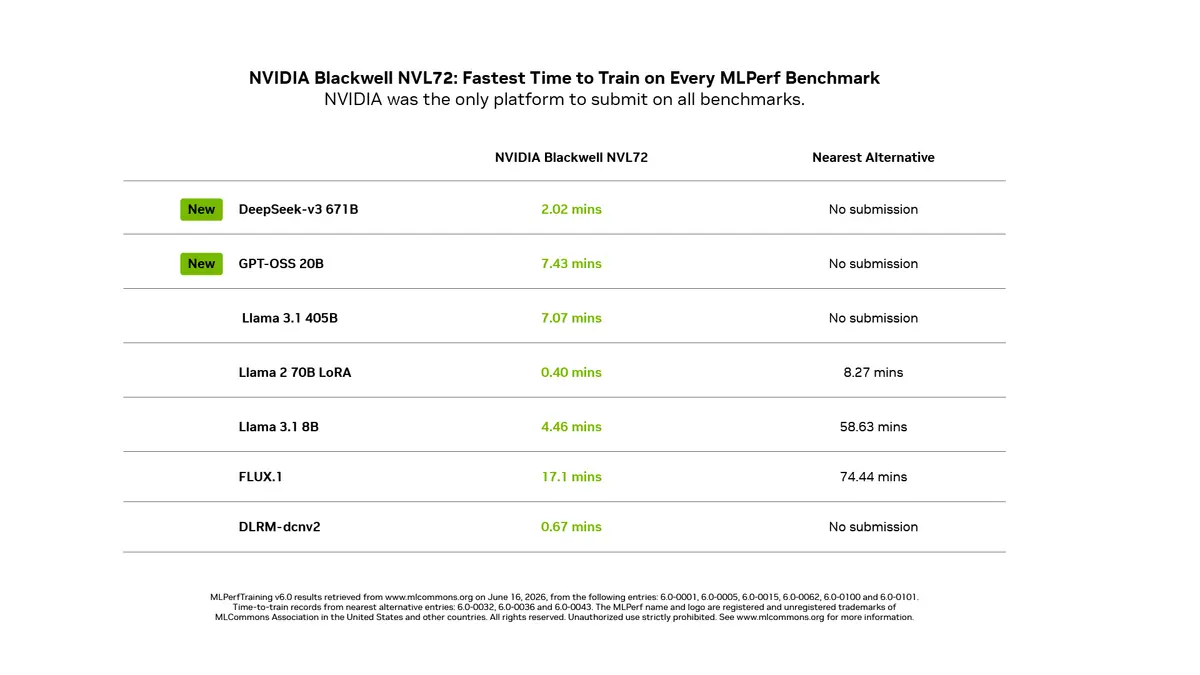
Those gaps affect compute planning because domestic accelerators still carry an efficiency penalty against Nvidia's strongest systems.
If each unit delivers less training work per watt, a domestic build must compensate with more chips, more electricity and tighter coordination across the cluster.
Chinese AI Training Moves Into Power And Interconnect Constraints
The build fits a wider push to fill new AI data centres with home-grown chips.
Recent GLM training has also been positioned around Huawei Ascend accelerators and Huawei's MindSpore software as a domestic hardware-and-software stack.
For operators, the implication is that data-centre design becomes part of AI sovereignty policy.
Power supply, cooling, accelerator availability and high-speed interconnects become strategic inputs rather than ordinary facility choices.
If the clusters are running at that scale, the site would be one of the clearest signs that China can assemble frontier-scale AI training capacity without Nvidia.
If the public gaps prove larger than reported, the distance between a completed building and live gigawatt-scale training remains the core execution risk.
Summary version for Medium
Z.ai Tests Gigawatt AI Data Centre Built On Domestic Chips
Why Z.ai Tests Gigawatt AI matter now for cloud infrastructure teams
Quick Summary: Unite.AI reported that Z.ai has begun operating part of a gigawatt-class AI data centre built on Chinese-made chips, highlighting how export controls are pushing large-scale model training toward domestic compute stacks.
Gigawatt Power Becomes Z.ai's Compute Test
A gigawatt-class AI data centre built around domestic chips would move Z.ai's training constraint from access to Nvidia hardware toward power, cooling, networking and cluster efficiency. Unite.AI cited Bloomberg and a person familiar with the project for the account that Z.ai has finished building the site and has begun operating part of it.
Cluster Scale Shifts The Engineering Problem
The site is not just a procurement story.
- Point 1: The central topic is cloud-data-centers, with the announcement framed around concrete operating detail.
- Point 2: Once a model developer reaches several large clusters, the practical question becomes whether the processors, memory fabric and network links can move training data fast enough...
AI deployments now depend on where models, data, approvals and operating teams meet.
Chinese AI Training Moves Into Power And Interconnect Constraints
The build fits a wider push to fill new AI data centres with home-grown chips. Recent GLM training has also been positioned around Huawei Ascend accelerators and Huawei's MindSpore software as a domestic hardware-and-software stack.
Read the Full Deep Dive
Want to explore the complete technical analysis, enterprise trade-offs, and detailed metrics?
Read the full article originally published at SendTech Times