Microsoft Adds AMD Helios AI Racks To Azure Without Order Size
Microsoft will deploy AMD Helios rack-scale AI accelerators for Azure AI workloads, with watts, dollars and rack counts still absent from the public terms of the commitment.
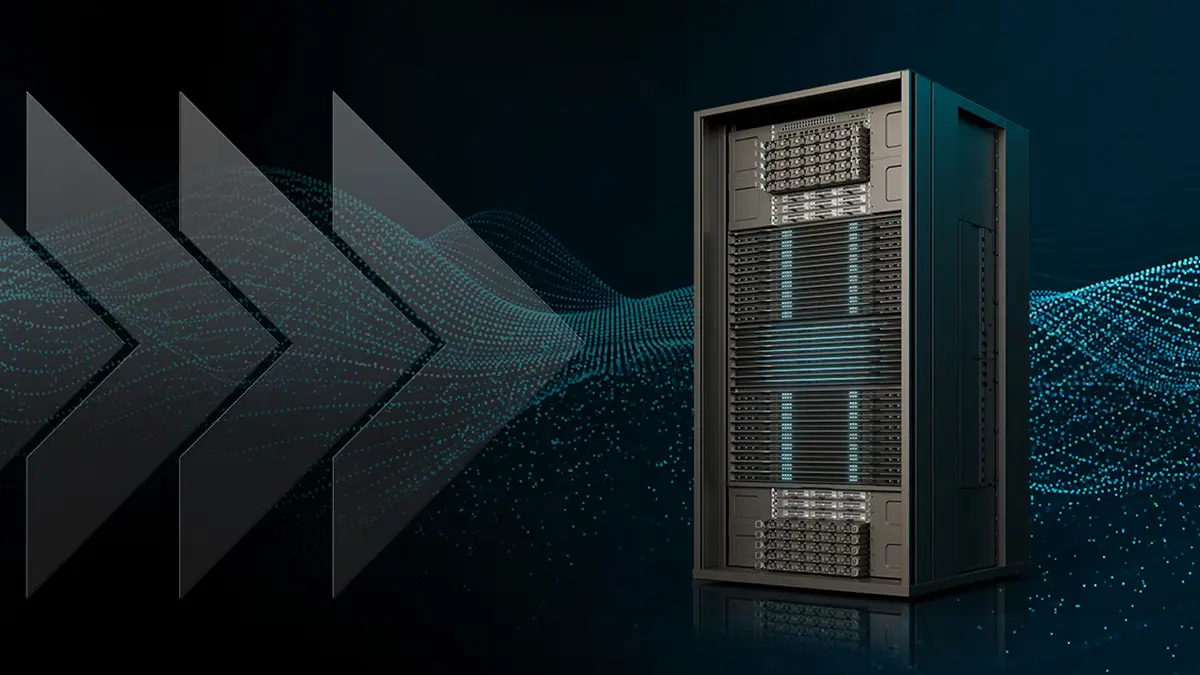
AMD's Helios rack-scale AI accelerator is moving onto Microsoft Azure for frontier-model workloads, giving the chipmaker a named hyperscale deployment before the order size is public.
Tom's Hardware reported that Microsoft and AMD announced the plan on July 20, 2026, with the systems intended for Microsoft's own data centres, Azure AI infrastructure customers and Microsoft Foundry users.
The commitment adds another accelerator option for cloud customers that need training and inference capacity.
The public terms stop before watts, dollars or rack counts, so the deployment is a cloud availability proof point for Helios instead of a measured share shift against Nvidia.
Helios Brings MI455X GPUs To Cloud AI Workloads
Tom's Hardware reported that the Helios rack joins 72 next-generation Instinct MI455X GPUs with 31.1TB of HBM4 memory across the system.
The same specification lists up to 1.4 exaFLOPS of FP8 compute and 2.9 exaFLOPS of FP4 compute for AI models using OCP AI data types.
AI labs are expected to use the AMD systems for training and inference serving, while enterprise workloads would run through Microsoft Foundry.
That delivery path puts the hardware inside cloud services, not only in a direct server procurement channel.
Interconnect performance is part of the rack-level design.
AMD is targeting 260 TB/s of scale-up bandwidth inside the Helios rack and 43 TB/s of scale-out bandwidth using UALink over Ethernet, Tom's Hardware's specification shows.
The article compares the scale-up figure with Nvidia's Vera Rubin NVL72 rack-scale system and puts the scale-out figure at about twice Vera Rubin's level.
UALink-over-Ethernet performance still has to be proven in practice.
Venice CPUs Add VM Series For AI And Chip Design
The Azure update extends beyond GPUs.
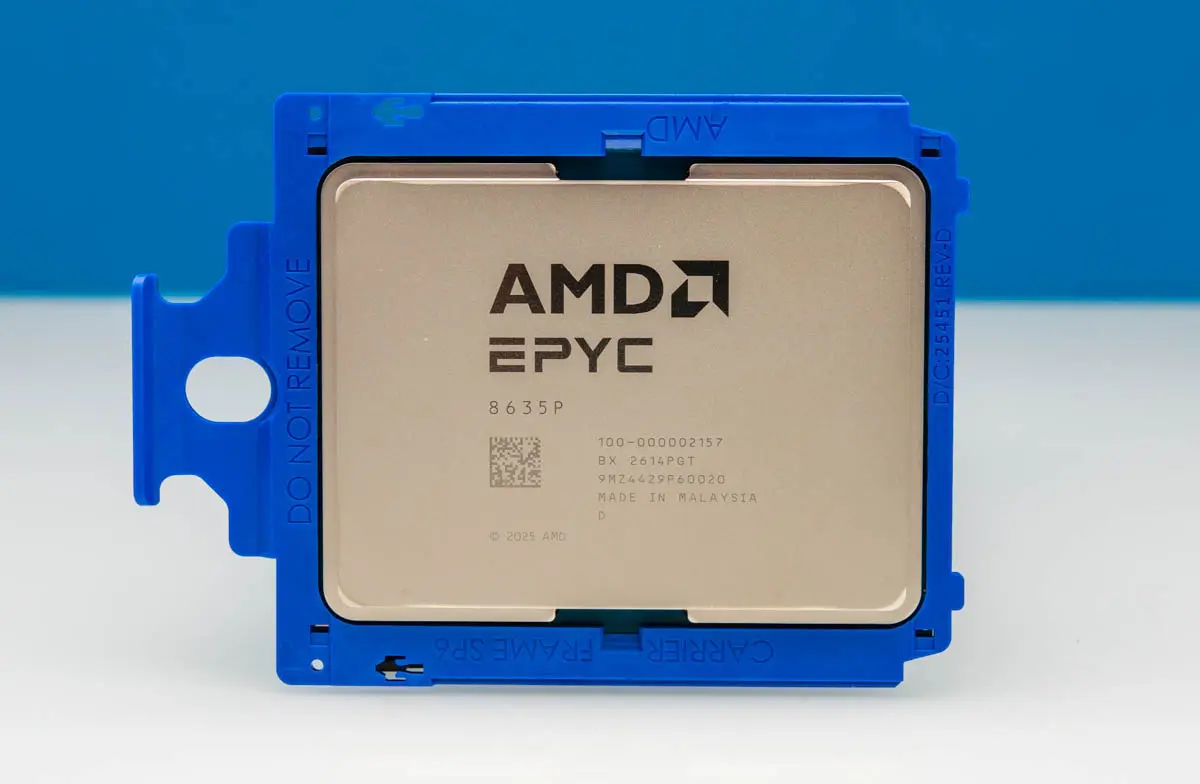
Microsoft and AMD also announced two VM series built on AMD's upcoming sixth-generation Epyc Venice CPUs: HDv2 for agentic AI and data pipelines, and HXv2 for semiconductor design workflows.
HDv2 targets data movement and agentic AI infrastructure.
HXv2 is aimed at electronic design and chip engineering tasks that need cloud capacity.
The cloud provider also plans to use its existing AMD Pensando DPU deployment with Azure Boost to accelerate networking and storage processing.
The package gives AMD a broader Azure footprint across GPUs, CPUs and DPUs.
Cloud customers trying to secure model-training and inference capacity would gain another hardware route through service contracts, while chip-design teams would get a Venice-based VM option for semiconductor workflows.
Helios Order Size Remains Outside The Public Terms
The order size is the main public-record gap.
Tom's Hardware wrote that the companies did not indicate the exact size of the Helios deployment in watts or dollars, even as the article placed the deal beside AMD's recent OpenAI and Meta partnerships involving gigawatts of compute installations and hundreds of billions of dollars potentially at stake.
The public record still lacks the first Helios wattage for the Azure rollout.
Summary version for Medium
Microsoft Adds AMD Helios AI Racks To Azure Without Order Size
Why this hardware shift matters for AI and compute buyers
Quick Summary: Microsoft will deploy AMD Helios rack-scale AI accelerators for Azure AI workloads, with watts, dollars and rack counts still absent from the public terms of the commitment.
Helios Brings MI455X GPUs To Cloud AI Workloads
Tom's Hardware reported that the Helios rack joins 72 next-generation Instinct MI455X GPUs with 31.1TB of HBM4 memory across the system. The same specification lists up to 1.4 exaFLOPS of FP8 compute and 2.9 exaFLOPS of FP4 compute for AI models using OCP AI data types.
Venice CPUs Add VM Series For AI And Chip Design
The Azure update extends beyond GPUs.
- Point 1: The central topic is chips-semiconductors, with the announcement framed around concrete operating detail.
- Point 2: Microsoft and AMD also announced two VM series built on AMD's upcoming sixth-generation Epyc Venice CPUs: HDv2 for agentic AI and data pipelines, and HXv2 for semiconductor...
AI deployments now depend on where models, data, approvals and operating teams meet.
Helios Order Size Remains Outside The Public Terms
The order size is the main public-record gap. Tom's Hardware wrote that the companies did not indicate the exact size of the Helios deployment in watts or dollars, even as the article placed the deal beside AMD's recent OpenAI and Meta partnerships involving gigawatts of compute installations and hundreds of billions of dollars potentially at stake.
Read the Full Deep Dive
Want to explore the complete technical analysis, enterprise trade-offs, and detailed metrics?
Read the full article originally published at SendTech Times