AI Agent Rollouts Require Testing Before Live Customers
No Jitter reported that enterprise AI agents need guardrails, simulations, answer checks and visibility before customer-facing deployment, as vendors add tools to catch regressions and rollback failures.

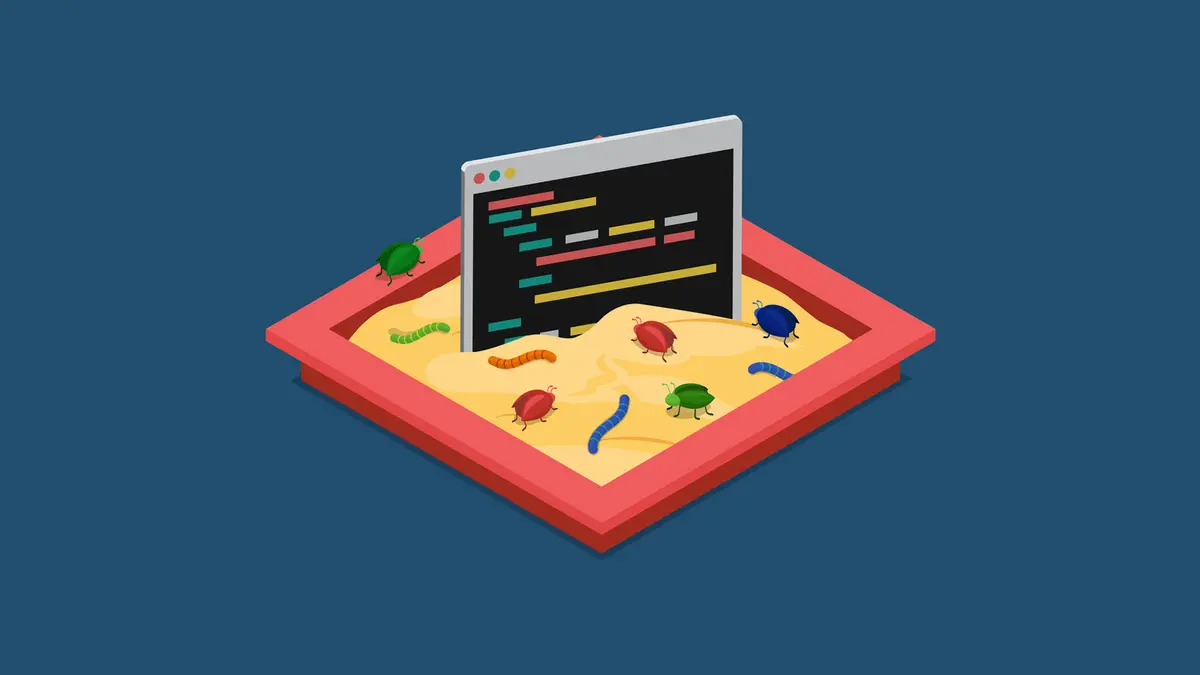
Customer-Facing AI Agents Need Simulations
AI agent rollouts are moving from feature launches to control systems for customer-facing work, with guardrails, simulation and visibility becoming the operating layer companies need before live deployment, No Jitter reported.
The deployment problem is not only whether an agent can answer a question.
Rebecca Wettemann, CEO and principal analyst with Valoir, told No Jitter that organisations piloting agents have seen systems behave in unexpected ways, including customer-facing agents going off track or consuming token credits overnight.
The practical contrast is between deterministic contact-centre systems and probabilistic agentic AI.
Traditional IVR workflows follow fixed routing rules, while LLM-based agents can produce different outcomes for the same case.
Companies therefore need testing to run throughout deployment, not only before launch.
Guardrails and monitoring also become a budget-control issue when agents can act repeatedly after a prompt, search a knowledge base, call tools or continue a conversation.
The deployment risk depends on what an organisation can observe and interrupt while the agent is working, rather than on a one-time model evaluation.
Vendors Add Simulation And Answer Checks
Guardrails are already common inside vendor products, but the newer layer is continuous testing.
No Jitter identified NiCE Cognigy, Cyara, Dialpad, Cresta and Quiq among vendors offering simulation, visibility, auditability or testing capabilities for AI agents.
Quiq's Verified Intelligence includes Verify Claim, which checks a generated answer against an organisation's own data before it is sent, and Process Guides, which encode brand voice, workflows and escalation rules.
Mike Myer, Quiq's CEO and founder, told No Jitter that the platform reviews whether a question is sensitive or hostile, then checks the response for accuracy, tone, helpfulness and policy compliance.
The same mechanism is meant to expose edge cases before customers see them.
Running hundreds of full conversations, rather than one clean example, surfaces the messy cases created by non-deterministic AI behaviour, Myer said.
NiCE Cognigy and Cyara testing tools similarly let organisations simulate customer interactions so failures can be traced to prompts, flows or policies.
Testing is also a workflow repair loop.
When a simulated interaction fails, the organisation can adjust the prompt, flow or policy that produced the failure, then rerun the test before exposing the agent to live traffic.
The control evidence is the ability to find, change and retest the agent before it reaches customers.
Knowledge-Base Changes Create Regression Risk
Knowledge bases sit at the centre of the risk model because human and AI agents both depend on them for approved answers.
If a knowledge-base article is outdated or rewritten poorly, the agent may continue to answer routine questions while failing on exceptions that previously worked.
Regression can follow a new model version, prompt update or edited knowledge-base article.
In the returns-policy example Myer gave, the agent can still handle general returns but begin giving incomplete answers on a nuanced exception.
Simulation after a knowledge-base update is designed to catch that change before it reaches a real conversation.
Visibility also has to extend beyond the final answer.
A test could check whether the agent correctly called an account API for a billing question, rather than only checking whether the visible reply sounded right, Myer said.
The Quiq rollback feature lets an administrator return an underperforming agent to the last known good version without downtime, according to the company.
The control requirement covers every tool call, data lookup and reasoning step that sits behind a response.
For contact-centre operators, that record is the evidence trail for whether the agent followed the approved workflow or simply produced an acceptable-sounding answer.
Agent Control Standard Adds A Shared Layer
The control model is not limited to individual vendors.
The Agent Control Standard debuted in June as a vendor-agnostic method for observing and controlling agent systems throughout their lifecycle.
Ariel Fogel, founding engineer and researcher with Pillar Security, told No Jitter that the standard addresses new threats and control points created by agent systems.
For enterprises, the operational consequence is a shift in ownership.
Contact-centre, customer-experience, security and IT teams need evidence that an AI agent was tested, monitored and reversible, not only proof that it answered sample prompts during procurement.
Wettemann told No Jitter that customers want repeated simulations before they are comfortable with what an agent will say and where it may go off track.
Customer-level failure-rate data for the testing tools remains undisclosed.
Summary version for Medium
AI Agent Rollouts Require Testing Before Live Customers
What the announcement means beyond the headline
Quick Summary: No Jitter reported that enterprise AI agents need guardrails, simulations, answer checks and visibility before customer-facing deployment, as vendors add tools to catch regressions and rollback failures.
Customer-Facing AI Agents Need Simulations
AI agent rollouts are moving from feature launches to control systems for customer-facing work, with guardrails, simulation and visibility becoming the operating layer companies need before live deployment, No Jitter reported. The deployment problem is not only whether an agent can answer a question.
Vendors Add Simulation And Answer Checks
Guardrails are already common inside vendor products, but the newer layer is continuous testing.
- Point 1: The central topic is ai, with the announcement framed around concrete operating detail.
- Point 2: No Jitter identified NiCE Cognigy, Cyara, Dialpad, Cresta and Quiq among vendors offering simulation, visibility, auditability or testing capabilities for AI agents.
AI deployments now depend on where models, data, approvals and operating teams meet.
Knowledge-Base Changes Create Regression Risk
Knowledge bases sit at the centre of the risk model because human and AI agents both depend on them for approved answers. If a knowledge-base article is outdated or rewritten poorly, the agent may continue to answer routine questions while failing on exceptions that previously worked.
Read the Full Deep Dive
Want to explore the complete technical analysis, enterprise trade-offs, and detailed metrics?
Read the full article originally published at SendTech Times