CAS Star’s Photonics Bet Turns Into an AI Infrastructure Test
CAS Star founder Mi Lei says the AI boom has validated a decade-long investment thesis around photonics and other hard-tech fields. The firm has more than 200 photonics-related companies among roughly 600 portfolio companies, spanning sensing, communications, computing, storage and display. The next test is whether optical links, laser chips and photonic computing companies can turn AI data-centre demand into durable commercial scale.
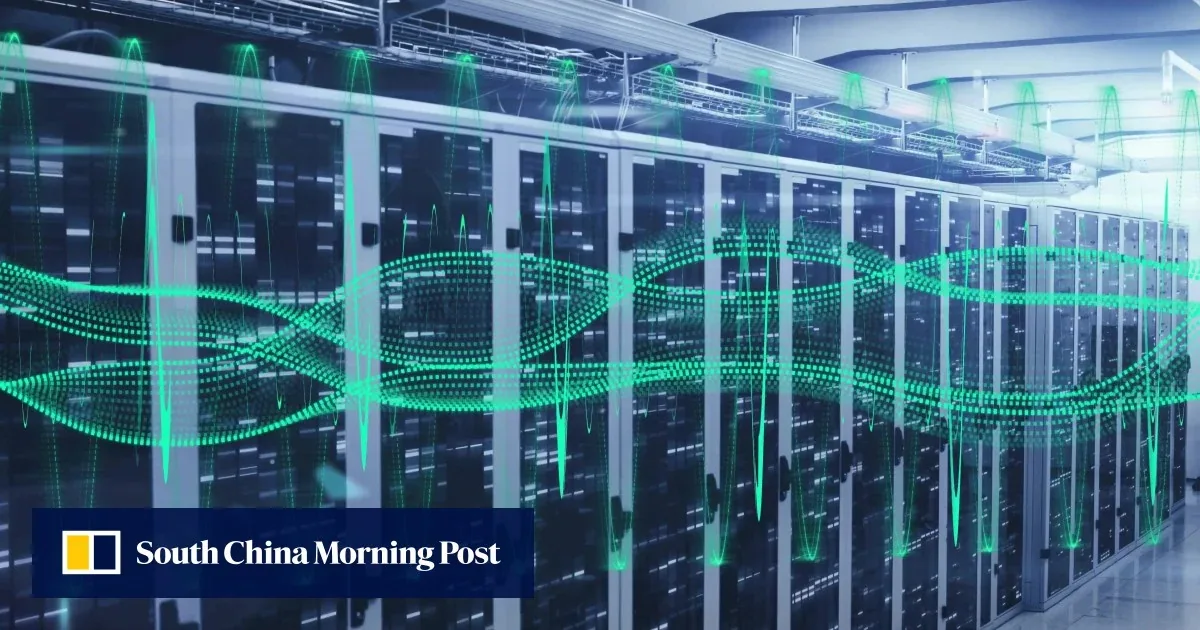
As AI clusters grow larger, Chinese venture firm CAS Star is seeing a long-running photonics strategy move from a specialist bet to a mainstream infrastructure story.
Founder Mi Lei told the South China Morning Post that the current interest in photonics validates a thesis he has backed for more than a decade.
Mi, who has a doctorate in optics from the Xian Institute of Optics and Precision Mechanics under the Chinese Academy of Sciences, said the firm was built to move scientific research toward commercial use.
The Infrastructure Signal
The immediate driver is the pressure inside AI data centres.
Large model training requires many specialised chips to exchange data continuously.
Copper links face signal loss, heat and power constraints as those data flows increase.
Optical links use light rather than electricity, making them more attractive for high-volume data movement.
The source does not say photonics will replace electronics.
The clearer signal is that optical components are becoming part of the AI computing stack, especially where energy use and interconnect bottlenecks are limiting scale.
Portfolio Proof Points
CAS Star has about 600 portfolio companies, with more than 200 connected to photonics across sensing, communications, computing, storage and display.
Yuanjie Technology, a Shaanxi laser-chip maker backed by the firm around 2019, has seen its shares rise more than elevenfold over the past year as revenue from data-centre light-source products increased.
Other optical communications names cited by the source include Eoptolink, Zhongji Innolight and TFC.
Lightelligence, a photonic computing company in the CAS Star portfolio, listed in Hong Kong last month and had a market value of about HK$57.9 billion as of Friday's close.
Hard-Tech Capital Cycle
Mi's wider argument is about hard tech: research-based technologies with long cycles and high barriers.
CAS Star was founded in 2013, when much of China's venture market was still focused on consumer internet companies.
Its recent or planned listings include Zhipu AI, Gpixel, Lightelligence, Uisee, Wenge AI, CAS Space and Minospace.
The firm manages about 18 billion yuan, or US$2.7 billion, across Xian, Beijing, Shanghai and Hong Kong.
Its incubators and chip pilot-production platforms show how capital, research institutions and manufacturing support are being tied together.
What To Watch
Beijing is also pushing patient capital toward frontier technologies.
In June 2024, President Xi Jinping called for finance to invest early, small, long-term and in hard tech, followed by State Council measures to support venture funding and exits.
The risk is that policy support and AI enthusiasm lift valuations faster than customer adoption.
The next test is whether optical links, laser chips and photonic computing systems keep winning orders as AI data-centre spending shifts from expansion to efficiency.
Summary version for Medium
CAS Star’s Photonics Bet Turns Into an AI Infrastructure Test
Why CAS Star’s Photonics Bet matter now for cloud infrastructure teams
Quick Summary: CAS Star founder Mi Lei says the AI boom has validated a decade-long investment thesis around photonics and other hard-tech fields. The firm has more than 200 photonics-related companies among roughly 600 portfolio companies, spanning sensing, communications, computing, storage and display.
The Core Signal
CAS Star founder Mi Lei says the AI boom has validated a decade-long investment thesis around photonics and other hard-tech fields. The firm has more than 200 photonics-related companies among roughly 600 portfolio companies, spanning sensing, communications, computing, storage and display.
The Technical Or Market Detail
As AI clusters grow larger, Chinese venture firm CAS Star is seeing a long-running photonics strategy move from a specialist bet to a mainstream infrastructure story.
- Point 1: The central topic is China AI, with the announcement framed around concrete operating detail.
- Point 2: Founder Mi Lei told the South China Morning Post that the current interest in photonics validates a thesis he has backed for more than a decade.
The important shift is not the AI label, but the operating boundary it creates for teams.
Operational Impact Or Limits
CAS Star founder Mi Lei says the AI boom has validated a decade-long investment thesis around photonics and other hard-tech fields. The firm has more than 200 photonics-related companies among roughly 600 portfolio companies, spanning sensing, communications, computing, storage and display.
Read the Full Deep Dive
Want to explore the complete technical analysis, enterprise trade-offs, and detailed metrics?
Read the full article originally published at SendTech Times