Cerebras Plans 8x To 10x Manufacturing Scale-Up For AI Inference
Cerebras chief executive Andrew Feldman said the company plans to scale manufacturing capacity by 8x to 10x this year and claimed its systems can run inference 10, 15, 20 or 30 times faster than GPUs. The interview-led source named customers including AlphaSense, Cognition AI, OpenAI, Block and GlaxoSmithKline, but did not include third-party benchmark methodology.

Cerebras is making inference speed the centre of its AI compute pitch, with chief executive Andrew Feldman saying the company plans to scale manufacturing capacity by 8x to 10x this year as agentic AI workloads increase demand for fast model responses.
Feldman made the comments at RAISE Summit 2026, and the public discussion did not provide independently audited benchmark results for the performance claims.
Cerebras Plans 8x To 10x Manufacturing Capacity Growth
Feldman said Cerebras plans to scale manufacturing capacity by eight to 10 times this year.
He linked that expansion to data-centre buildout, next-generation chip and system design, and growing demand from customers using inference for agents and coding workflows.
The company is positioning inference as a hardware bottleneck as AI systems make more sequential calls and reason over longer context windows.
Feldman said faster inference can let customers search across more documents and run more reasoning iterations before returning an answer.
The article named AlphaSense as a customer using speed to search over more documents.
It also said customers include Cognition AI, OpenAI in coding flows, Block for financial agents, GlaxoSmithKline for enterprise deployments and European high-performance computing centres.
Feldman Claims 10, 15, 20, 30 Times Faster Inference
Feldman said Cerebras is "10, 15, 20, 30 times faster than GPUs" for inference.
That is a vendor performance claim from the company's chief executive, and the article did not include independent benchmark methodology, test configuration, model details or third-party validation for the comparison.
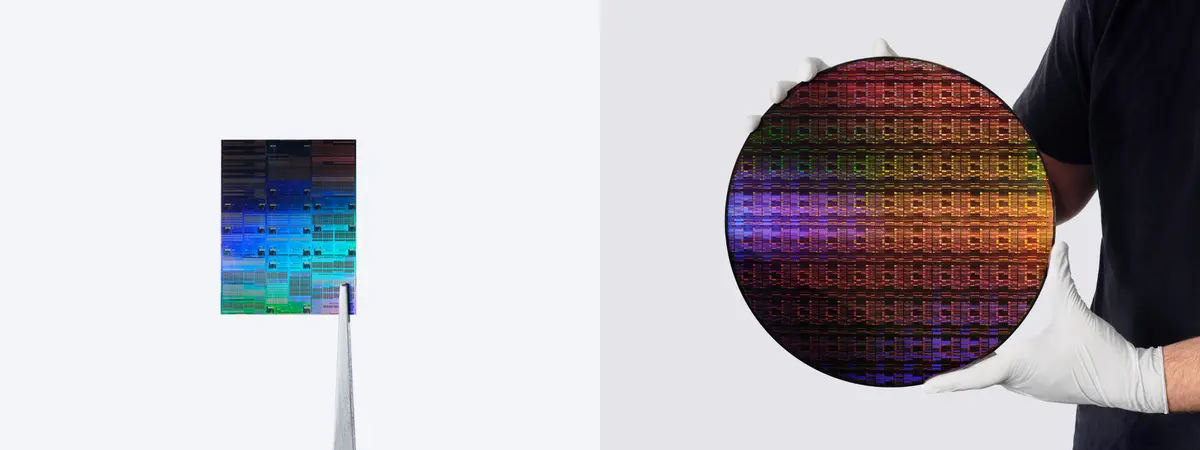
The technical argument centres on Cerebras's wafer-scale architecture.
Feldman said the design keeps model weights in on-chip SRAM, which the company presents as a way to avoid memory constraints that slow conventional GPU systems.
Coding agents were described as an initial use case.
The company is also using the pitch to frame broader demand from enterprise agents, financial agents and high-performance computing sites, but the public discussion did not disclose customer-level volumes or contract values.
RAISE Summit 2026 Interview Names Customers But Not Orders
Feldman spoke with John Furrier and Dave Vellante at the RAISE Summit.
The discussion covered Cerebras's IPO milestone, inference speed, European data-centre buildout and manufacturing scale, but it did not provide IPO timing, production-site names, wafer supply commitments or signed order totals.
The article disclosed that theCUBE was a paid media partner for the RAISE Summit event and said sponsors did not have editorial control over the content.
That makes the source useful for company strategy and named-customer claims, but not enough to treat the speed comparison as independently verified.
Cerebras did not disclose independent benchmark methodology, exact manufacturing partners, named manufacturing sites, signed order volumes, or a timetable for the IPO milestone.
Summary version for Medium
Cerebras Plans 8x To 10x Manufacturing Scale-Up For AI Inference
Why this hardware shift matters for AI and compute buyers
Quick Summary: Cerebras chief executive Andrew Feldman said the company plans to scale manufacturing capacity by 8x to 10x this year and claimed its systems can run inference 10, 15, 20 or 30 times faster than GPUs. The interview-led source named customers including AlphaSense, Cognition AI, OpenAI, Block and GlaxoSmithKline, but did not include third-party benchmark...
Cerebras Plans 8x To 10x Manufacturing Capacity Growth
Feldman said Cerebras plans to scale manufacturing capacity by eight to 10 times this year. He linked that expansion to data-centre buildout, next-generation chip and system design, and growing demand from customers using inference for agents and coding workflows.
Feldman Claims 10, 15, 20, 30 Times Faster Inference
Feldman said Cerebras is "10, 15, 20, 30 times faster than GPUs" for inference.
- Point 1: The central topic is chips-semiconductors, with the announcement framed around concrete operating detail.
- Point 2: That is a vendor performance claim from the company's chief executive, and the article did not include independent benchmark methodology, test configuration, model details or...
The important shift is not the AI label, but the operating boundary it creates for teams.
RAISE Summit 2026 Interview Names Customers But Not Orders
Feldman spoke with John Furrier and Dave Vellante at the RAISE Summit. The discussion covered Cerebras's IPO milestone, inference speed, European data-centre buildout and manufacturing scale, but it did not provide IPO timing, production-site names, wafer supply commitments or signed order totals.
Read the Full Deep Dive
Want to explore the complete technical analysis, enterprise trade-offs, and detailed metrics?
Read the full article originally published at SendTech Times