Open USD Stablecoin Draws 140 Backers But Launch Timing Stays Open
Open Standard launched Open USD with backing from banks, card networks and fintech firms, while the consortium said the stablecoin will go live later this year without naming commercial volumes or merchant adoption targets.
Open Standard Names Banks, Networks And Fintech Backers
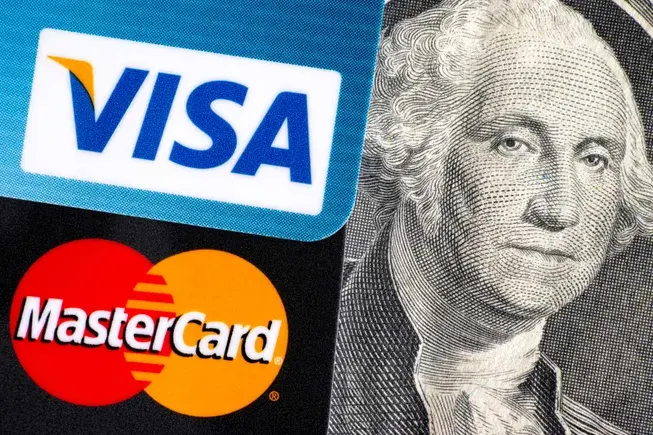
Banking Dive reported that Open Standard launched Open USD with support from more than 140 businesses, including BNY, U.S. Bank, Huntington, Citizens, Chime, Stripe, Coinbase, Ripple, Visa, Mastercard and American Express.
The consortium is led, at least on an interim basis, by Bridge CEO Zach Abrams.
The launch puts banks, payment networks, fintech firms and crypto companies behind a stablecoin designed for business payments.
Open Standard described Open USD as open, low-cost, high-throughput and broadly accessible, but the announcement still leaves commercial adoption and live transaction scale outside the public record.
Stablecoins are digital assets usually pegged one-to-one with fiat currencies.
Open Standard described the payments pitch as 24/7 market access and near-instant settlement for cross-border transactions.
U.S. lawmakers have been working on stablecoin oversight after passage of the Genius Act last year, so Open USD arrives as payment firms are preparing for more formal regulation.
Reserve Earnings Will Be Shared Among Partners
Open Standard listed three design principles for Open USD.
The consortium said business users face prohibitive fees when they mint and redeem stablecoins at scale, and said Open USD would allow those actions at no cost and without artificial volume limits.
The group also said earnings from Open USD reserves would be split among partners after a management fee for operational costs.
Governance is designed around a partner-member board, with Open Standard saying decisions should be made for the collective interest rather than for a single entity.
Those terms separate Open USD from a single-issuer stablecoin model.
The disclosed structure gives partner companies a role in economics and governance, while still leaving operational details such as reserve management and redemption mechanics outside the launch material.
Banking Dive reported that BNY chief product and innovation officer Carolyn Weinberg gave a $1.5 trillion stablecoin value expectation for 2030.
Her comments linked neutral governance and shared economics to digital-asset growth, while leaving the projection as a partner-bank expectation rather than measured Open USD usage.
Stripe, Visa And Mastercard Stress Payment Infrastructure
Abrams said Open USD would be live later this year.
Bridge, the company Abrams also leads, won conditional OCC approval in February for a national trust bank charter.
Stripe bought Bridge early last year in a deal worth $1.1 billion.
Stripe president of technology and business Will Gaybrick said the payment processor plans to make Open USD its default stablecoin for partner businesses.
Coinbase chief business officer Shan Aggarwal said better shared infrastructure could close the gap between current payments and what payments should be.
Visa chief product and strategy officer Jack Forestell said the stablecoin sector must shift focus from speed to reliability, governance and interoperability.
He said Visa would bring the same discipline, risk standards and operational rigour to Open USD that it applies to its card network.
Mastercard chief product officer Jorn Lambert compared stablecoin infrastructure with earlier shared technology layers such as the internet and mobile networks.
The public launch names the institutions backing Open USD and describes its fee, reserve-sharing and governance design.
Open Standard has not disclosed a launch date, initial transaction volume, merchant list, reserve manager, chain support, redemption process, compliance partners or named customers using Open USD in production.
Summary version for Medium
Open USD Stablecoin Draws 140 Backers But Launch Timing Stays Open
What the move signals for regulated finance and digital payments
Quick Summary: Open Standard launched Open USD with backing from banks, card networks and fintech firms, while the consortium said the stablecoin will go live later this year without naming commercial volumes or merchant adoption targets.
Open Standard Names Banks, Networks And Fintech Backers
Banking Dive reported that Open Standard launched Open USD with support from more than 140 businesses, including BNY, U.S. Bank, Huntington, Citizens, Chime, Stripe, Coinbase, Ripple, Visa, Mastercard and American Express.
Reserve Earnings Will Be Shared Among Partners
Open Standard listed three design principles for Open USD.
- Point 1: The central topic is fintech-digital-payments, with the announcement framed around concrete operating detail.
- Point 2: The consortium said business users face prohibitive fees when they mint and redeem stablecoins at scale, and said Open USD would allow those actions at no cost and without...
The headline matters only if the approval path, compliance burden and operating limits line up.
Stripe, Visa And Mastercard Stress Payment Infrastructure
Abrams said Open USD would be live later this year. Bridge, the company Abrams also leads, won conditional OCC approval in February for a national trust bank charter.
Read the Full Deep Dive
Want to explore the complete technical analysis, enterprise trade-offs, and detailed metrics?
Read the full article originally published at SendTech Times