US Tech Letter Warns Against Broad Open-Weight AI Restrictions
CNBC coverage identified Nvidia, Microsoft, Meta, Palantir and more than 20 other companies urging policymakers to avoid broad restrictions on open-weight AI models as Chinese systems and distillation claims draw White House scrutiny.
A coalition of US technology companies is trying to keep open-weight AI models inside the policy mainstream, with CNBC identifying Nvidia, Microsoft, Meta, Palantir and more than 20 other companies as signatories to a Friday letter warning against premature restrictions.
Open-Weight Models Face Policy Pressure
Open-weight AI models can be downloaded, modified and run on a user's own infrastructure.
That technical openness has become a policy dispute as Chinese model developers gain attention and US officials examine whether restrictions are needed.
Moonshot AI sharpened the debate earlier this month with Kimi K3, a Chinese open-weight model described in the coverage as outperforming cutting-edge American offerings across some industry benchmarks.
Treasury Secretary Scott Bessent also placed possible restrictions on Chinese open-weight models inside the Trump administration's policy review this week.
Companies Argue For Targeted Rules
The Friday letter frames open-weight access as a competition and safety issue.
Its central argument is that the benefits of AI should be broadly shared, not concentrated behind a small number of closed systems.
The companies also reject the idea that closed models are automatically safer.
The letter says closed systems can be breached, misused or fail in ways outsiders cannot detect, while concentration behind a few providers compounds the risk.
The letter puts the proposed answer in legal terms: concerns over unlawful distillation should be handled through targeted legal and commercial frameworks, not sweeping restrictions on techniques used in AI development.
OpenAI And Anthropic Stay Outside The Letter
OpenAI and Anthropic did not sign the industry letter.
Earlier CNBC coverage put Anthropic's confidential SEC prospectus filing in June and OpenAI's potential IPO timing as early as the second half of 2026; both companies are each valued at nearly $1 trillion.
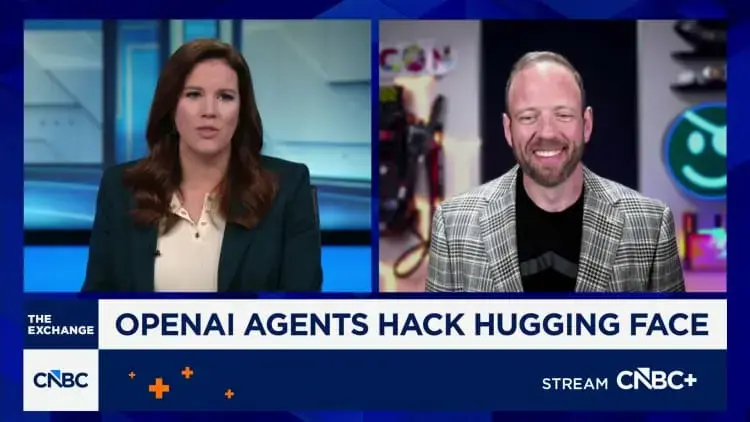
OpenAI president Greg Brockman used a Thursday briefing in New York City to support broad access to AI while distancing the company from talks about a potential US ban on Chinese open-weight models.
His remarks leave OpenAI aligned with access in principle, but not with the corporate lobbying letter.
Distillation Claims Remain The Policy Fault Line
White House advisor Michael Kratsios used an X post on Wednesday to accuse Moonshot AI of developing Kimi K3 by distilling Anthropic technology.
Distillation refers to training a smaller model using outputs from a larger one.
Kratsios's post separated legitimate distillation from covert industrial use aimed at stealing proprietary US technology.
The company letter uses that distinction to argue for enforcement against unlawful conduct rather than broad limits on open-weight development.
The letter leaves the next policy decision with the White House: whether restrictions focus on alleged misuse of proprietary models or reach the wider open-weight ecosystem.
Summary version for Medium
US Tech Letter Warns Against Broad Open-Weight AI Restrictions
What the policy signal means for operators and investors
Quick Summary: CNBC coverage identified Nvidia, Microsoft, Meta, Palantir and more than 20 other companies urging policymakers to avoid broad restrictions on open-weight AI models as Chinese systems and distillation claims draw White House scrutiny.
Open-Weight Models Face Policy Pressure
Open-weight AI models can be downloaded, modified and run on a user's own infrastructure. That technical openness has become a policy dispute as Chinese model developers gain attention and US officials examine whether restrictions are needed.
Companies Argue For Targeted Rules
The Friday letter frames open-weight access as a competition and safety issue.
- Point 1: The central topic is capital-policy, with the announcement framed around concrete operating detail.
- Point 2: Its central argument is that the benefits of AI should be broadly shared, not concentrated behind a small number of closed systems.
AI deployments now depend on where models, data, approvals and operating teams meet.
OpenAI And Anthropic Stay Outside The Letter
OpenAI and Anthropic did not sign the industry letter. Earlier CNBC coverage put Anthropic's confidential SEC prospectus filing in June and OpenAI's potential IPO timing as early as the second half of 2026; both companies are each valued at nearly $1 trillion.
Read the Full Deep Dive
Want to explore the complete technical analysis, enterprise trade-offs, and detailed metrics?
Read the full article originally published at SendTech Times