AMD Helios AI Racks Bring Epyc CPUs To Nvidia Compute Challenge
Data Center Knowledge reported that AMD moved Helios into production with MI455X GPUs, Epyc processors, Pensando networking and ROCm software, while vendor performance claims still lack third-party benchmark validation.
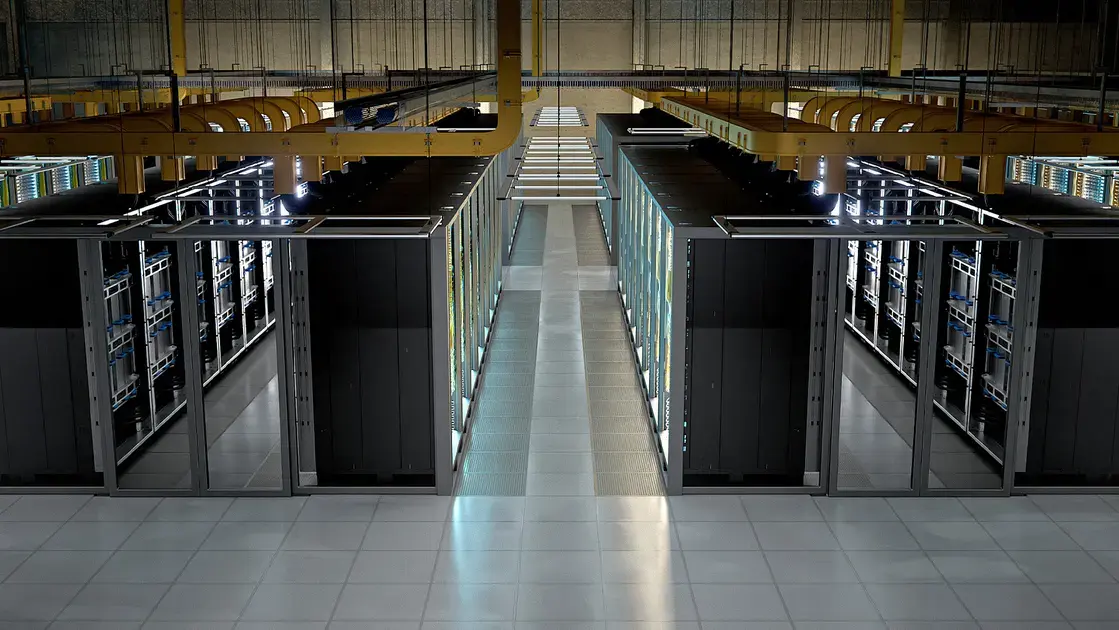
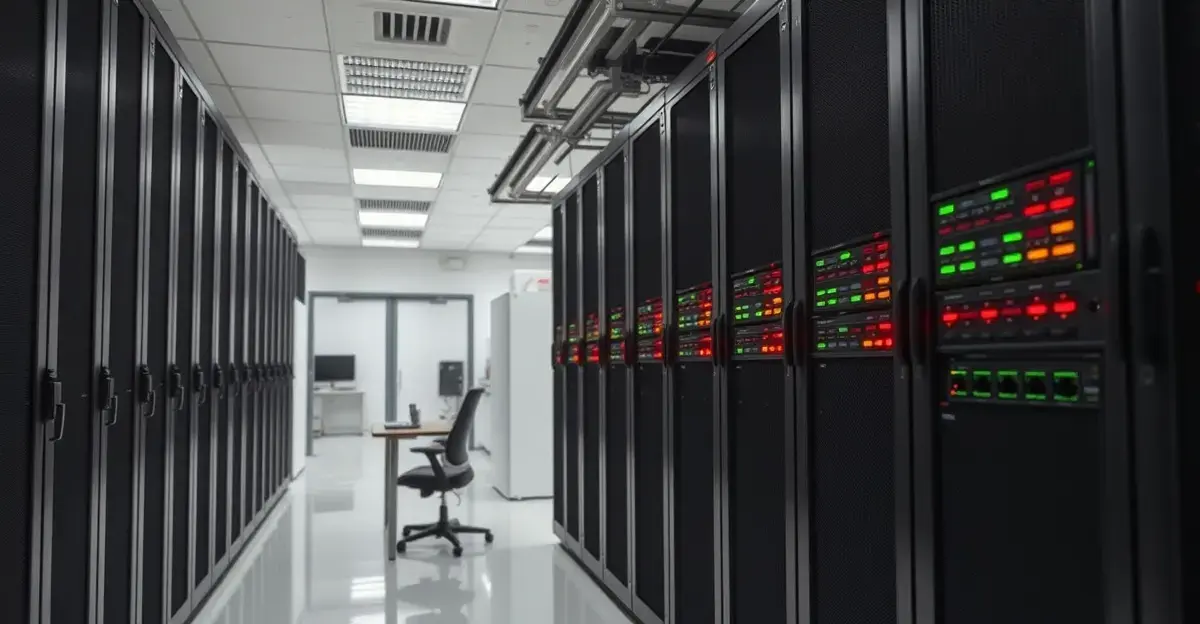
AMD has moved its Helios rack-scale AI system into full production, giving the chipmaker an integrated platform to compete with Nvidia beyond individual accelerators.
Data Center Knowledge reported that hardware partners are scheduled to begin shipments by the end of the third quarter of 2026.
The system combines Instinct MI455X accelerators, Epyc server processors, Pensando networking and ROCm software.
AMD said Microsoft and Anthropic are the first named deployment routes for the integrated architecture.
A Rack-Scale Platform Built Around Venice
Helios follows the integrated design now shaping high-end AI infrastructure: processors, accelerators, networking and software are engineered as one rack rather than assembled as separate components.
The approach is intended for increasingly complex agentic workloads that require CPUs to coordinate data retrieval, tool calls and other tasks around GPU reasoning.
At the July 23 Advancing AI event in San Francisco, Chief Executive Lisa Su said AI agents could expand from millions to billions.
Her presentation positioned server processors as an important part of that growth, not simply as hosts for accelerators.
AMD said the Venice family includes configurations with up to 256 cores: SP8 variants span 8 to 128 cores, the SP7 range reaches 256 cores and the LP host-node processor reaches 72 cores.
The lineup covers enterprise servers, cloud systems and specialised AI host nodes.
Performance Claims Centre On The Full System
Su said Helios delivers 15% more AI compute, 50% more memory, 50% more scale-out bandwidth and up to 30% more tokens per dollar than Nvidia's competing platform.
AMD's launch material also compared a 256-core Venice configuration with Nvidia's 88-core Vera CPU, claiming 2.2 times the throughput, and cited a 20% per-core advantage for a 96-core Venice chip.
According to AMD's launch benchmarks, MI455X provides 34 times the token throughput and up to 18 times the token-cost performance of the previous MI355X generation.
Taken together, the vendor's figures present a performance and capacity case for evaluating the rack as an alternative to Nvidia's integrated designs.
Microsoft And Anthropic Establish Deployment Routes
AMD identified Microsoft as a customer for frontier-model inference and Azure AI services.
Su also said Anthropic intends to deploy as much as 2 GW of accelerators in the rack-scale systems.
Those commitments move the launch beyond a component roadmap and support a broader effort to sell CPUs, accelerators, networking and software as one infrastructure stack.
In the same presentation, Su projected a $1.4 trillion AI infrastructure market by 2030, replacing her earlier $500 billion estimate for 2028.
She put the server CPU opportunity at $200 billion by 2030, up from $25 billion today.
The presentation also attributed 46% of latest-quarter server-market revenue to the processor family and listed deployments at more than 60% of Fortune 100 companies.
The Processor Roadmap Runs Through 2030
AMD said its roadmap schedules the SP7 version for the fourth quarter of 2026, SP8 for the first half of 2027 and the LP host-node processor for the second half of that year.
It places seventh-generation Florence CPUs in 2028 and an eighth generation in 2030.
On the accelerator side, the roadmap calls for a new GPU and Helios generation each year, including Instinct MI500 in 2027 and MI600 in 2028.
ROCm.AI is intended to support that cadence with command-line tools, reusable skills and AI-assisted software optimisation across the hardware portfolio.
The remaining evidence gap is operational.
Public material establishes production status, shipment timing, product specifications and customer commitments, but it does not provide order sizes, deployed-cluster economics or independently reproduced benchmarks.
Summary version for Medium
AMD Helios AI Racks Bring Epyc CPUs To Nvidia Compute Challenge
Why AMD Helios AI Racks matter now for cloud infrastructure teams
Quick Summary: Data Center Knowledge reported that AMD moved Helios into production with MI455X GPUs, Epyc processors, Pensando networking and ROCm software, while vendor performance claims still lack third-party benchmark validation.
A Rack-Scale Platform Built Around Venice
Helios follows the integrated design now shaping high-end AI infrastructure: processors, accelerators, networking and software are engineered as one rack rather than assembled as separate components. The approach is intended for increasingly complex agentic workloads that require CPUs to coordinate data retrieval, tool calls and other tasks around GPU reasoning.
Performance Claims Centre On The Full System
Su said Helios delivers 15% more AI compute, 50% more memory, 50% more scale-out bandwidth and up to 30% more tokens per dollar than Nvidia's competing platform.
- Point 1: The central topic is chips-semiconductors, with the announcement framed around concrete operating detail.
- Point 2: AMD's launch material also compared a 256-core Venice configuration with Nvidia's 88-core Vera CPU, claiming 2.2 times the throughput, and cited a 20% per-core advantage for a...
AI deployments now depend on where models, data, approvals and operating teams meet.
Microsoft And Anthropic Establish Deployment Routes
AMD identified Microsoft as a customer for frontier-model inference and Azure AI services. Su also said Anthropic intends to deploy as much as 2 GW of accelerators in the rack-scale systems.
Read the Full Deep Dive
Want to explore the complete technical analysis, enterprise trade-offs, and detailed metrics?
Read the full article originally published at SendTech Times