World Cup Opens in Mexico With 48-Team Scale and Two Early Tests
The 2026 FIFA World Cup starts in Mexico with a 48-team, 104-match format, an opening ceremony at Mexico City Stadium and two Group A matches: Mexico against South Africa and South Korea against Czechia. The first day tests co-host momentum, expanded tournament logistics and early pressure on South Korea.

Mexico opens a larger World Cup format
The 2026 FIFA World Cup begins on Thursday, June 11, with the tournament expanding to 48 teams and 104 matches across the United States, Canada and Mexico.
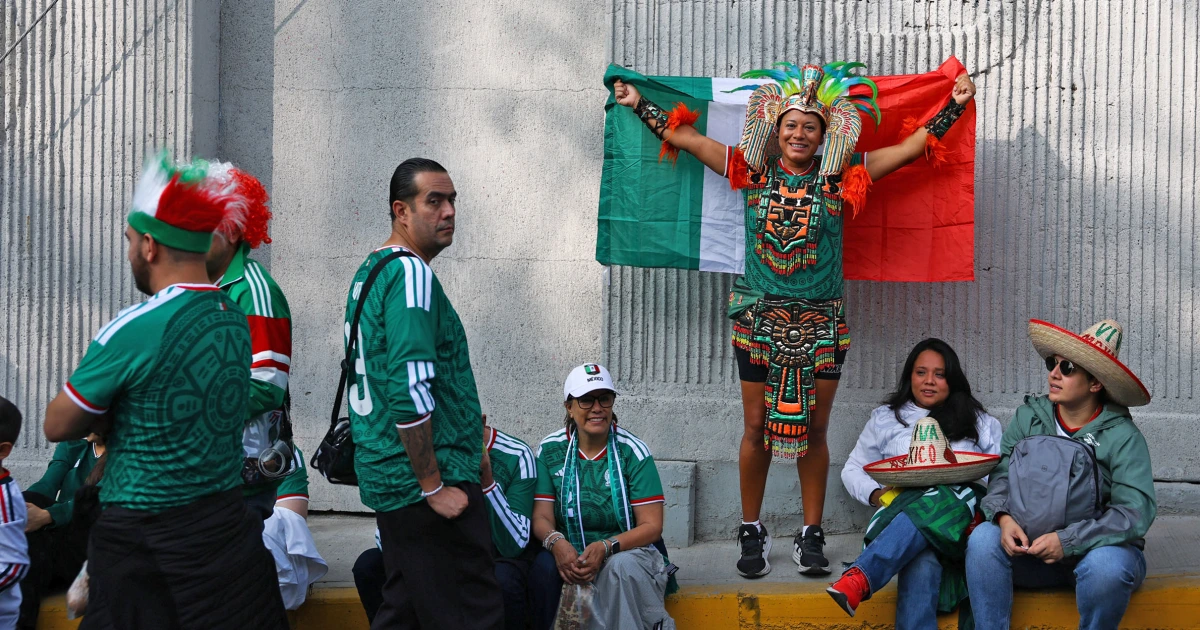
The opening day is centered on Mexico, where the first two Group A matches set the competitive and operational tone for a six-week event.
The opening ceremony is scheduled for 11am local time, or 17:00 GMT, at Mexico City Stadium in Mexico City.
The event includes Mexican and Latin music, with Alejandro Fernandez performing the national anthem and appearances by Mana, Los Angeles Azules, Lila Downs, Belinda, J Balvin, Danny Ocean, Shakira and Burna Boy.
Shakira and Burna Boy are tied to the debut performance of “Dai Dai”, the tournament’s official song.
Hosts Mexico then play South Africa at the same venue at 1pm local time, or 19:00 GMT.
Later, South Korea face Czechia at Estadio Guadalajara, also known as Estadio Akron, in Guadalajara.
That match is scheduled for 8pm local time, or 02:00 GMT on June 12.
The first match carries host-country pressure
Mexico enter the opening match as clear favourites.
Opta’s pre-match simulations give the hosts a 66.3 percent chance of beating South Africa, compared with 14.3 percent for South Africa and 19.4 percent for a draw.
Those figures make the opener more than a ceremony-backed showcase: Mexico are expected to turn home advantage into an immediate Group A result.
The source material frames South Africa as the team trying to disrupt that script.
The opening fixture therefore tests whether Mexico can handle the attention that comes with co-hosting while beginning the expanded format with a result that matches the probability model.
South Korea’s night match widens the first-day stakes
South Korea’s meeting with Czechia gives the first day a second competitive track beyond the host opener.
The Guadalajara fixture matters for Asian football visibility because South Korea begin their campaign on the same day the tournament starts, rather than entering after the opening weekend.
The schedule also spreads the first-day spotlight across two Mexican venues.
Mexico City Stadium carries the ceremony and host opener, while Estadio Guadalajara receives the late Group A match.
That split is an early indicator of how the enlarged World Cup will distribute attention across host cities rather than concentrating the first day around one game.
What the opening day proves, and what it does not
The first day proves the expanded tournament has moved from planning into execution: 48 teams, 104 matches and three host countries are no longer abstract format changes.
Mexico’s opening result and South Korea’s late match will provide the first evidence of competitive balance inside Group A.
It does not yet prove whether the larger format will improve the tournament’s football quality.
That question will depend on match competitiveness beyond the first day, travel demands across the three host countries and whether teams outside the traditional power centers can turn expanded access into stronger performances.