SendTech Times
News
MARKET SIGNAL:

GCI Turns Starlink Into A Backup Path For Remote Alaska Networks

Article summary

GCI plans to use Starlink dedicated service with bonded gateways as backup connectivity for Alaskan hubs including Bethel, Sitka, Kotzebue and Dillingham, adding a satellite path behind existing microwave and fiber links.
GCI Turns Starlink Into A Backup Path For Remote Alaska Networks

Starlink Moves From Customer Terminal To Network Backup

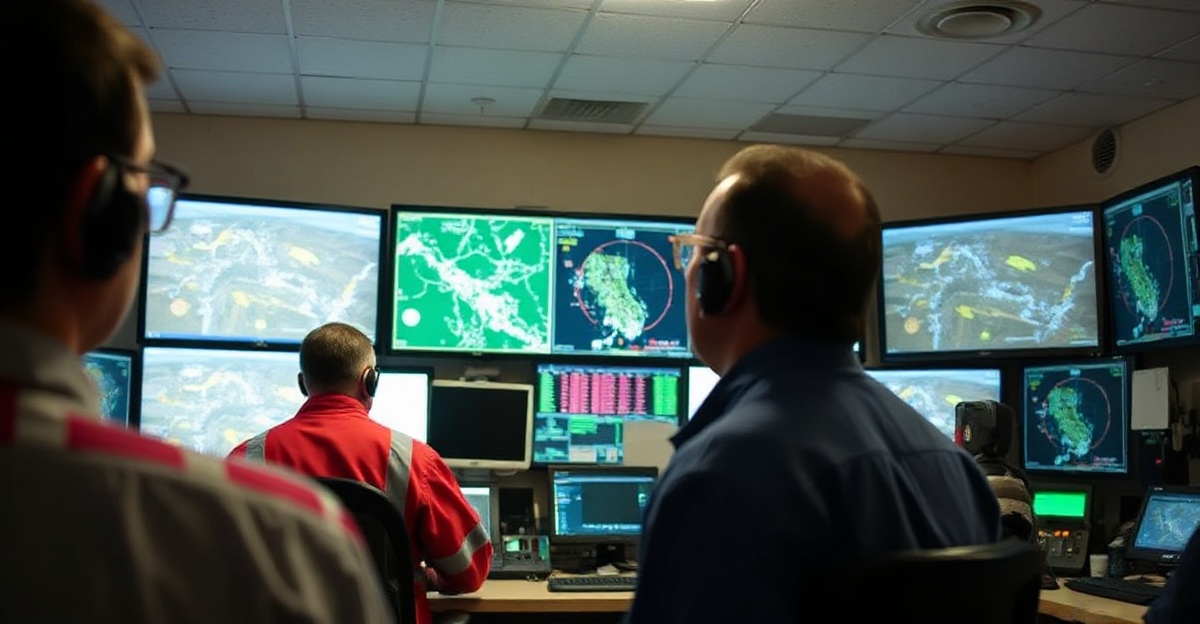
GCI is expanding its use of Starlink from customer-level satellite access into a resilience layer for its own Alaskan network.

The operator plans to deploy Starlink dedicated Internet service with bonded gateways so several remote communities can keep business and residential traffic moving when terrestrial paths fail.

The first named hubs are Bethel, Sitka, Kotzebue and Dillingham.

GCI describes the plan as a way to support thousands of customers in locations that can sit far from Starlink ground stations and far from ordinary repair logistics.

The company already resells Starlink service to business customers beyond the reach of terrestrial broadband, but the new design places Starlink behind GCI's network rather than only at an end user's site.

That distinction matters for rural connectivity.

A standard Starlink receiver can restore one customer or one location.

GCI's bonded-gateway plan is meant to give the operator another route for community traffic when microwave or fiber infrastructure is disrupted.

Bonded Gateways Add Capacity Behind Existing Links

The Starlink dedicated service combines four or more parabolic gateway antennas and uses dedicated Ku beams.

The service is described as enterprise-focused and unlimited-data, with multi-gigabit downlinks and uplinks of up to about 600 Mbit/s.

Billy Wailand, GCI's SVP of corporate development, compared the installation to large Earth stations that are hardened and covered by ray domes.

The point is not to replace the microwave and fiber networks already serving those towns.

GCI plans to use Starlink as an added path that can carry traffic if the terrestrial systems are unavailable.

Wailand's phrase for the fallback is direct: a Starlink gateway can function like a fiber in the sky.

In practical terms, that means GCI could swing traffic to the satellite-backed route during an outage instead of waiting for a field repair before service resumes.

Alaska's Repair Geography Makes Redundancy Operational

The plan is tied to Alaska's repair geography as much as to satellite capacity.

Wailand noted that reaching an extremely rural outage site by truck can take multiple of hours.

If a failure involves fiber below subsea ice, the outage can last months.

Those conditions make a third route valuable even where communities already have ring architecture to reduce outage risk.

For GCI, the operational problem is not only bandwidth; it is keeping a route available while crews work across difficult terrain and weather.

The added path gives GCI a way to keep traffic flowing while repair work continues on the terrestrial layer.

GCI has started design work to decide where the bonded gateways will be installed, and Wailand expects a few deployments before year-end.

Customers will not need individual Starlink receivers for the dedicated version because GCI handles the connection on the backend of its network.

Cable And Mobile Operators Are Testing Satellite Redundancy

GCI will continue to resell traditional Starlink services to business customers that need direct satellite access.

It has already deployed hundreds of Starlink terminals under an agreement announced in 2024.

The wider operator pattern is also visible.

Comcast announced a similar Starlink arrangement about two years ago, AT&T recently made a business-services agreement with Amazon Leo, and T-Mobile introduced SuperBroadband in April with 5G and fiber as primary and secondary links and Starlink as the fallback.

GCI's Alaska plan is a more location-specific test: whether bonded satellite gateways can protect community-level connectivity where distance, ice and repair time make ordinary redundancy harder to operate.

Share this article
inXf

Related articles

More
NTT’s Amazon Leo Deals Move Satellite Broadband Toward Japan’s Enterprise Networks
Telco & Connectivity

NTT’s Amazon Leo Deals Move Satellite Broadband Toward Japan’s Enterprise Networks

NTT group companies signed Amazon Leo reseller agreements by June 9, setting up technical validation for satellite broadband services aimed at companies, government agencies, disaster backup and Docomo base-station backhaul in Japan.

Anterix And Lynk Test Satellite-To-Device Links For Utility Networks
Telco & Connectivity

Anterix And Lynk Test Satellite-To-Device Links For Utility Networks

Anterix and Lynk Global are testing whether 900 MHz private wireless spectrum can extend satellite-to-device connectivity into utilities and other critical infrastructure networks.

Telecom Operators Test Whether AI Networks Can Move From Opex Cuts To Revenue
Telco & Connectivity

Telecom Operators Test Whether AI Networks Can Move From Opex Cuts To Revenue

Communications service providers are using generative and agentic AI to automate network operations, but the next test is whether distributed connectivity, edge sites and secure infrastructure can become paid AI services.

AT&T’s OSS/BSS Token Strategy Turns Telco AI Costs Into A Network Test
Telco & Connectivity

AT&T’s OSS/BSS Token Strategy Turns Telco AI Costs Into A Network Test

An AT&T network architect outlined how tokenized OSS/BSS data, edge processing and internal models can reduce telecom AI cost, including 27 billion daily tokens and a 90% generative AI cost reduction claim.

Keep Reading

More Stories

Latest
Sakana Marlin Tests Whether AI Agents Can Do Strategy Research, Not Just ChatAIJun 17, 2026Sakana Marlin Tests Whether AI Agents Can Do Strategy Research, Not Just ChatSakana AI launched Sakana Marlin as an enterprise research agent that can spend up to 8 hours preparing a 100-page strategy report, but customer proof and data-handling details remain undisclosed.Indian Telcos Push Back On TRAI Voice-Only Tariff PlanTelco & ConnectivityJun 17, 2026Indian Telcos Push Back On TRAI Voice-Only Tariff PlanReliance Jio, Bharti Airtel and Vodafone Idea opposed TRAI’s 2026 draft plan to widen voice-and SMS-only tariff vouchers, setting up a pricing fight over basic-phone users, data bundles and consumer protection.Taiwan Turns 6G Planning Into A Spectrum And Standards TestTelco & ConnectivityJun 16, 2026Taiwan Turns 6G Planning Into A Spectrum And Standards TestTaiwan is pairing 6G spectrum-roadmap work with ITRI agreements in Europe, while Dell’Oro’s projections frame the next network cycle as evolutionary and dependent on AI-driven traffic demand.Upstage Turns Daum Into The Distribution Layer For Solar AI AgentsAIJun 16, 2026Upstage Turns Daum Into The Distribution Layer For Solar AI AgentsSouth Korea’s Upstage is tying its Solar models to Daum search, Timelee agents and a planned Loom desktop agent as it moves from model development toward search, enterprise and consumer AI services.AI Compute Scarcity Is Redrawing The Infrastructure MapAIJun 16, 2026AI Compute Scarcity Is Redrawing The Infrastructure MapAI infrastructure projects in India, Africa, Brazil and the UAE show how power, chip access, data location and inference demand are pushing compute beyond the traditional U.S. hyperscale cloud map.Ciena Says AI Data Centers Will Need More Than One Optical Network DesignTelco & ConnectivityJun 16, 2026Ciena Says AI Data Centers Will Need More Than One Optical Network DesignCiena executive Helen Xenos says AI data center interconnect will mix coherent optics, photonic line systems, full-spectrum transponders, co-packaged optics and liquid cooling as scale-across deployments push capacity and reliability demands higher.Hunar.AI Tests Voice Agents On India’s Frontline Hiring GapAIJun 16, 2026Hunar.AI Tests Voice Agents On India’s Frontline Hiring GapBengaluru-based Hunar.AI says its voice agents now handle more than 5 Lakh calls a day for frontline hiring, onboarding and retention workflows, with customers including Swiggy, Zepto, Croma and Starbucks.3GPP Sets 6G Standards Path To March 2029 Code FreezeTelco & ConnectivityJun 16, 20263GPP Sets 6G Standards Path To March 2029 Code Freeze3GPP has fixed the Release 21 timeline for the first 6G specifications, with March 2027, June 2028, December 2028 and March 2029 milestones now shaping vendor and operator planning.Middle Powers Face AI Access Test As U.S. And China Dominate ComputeAIJun 16, 2026Middle Powers Face AI Access Test As U.S. And China Dominate ComputeA New York Tech Week discussion framed AI access as a bargaining problem for middle powers, with the U.S. and China controlling most compute, investment and frontier-model leverage.Foxconn And Schneider Target AI Data Center Power BottleneckAIJun 16, 2026Foxconn And Schneider Target AI Data Center Power BottleneckFoxconn and Schneider Electric plan joint AI data center reference architectures, pairing AI rack manufacturing with power, cooling and energy-management systems as production begins later this year.Tencent Cloud Tests Korea As AI And Gaming Cloud BenchmarkAIJun 16, 2026Tencent Cloud Tests Korea As AI And Gaming Cloud BenchmarkTencent Cloud is using South Korea as an Asia-Pacific benchmark for AI, gaming and cloud expansion, pairing 66 availability zones across 23 regions with new Korea partnerships and AI products unveiled at Tencent Cloud Day Korea 2026.AT&S Backs Malaysia AI Substrate Expansion With Customer CommitmentsChips & SemiconductorsJun 16, 2026AT&S Backs Malaysia AI Substrate Expansion With Customer CommitmentsAT&S plans a customer-backed Kulim expansion for IC substrates and advanced PCBs, naming AMD as one customer as AI hardware demand moves deeper into the semiconductor supply chain.