SendTech Times
News
AI SHIFT:

Smart TV Proxy SDKs Turn Free Apps Into a Hidden AI Scraping Supply Chain

Article summary

Bright Data's SDK has been reverse-engineered in research showing how free apps can turn consumer devices, including smart TVs, into residential proxy nodes for web-scraping traffic. The issue matters because AI data harvesting is increasing demand for residential IPs, while consent screens and background network behavior may not be clear to users or IT teams.
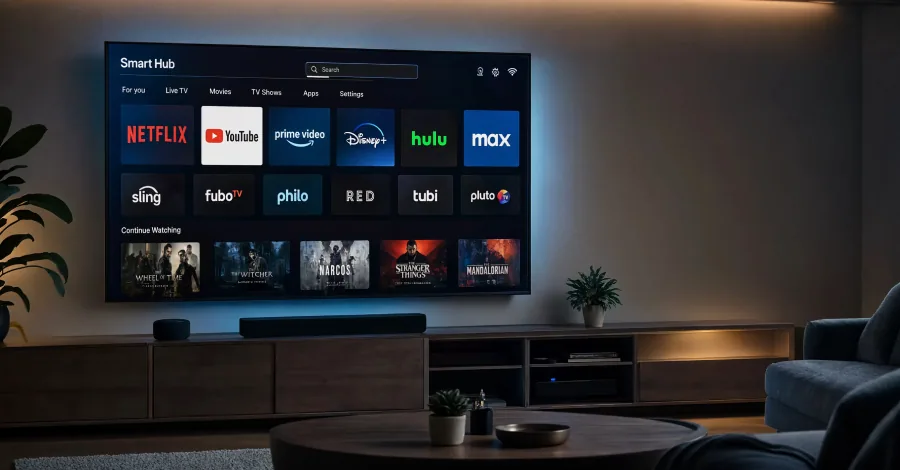
Smart TV Proxy SDKs Turn Free Apps Into a Hidden AI Scraping Supply Chain
Image source: The Hacker News

Free apps become residential proxy infrastructure

Bright Data's consumer-app SDK has been reverse-engineered in research showing how free apps can turn user devices, including always-on smart TVs, into exit nodes for web-scraping traffic.

The company, previously known as Luminati, advertises more than 400 million residential IPs and describes an SDK-sourced pool of more than 150 million IPs.

The practical exposure is that a household connection and bandwidth can be used as someone else's scraping infrastructure.

Smart TVs are sensitive in that model because they are usually plugged in, connected to fast networks and left running for long periods.

Consent screens face a technical gap

The researcher found that the channel carrying scraping jobs lacked normal authentication controls and, on iOS, could bypass a configured VPN.

The SDK could also continue relaying traffic in the background while a user watched the screen or took a call, unless the battery was low.

One Roku app, Petflix, presented an opt-in screen saying the device and connection would be used occasionally.

The SDK settings reviewed in the research allowed up to 200 GB of traffic a month, with far higher limits in a few countries, including Uzbekistan and Oman.

AI demand changes the economics

Demand for residential IP addresses is rising as AI data harvesting runs into anti-bot defenses.

Cloudflare and DataDome can block scrapers using datacenter IPs and push scraping traffic toward residential connections.

That does not make consent-based proxy networks the same as criminal botnets.

Bright Data says its exit nodes opt in through a consent screen, while botnets hijack devices.

The key question is whether that consent is specific and durable enough when the device may be a living-room TV.

What device owners and IT teams can watch

Bright Data's public partner list includes smart-TV app makers such as PlayWorks Digital, CloudTV and Longvision, although the list alone does not prove a current app still carries the SDK.

Google, Amazon and Roku have restricted background proxy SDKs, and Bright Data dropped those platforms while still listing Samsung's Tizen and LG's webOS.

For households, the actionable watchpoint is unusual background traffic from free apps to Bright Data SDK-related infrastructure.

Router-level tools such as Pi-hole or NextDNS can help reduce that exposure when the relevant domains are identified.

The practical test is whether app stores, device makers and network administrators can make background proxy use visible before residential bandwidth becomes a hidden AI supply chain.


Share this article
inXf

Related articles

More
Stratos Data Center Cuts Utah Plan as Water Backlash Tests AI Infrastructure Growth
AI

Stratos Data Center Cuts Utah Plan as Water Backlash Tests AI Infrastructure Growth

A Kevin O'Leary-backed Utah data center plan has been cut back after water and transparency objections, showing how local resistance can reshape AI infrastructure projects.

Ciena's $50 Billion AI Network Target Puts Optical Capacity on the Hyperscaler Clock
Chips & Semiconductors

Ciena's $50 Billion AI Network Target Puts Optical Capacity on the Hyperscaler Clock

Ciena says AI demand could roughly double its addressable market to about $50 billion by 2029 as hyperscalers and service providers invest in optical networking. It cited RLS Hyper Rail, DCOM, coherent modules and 400G/800G pluggable optics as demand areas while planning $250 million to $275 million in capex this year. The practical test is whether AI compute buildouts convert into durable network orders.

AI Data-Centre Spending Turns Energy Costs Into an Inflation Test
Cloud & Data Centers

AI Data-Centre Spending Turns Energy Costs Into an Inflation Test

AI infrastructure spending is pushing data-centre power demand, construction costs and debt issuance into the inflation debate. Pew Research Centre counted more than 3,000 operational US data centres and about 1,500 more under construction or in early development. The practical test is whether productivity gains arrive before power, construction and financing costs spread further through the economy.

Alphabet’s $85 Billion AI Financing Push Tests Data Center Investor Appetite
Cloud & Data Centers

Alphabet’s $85 Billion AI Financing Push Tests Data Center Investor Appetite

Alphabet is seeking $85 billion in equity financing after raising its capex outlook to as high as $190 billion. The company is presenting Google Cloud growth, AI adoption and lower Gemini serving costs as evidence that its data center spending can support long-term AI demand.

Keep Reading

More Stories

Latest
Amazon-Corning Fiber Deal Puts Optics Inside The AI Data Center BottleneckCloud & Data CentersJun 9, 2026Amazon-Corning Fiber Deal Puts Optics Inside The AI Data Center BottleneckAmazon has reached a multi-year optical fiber and networking agreement with Corning, adding North Carolina manufacturing jobs and highlighting fiber capacity as a practical constraint in AI data center expansion.Check Point VPN Exploitation Puts Legacy IKEv1 Access In The Ransomware SpotlightCybersecurityJun 8, 2026Check Point VPN Exploitation Puts Legacy IKEv1 Access In The Ransomware SpotlightA critical Check Point VPN flaw, CVE-2026-50751, is being exploited against legacy IKEv1 remote-access configurations, with activity tied in one case to a Qilin ransomware affiliate and a second related VPN issue also disclosed.Silent Ransom Group Uses Fake IT Support Calls to Pressure Law FirmsCybersecurityJun 8, 2026Silent Ransom Group Uses Fake IT Support Calls to Pressure Law FirmsSilent Ransom Group is targeting U.S. law firms and professional services organizations with fake IT support calls, remote access tools and rapid data-theft extortion. Mandiant links the activity to UNC3753, Luna Moth and Chatty Spider, while the FBI has warned of related social engineering and in-person theft attempts.Apple WWDC 2026 Turns Siri Into the Test of Its AI CredibilityAIJun 8, 2026Apple WWDC 2026 Turns Siri Into the Test of Its AI CredibilityApple is expected to put Siri back at the center of WWDC 2026 after delays to its promised Apple Intelligence assistant. The event is likely to test whether Apple can turn contextual awareness, chatbot-style interaction and agentic voice tasks into reliable platform features.ChatGPT Lockdown Mode Narrows AI Data Exfiltration PathsCybersecurityJun 8, 2026ChatGPT Lockdown Mode Narrows AI Data Exfiltration PathsOpenAI is rolling out Lockdown Mode for eligible ChatGPT users to reduce data exfiltration risk from prompt injection. The optional setting limits outbound web and tool capabilities, trading some product flexibility for stronger containment around sensitive workflows.Dubai Hotels Turn to Residents as Tourism Shock Tests Luxury DemandEconomyJun 7, 2026Dubai Hotels Turn to Residents as Tourism Shock Tests Luxury DemandDubai luxury hotels are using resident staycation discounts to offset weaker international tourism, but the source shows weekend demand cannot fully replace longer foreign stays.liko.ai Funding Turns Edge AI Into a Smart-Home Hardware TestAIJun 7, 2026liko.ai Funding Turns Edge AI Into a Smart-Home Hardware Testliko.ai completed its first-round financing to fund edge-side vision-language models, AI-native hardware and multi-modal home terminals. The investor group includes Shangtang Guoxiang Capital, Orient Fortune Capital, iFlytek Venture Capital, Hongtai Fund, Zhengxuan Investment and Mianbi Intelligence. The practical test is whether the startup can turn camera-based edge AI into a consumer smart-home hub without relying on cloud processing.Impact Circle Turns Impact Finance Into a Japan Fintech Measurement TestFintech & Digital PaymentsJun 7, 2026Impact Circle Turns Impact Finance Into a Japan Fintech Measurement TestTokyo-based Impact Circle is building a fintech model that measures social impact through its own lending and visualization businesses. The company won the Tokyo Financial Award 2025 financial innovation category and raised 335 million yen in a November 2024 Series A round. The next signal is whether Impact Cloud IC can turn impact measurement into a repeatable workflow for investors and Japanese corporations.ByteDance Raises Volcano Engine AI Revenue Target on Seedance 2.0 DemandAIJun 7, 2026ByteDance Raises Volcano Engine AI Revenue Target on Seedance 2.0 DemandByteDance’s Volcano Engine raised its full-year MaaS revenue target to RMB 15 billion after Seedance 2.0 became a larger AI revenue contributor. Seedance 2.0 is described as generating more than RMB 1 billion in monthly revenue, while average daily token consumption has grown by nearly 40% month-on-month. The practical test is whether Volcano Engine can keep video-generation usage converting into paid token consumption beyond high-usage content segments.Microsoft Uses Build 2026 to Push Agents Beyond CopilotAIJun 7, 2026Microsoft Uses Build 2026 to Push Agents Beyond CopilotMicrosoft used its Build 2026 keynote to introduce MAI models, Project Soltera and Microsoft Scout as part of a broader agent strategy. MAI-Thinking-1 is described as a 35-billion-parameter reasoning model with a 128,000-context window for multi-step instructions, long-context reasoning and code generation. The announcement gives Microsoft a clearer agent roadmap, but the source does not provide customer rollout data, pricing or enterprise adoption evidence.IPA Translation Turns CISA Security Goals Into A Japan Infrastructure BaselineCybersecurityJun 7, 2026IPA Translation Turns CISA Security Goals Into A Japan Infrastructure BaselineJapan’s Information-technology Promotion Agency published a Japanese translation of CISA’s Cross-Sector Cybersecurity Performance Goals Version 2.0 for domestic critical infrastructure operators. The guidance covers IT and operational technology, maps goals to NIST CSF 2.0, and frames the controls as minimum practices rather than a full cybersecurity program. The practical test is whether asset owners use the worksheet to rank gaps by cost, complexity and impact, then review progress after 12 months.Quant Firms Turn Prediction Markets Into a Crypto Trading Infrastructure TestCrypto/Web3Jun 7, 2026Quant Firms Turn Prediction Markets Into a Crypto Trading Infrastructure TestDRW, Wintermute and IMC are building or hiring for prediction-market trading desks as Polymarket and Kalshi attract institutional attention. During 2025, Polymarket handled a reported $22 billion to $40 billion across politics, economics and sports, while three sports markets topped $730 million together. The practical test is whether institutional trading models can exploit cross-platform inefficiencies without displacing specialist sports-betting groups.